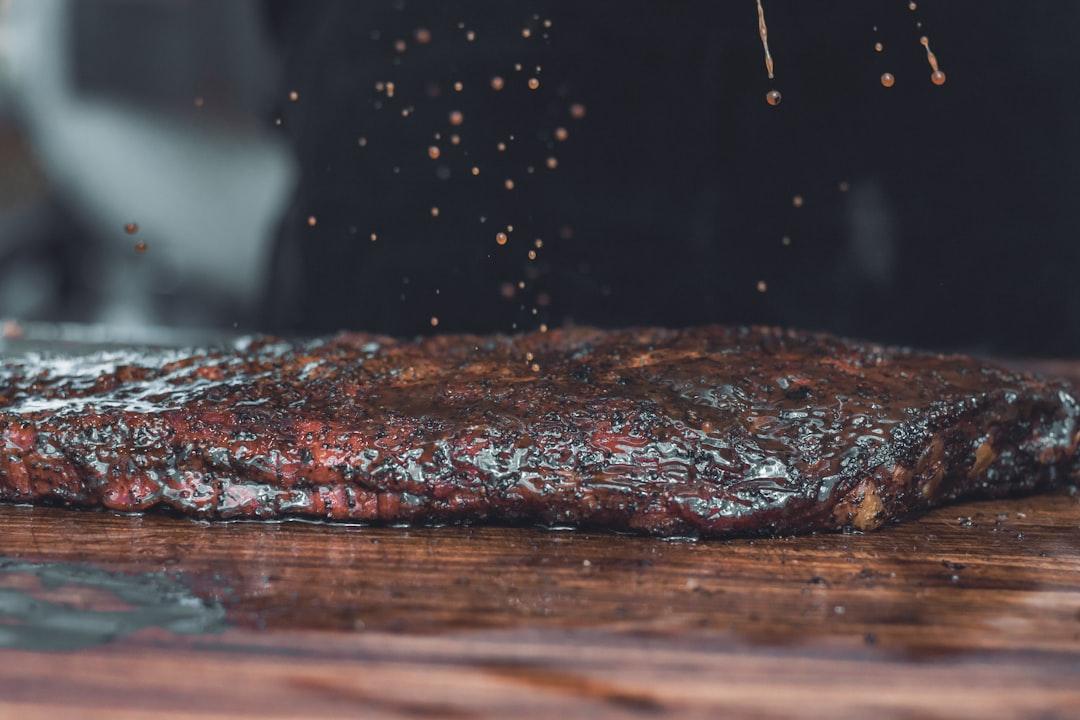
Texas Brisket Flat
Tender, smoky beef brisket flat with a peppery bark, slow-smoked low and slow until it pulls apart. A Texas barbecue classic that feeds a crowd and rewards patience.
- Total time
- 840 min
- Servings
- 8
- Calories
- 480
- Protein
- 52g
Ingredients
- 3 tablespoons kosher salt
- 3 tablespoons coarsely ground black pepper
- 1 tablespoon garlic powder
- 1 tablespoon onion powder
- 1 tablespoon smoked paprika
- 5 pounds beef brisket flat, untrimmed
- 4 cups oak or hickory smoking wood, soaked
- ½ cup beef broth or water, warm
Instructions
- 1
Remove the 5-pound beef brisket flat from the refrigerator 30 minutes before smoking so it comes closer to room temperature — this helps it cook more evenly. Place it on a large cutting board, fat side up.
- 2
Make the dry rub: In a small bowl, combine 3 tablespoons kosher salt, 3 tablespoons coarsely ground black pepper, 1 tablespoon garlic powder, 1 tablespoon onion powder, and 1 tablespoon smoked paprika. Stir well to combine.
- 3
Generously coat all sides of the brisket flat with the dry rub, working it into the meat with your fingers. Make sure every surface — top, bottom, and all edges — gets a thorough coating. The rub will form the bark, so don't be shy.
- 4
Set up your smoker for low and slow cooking: aim for a steady temperature between 225°F and 250°F. If using an offset barrel smoker, light charcoal in the firebox and let it stabilize at temperature before adding wood — this takes about 20 minutes. If using an electric or pellet smoker, preheat according to the manufacturer's instructions.
- 5
Add 4 cups of soaked oak or hickory wood chunks to the coals or smoking box — the wood should smoke steadily and create a thin, pale blue smoke. Thick white smoke will overpower the meat and make it acrid. Let the smoker settle back to 225–250°F before placing the meat.
- 6
Place the seasoned brisket flat fat side up on the smoking grate, away from direct heat. Insert an instant-read thermometer into the thickest part of the flat, being careful not to touch bone or fat. Close the smoker and maintain your temperature zone.
- 7
Smoke the brisket undisturbed for the first 5 hours — do not open the smoker. The internal temperature should climb to around 160°F. This is the stall phase; the brisket will seem to pause in its temperature rise. This is normal and expected.
- 8
After 5 hours, wrap the brisket tightly in butcher paper (the Texas Crutch method) — this accelerates the cook, keeps the meat moist, and prevents excessive bark formation. Place it back on the grate, fat side up.
- 9
Continue smoking the wrapped brisket until the thickest part of the flat reaches 203°F on your instant-read thermometer. This typically takes another 3–4 hours. Probe the meat from the side through the wrap — when the thermometer slides in like butter with no resistance, the collagen has fully rendered.
- 10
Once the brisket reaches 203°F, carefully remove it from the smoker and place it on a large cutting board still wrapped in butcher paper. Let it rest for 30 minutes minimum — carryover cooking will not push the temperature significantly higher at this point, and the rest allows the juices to redistribute throughout the meat.
- 11
Carefully unwrap the butcher paper and transfer the brisket flat to a clean cutting board. Using a sharp serrated knife, slice the brisket against the grain into 0.25-inch-thick slices. The grain runs the long way through the flat, so cut perpendicular to it. You should see a pink smoke ring just under the surface.
- 12
If desired, warm 0.5 cup of beef broth or water and drizzle it lightly over the sliced brisket to keep it moist. Serve with classic Texas sides — white bread, dill pickle slices, and jalapeños. Save any pan drippings and serve as a light sauce on the side.
Tools you’ll need
- smoker (barrel, offset, electric, or pellet)
- instant-read thermometer
- large cutting board
- small mixing bowl
- butcher paper
- sharp serrated knife
- tongs
- charcoal or wood (for fuel)
Cook smarter
Get matched recipes for what’s in your fridge
CookSnap is a free iOS app that finds real recipes from the ingredients you already have. No more grocery-list aspirations.