Five-Cheese Baked Mac & Cheese Skillet
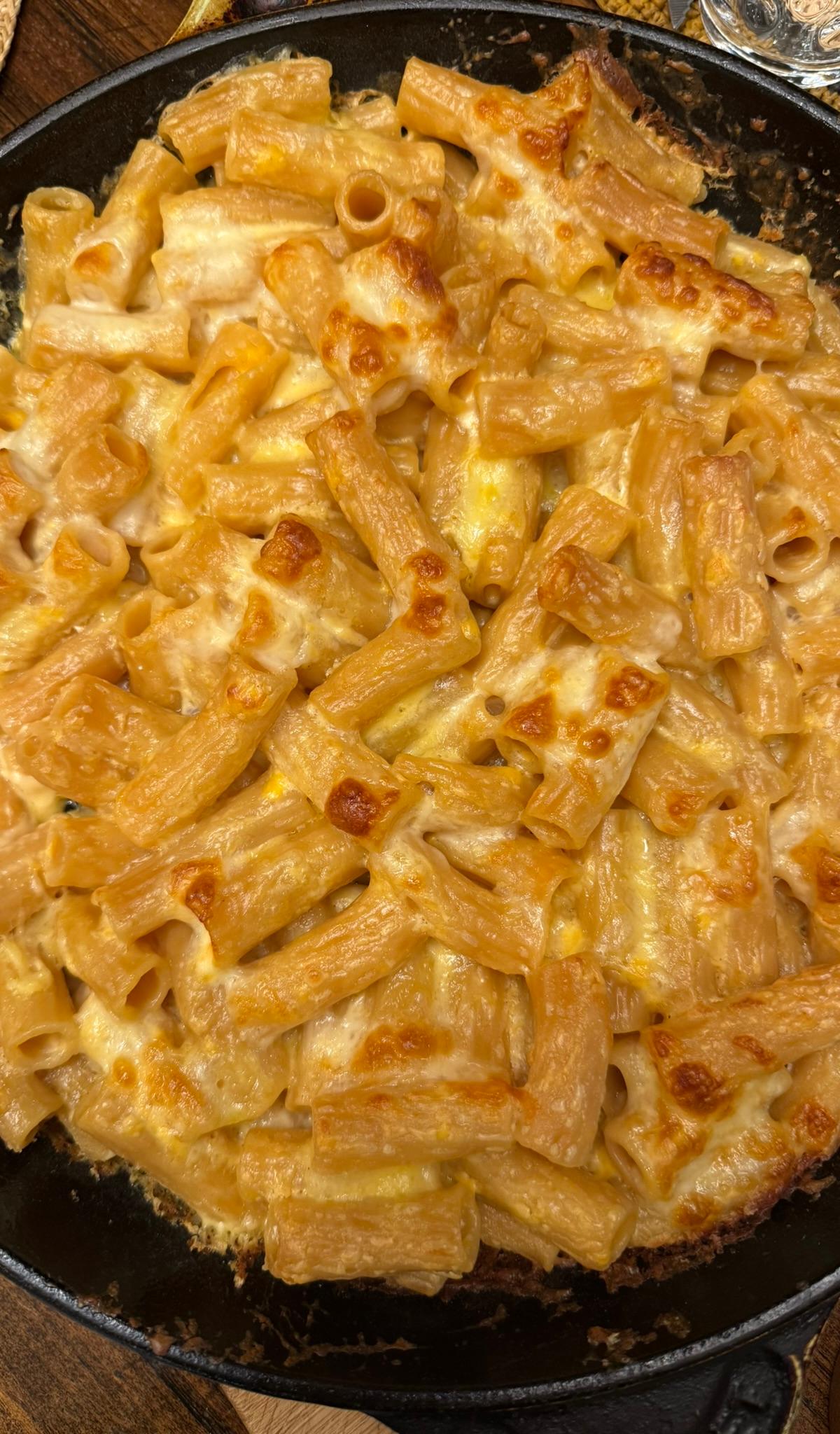
This ultra-creamy, golden-topped baked mac and cheese is built on a velvety two-cheese béchamel sauce with three optional add-in cheeses for extra depth and stretch. Made entirely in one cast iron skillet and finished under the broiler, it delivers a bubbly, bronzed crust over silky pasta that pulls apart like a dream. It's the ultimate weeknight comfort dish that looks and tastes like it came from a restaurant kitchen.
- Total time
- 45 min
- Servings
- 4
- Calories
- 720
- Protein
- 32g
Ingredients
- 12 oz ziti or penne rigate
- 1 tbsp kosher salt (for pasta water)
- 4 tbsp unsalted butter
- 4 tbsp all-purpose flour
- 2.5 cups whole milk, warmed
- 0.5 cup heavy cream
- 2 cups sharp cheddar cheese, freshly grated
- 1.5 cups gruyère cheese, freshly grated
- 1 tsp dijon mustard
- 0.5 tsp garlic powder
- 0.5 tsp onion powder
- 0.5 tsp freshly ground black pepper
- 0.75 tsp kosher salt
- 0.25 tsp freshly grated nutmeg
- 0.75 cup fontina cheese, freshly grated (optional — adds buttery melt)
- 0.75 cup smoked gouda, freshly grated (optional — adds smoky depth)
- 0.5 cup freshly grated parmesan (optional — adds salty nuttiness)
- 0.5 cup gruyère or sharp cheddar, freshly grated (reserved from above)
Instructions
- 1
Preheat your oven broiler to high (500°F / 260°C) and position an oven rack about 6 inches from the heating element. Set your 12-inch cast iron skillet on the stovetop — you'll cook, assemble, and broil everything in it.
- 2
Grate all your cheeses now before you begin cooking — freshly grated cheese melts far more smoothly than pre-shredded, which contains anti-caking agents that can make the sauce grainy. Set aside 1/2 cup of your chosen topping cheese in a small bowl; keep the rest separate.
- 3
Warm the 2.5 cups of whole milk and 1/2 cup heavy cream together in a liquid measuring cup in the microwave for 90 seconds, or gently on the stovetop, until just warm to the touch (about 110°F). Warm dairy prevents lumps when it hits the roux.
- 4
Fill your large pot with at least 4 quarts of water and bring to a rolling boil over high heat. Once boiling vigorously, add 1 tablespoon kosher salt — the water should taste pleasantly salty, like mild seawater. Add 12 oz of ziti and cook for 2 minutes LESS than the package's al dente time (usually 7–8 minutes total instead of 9–10), stirring occasionally to prevent sticking. The pasta will finish cooking in the oven, so you want it noticeably firm with a white, chalky center when you bite it.
- 5
Reserve 1/2 cup of the starchy pasta cooking water in a mug before draining — this is your insurance policy if the sauce gets too thick. Drain the pasta through a colander, then toss it immediately with a tiny drizzle of olive oil (about 1 teaspoon) to prevent clumping. Set aside.
- 6
Place your cast iron skillet over medium heat. Add 4 tablespoons of unsalted butter and let it melt completely until it foams and the foam just begins to subside, about 1–2 minutes. Do not let it brown.
- 7
Add 4 tablespoons of all-purpose flour all at once and immediately whisk vigorously to combine with the butter. Keep whisking constantly for 1.5 to 2 minutes, until the mixture (called a roux) turns a very pale golden color and smells faintly nutty — this step cooks out the raw flour taste. The roux should look like thick, pale paste and pull cleanly away from the skillet sides.
- 8
Reduce the heat to medium-low. Begin adding the warmed milk and cream mixture in a slow, steady stream — pour about 1/4 cup at a time while whisking constantly. This slow addition prevents lumps. Once all the liquid is incorporated, increase heat to medium and whisk continuously until the sauce thickens enough to coat the back of a spoon and a line drawn through it holds for 2 seconds, about 4–6 minutes. The sauce should be smooth, glossy, and pourable but not watery.
- 9
Remove the skillet from heat (this is critical — residual heat is enough to melt the cheese; high heat will make it greasy and grainy). Add the 1 teaspoon dijon mustard, 1/2 teaspoon garlic powder, 1/2 teaspoon onion powder, 3/4 teaspoon kosher salt, 1/2 teaspoon black pepper, and 1/4 teaspoon nutmeg. Whisk until combined.
- 10
Add the grated sharp cheddar (2 cups) and grated gruyère (1.5 cups, minus the 1/2 cup reserved for topping) in three or four handfuls, stirring with a wooden spoon or silicone spatula between each addition until each batch is fully melted and the sauce is completely smooth before adding the next. If using any of the optional cheeses (fontina, smoked gouda, or parmesan), add them now in the same manner. Taste the sauce — it should be deeply savory, rich, and well-seasoned. Adjust with additional salt and pepper if needed.
- 11
Add the drained, par-cooked pasta directly into the cheese sauce in the cast iron skillet. Using a silicone spatula or large spoon, fold everything together gently but thoroughly, making sure every piece of pasta is coated in sauce. If the mixture looks very thick (it should be saucy and slightly loose — the pasta will absorb more liquid as it bakes), stir in reserved pasta water 2 tablespoons at a time until you reach a creamy, flowing consistency.
- 12
Spread the pasta evenly in the skillet, then scatter the reserved 1/2 cup of grated cheese evenly over the entire surface. For best browning, make sure some pasta tubes are peeking up above the cheese layer — these will get the most beautiful golden color under the broiler.
- 13
Place the cast iron skillet under the preheated broiler and broil on high for 3 to 5 minutes, watching closely and rotating the skillet once halfway through if your broiler has hot spots. You're looking for deep golden-brown patches on the cheese and pasta tips — some spots should look almost amber and caramelized, while others remain golden yellow. Do NOT walk away from the broiler; it can go from perfect to burnt in under 60 seconds.
- 14
Use oven mitts to remove the skillet from the oven — the handle will be extremely hot. Place it on a heat-safe trivet or folded kitchen towel on your countertop. WARNING: Cast iron retains heat for a long time; always use protection when handling and warn anyone nearby.
- 15
Let the skillet rest for 3 to 5 minutes before serving. This rest time allows the cheese sauce to tighten slightly so it serves in cohesive, creamy scoops rather than running everywhere. Serve directly from the skillet using a large spoon, making sure each portion gets some of the bronzed top layer as well as the creamy pasta underneath.
Tools you’ll need
- 12-inch cast iron skillet
- large pot (at least 6-quart) for boiling pasta
- colander
- medium saucepan
- whisk
- wooden spoon or silicone spatula
- box grater or food processor with grating blade
- liquid measuring cup
- dry measuring cups and spoons
- oven mitts
- ladle or large spoon
Cook smarter
Get matched recipes for what’s in your fridge
CookSnap is a free iOS app that finds real recipes from the ingredients you already have. No more grocery-list aspirations.