Steamed Pork Baozi
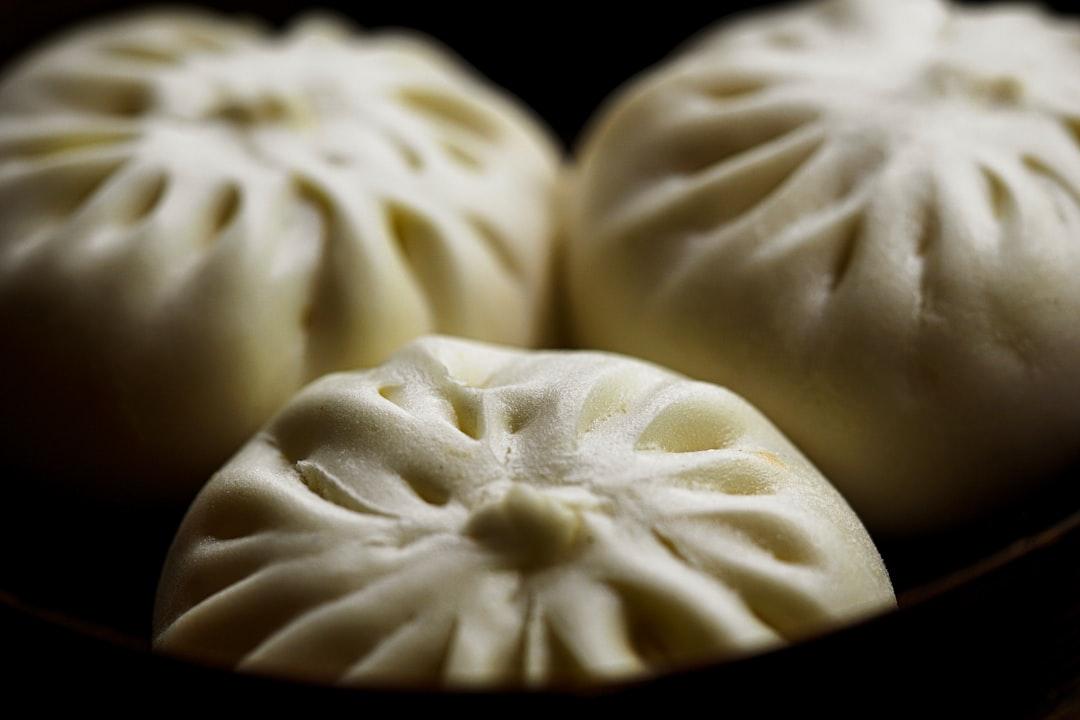
Fluffy steamed buns filled with savory ground pork, ginger, and soy—a beloved Chinese street food. Homemade dough is easier than you think, and the reward is warm, pillowy buns that rival any dim sum cart.
- Total time
- 90 min
- Servings
- 12
- Calories
- 240
- Protein
- 12g
Ingredients
- 2.5 cups all-purpose flour
- 1.5 teaspoons instant yeast
- 2 tablespoons sugar
- ½ teaspoon salt
- 1 cup warm water
- 2 tablespoons vegetable oil
- 1 pound ground pork
- 1 tablespoon fresh ginger
- 3 whole garlic cloves
- 3 tablespoons low-sodium soy sauce
- 1 tablespoon sesame oil
- 1 teaspoon sugar
- 4 whole scallions
- ¼ teaspoon salt and white pepper
- 12 squares parchment paper
Instructions
- 1
In a large mixing bowl, whisk together 2.5 cups all-purpose flour, 1.5 teaspoons instant yeast, 2 tablespoons sugar, and 0.5 teaspoon salt. These dry ingredients distribute the yeast evenly so the dough rises uniformly.
- 2
Create a well in the center of the flour mixture and pour in 1 cup of warm water (110°F—it should feel pleasantly warm to the inside of your wrist, not hot). Add 2 tablespoons vegetable oil.
- 3
Stir with a wooden spoon or your hand until a shaggy dough forms and no dry flour remains—the dough will look rough and sticky at this stage, which is correct.
- 4
Transfer the dough to a lightly oiled work surface and knead for 8–10 minutes, adding a pinch of flour only if it's so sticky your hands slip. You'll feel the dough transform from rough to smooth and elastic—when you poke it, it should spring back slowly.
- 5
Form the dough into a tight ball, place it in a lightly oiled bowl, and cover with a damp kitchen towel. Set in a warm, draft-free spot for 1 hour, or until the dough has doubled in size—you should see a slow bubble rise when you peek under the towel.
- 6
While the dough rises, start the filling. Peel and finely mince 3 garlic cloves on a cutting board, then grate a 1-tablespoon piece of fresh ginger on a microplane (you should get about 1 tablespoon of finely grated ginger). Trim the scallions and cut them into thin rings, separating the white and light green parts from the dark green tops.
- 7
Place 1 pound ground pork in a medium mixing bowl. Add the minced garlic, grated ginger, 3 tablespoons low-sodium soy sauce, 1 tablespoon sesame oil, 1 teaspoon sugar, the white and light green scallion pieces, and 0.25 teaspoon white pepper.
- 8
Stir the filling with a fork, mixing gently but thoroughly until all ingredients are evenly distributed—do not overmix or the pork will become dense. The filling should smell fragrant and cohesive. Taste a tiny bit on your finger; if you want more salty depth, add another 0.5 teaspoon soy sauce.
- 9
Turn the risen dough onto a lightly floured surface and gently press it down to release excess gas—it should deflate slightly but still feel airy. Divide the dough into 12 equal pieces; the easiest way is to halve the dough, then halve each half, then divide each quarter into three. Roll each piece gently between your palms into a smooth ball.
- 10
Take one dough ball and flatten it into a 3-inch disk with the heel of your hand. Use a rolling pin to gently roll it into a 4-inch circle, keeping the center slightly thicker than the edges—this helps the lid stay sealed.
- 11
Place 1.5 tablespoons of filling in the center of the dough circle. Fold the edges up and inward, gathering them at the top like a little purse, and twist gently to seal. The seam should be tight but the bun should not feel hard—handle it gently.
- 12
Place the baozi seam-side up on a 3-inch square of parchment paper. Repeat with the remaining dough and filling. Arrange the finished baozi on a clean kitchen towel, spacing them 1 inch apart—they will expand slightly as they proof.
- 13
Cover the buns loosely with another damp towel and let them proof at room temperature for 20–30 minutes. They should look slightly puffed but still hold their shape when you gently tap one.
- 14
Fill a large pot with 2 inches of water and set a bamboo steamer basket or metal steamer rack inside—the water should not touch the bottom of the basket. Bring the water to a rolling boil over high heat; you should see strong steam rising.
- 15
Carefully arrange the baozi on the steamer basket in a single layer, parchment side down, spacing them 0.5 inches apart. If you have more than will fit in one layer, you can stack bamboo steamers.
- 16
Cover the steamer with its lid and steam over high heat for 12–14 minutes. At the 10-minute mark, carefully lift the lid away from you to avoid scalding steam, and peek—the buns are done when they are puffy, pale, and springy to the touch. If you press one gently, it should slowly spring back.
- 17
Using tongs or a bamboo steaming brush, transfer the baozi to a serving platter while they are still warm. Garnish with the reserved dark green scallion tops if you like. Serve immediately with soy sauce, chili oil, or black vinegar on the side for dipping. They are best eaten within 2 hours of steaming but can be reheated by steaming for 3–4 minutes.
Tools you’ll need
- large mixing bowl
- whisk
- wooden spoon
- work surface
- damp kitchen towel
- cutting board
- microplane
- medium mixing bowl
- fork
- rolling pin
- large pot
- bamboo steamer basket or metal steamer rack
- steamer lid
- tongs or bamboo steaming brush
- serving platter
- instant-read thermometer (optional, for water temperature)
Cook smarter
Get matched recipes for what’s in your fridge
CookSnap is a free iOS app that finds real recipes from the ingredients you already have. No more grocery-list aspirations.