Japanese Soy-Braised Beef Tendon
A deeply savory Japanese braise where gelatinous beef tendon becomes melt-in-mouth tender in a rich soy-mirin glaze. This slow-cooked comfort dish develops complex umami flavors that improve with time.
- Total time
- 180 min
- Servings
- 4
- Calories
- 320
- Protein
- 42g
Ingredients
- 2 lbs beef tendon (shank or leg cut), cut into 2-inch pieces
- 6 cups water
- ½ cup low-sodium soy sauce
- ¼ cup mirin (sweet rice wine)
- ¼ cup sake (or dry white wine)
- 1 whole large yellow onion, peeled
- 3 inch piece fresh ginger, unpeeled
- 6 whole garlic cloves, unpeeled
- 1 3-inch piece kombu (dried kelp seaweed)
- 8 oz daikon radish, peeled
- 2 whole medium carrots
- 2 whole scallions, green parts only
- ¼ tsp shichimi togarashi (seven-spice blend), optional
Instructions
- 1
Prepare the beef tendon: place 2 lbs of beef tendon pieces in a large pot and cover with cold water. Bring to a boil over high heat and boil for 5 minutes — this initial blanch removes impurities and renders some fat, which will give you a cleaner, more refined braise. Drain the tendon in a colander, rinse under cold running water until the water runs clear, and set aside. Rinse out the pot to remove any residue.
- 2
Prepare the aromatics: lightly crush 6 unpeeled garlic cloves with the flat of a knife. Smash a 3-inch piece of fresh ginger (unpeeled) with the side of your knife to crack it open — this releases oils without breaking the flesh apart. Leave the 1 large yellow onion unpeeled and cut it in half crosswise. Leave the kombu seaweed whole.
- 3
Prepare the vegetables: cut the peeled daikon radish into 1.5-inch cubes (they'll shrink during cooking). Cut the 2 medium carrots on a sharp bias into 2-inch chunks — the angled cut creates more surface area for flavor absorption.
- 4
Build the braising liquid: return the blanched beef tendon to the clean pot. Add 6 cups of water, 0.5 cup of low-sodium soy sauce, 0.25 cup of mirin, and 0.25 cup of sake. Stir gently to combine. The braising liquid should taste noticeably salty-sweet — taste a spoonful and adjust if needed (it will concentrate as it reduces).
- 5
Add aromatics for the first braise: add the cracked ginger, crushed garlic cloves, both halves of the onion (skin-on), and the kombu seaweed to the pot. Bring everything to a gentle boil over medium-high heat — you should see large bubbles breaking the surface regularly, not a rolling boil.
- 6
Braise the tendon low and slow: once boiling, reduce the heat to low (the liquid should barely simmer with just occasional small bubbles). Partially cover the pot with a lid, leaving it slightly ajar. Braise for 2 to 2.5 hours. The tendon is done when a fork pierces the thickest piece with minimal resistance — it should feel almost like cooked potato, not chewy.
- 7
Remove aromatics and skim: carefully lift out the ginger, garlic, onion, and kombu with tongs and discard them (they've given all their flavor). Using a fine-mesh strainer or spoon, skim any gray foam or fat from the surface of the braise — this final cleaning step ensures a clear, refined-looking sauce.
- 8
Add the vegetables: add the daikon cubes and carrot chunks directly to the simmering braise. The liquid should come three-quarters of the way up the vegetables. Increase the heat slightly to medium so the liquid simmers gently. Cook uncovered for 25 to 30 minutes until the vegetables are tender when pierced with a fork but not falling apart. The daikon should be almost translucent at the edges.
- 9
Taste and adjust: carefully spoon out a bit of the cooking liquid and taste it. The sauce should be balanced between salty (soy), sweet (mirin), and savory (umami from the tendon and its gelatin). If it tastes too thin or bland, leave the pot uncovered on medium heat for another 5 to 10 minutes to reduce and concentrate the flavors. If it's too salty, add a splash of water.
- 10
Prepare the garnish: slice 2 scallions on a sharp bias into thin rings, using only the green parts (save the white parts for other dishes). If using shichimi togarashi, measure out 0.25 tsp — this optional seven-spice blend adds a gentle heat and complexity.
- 11
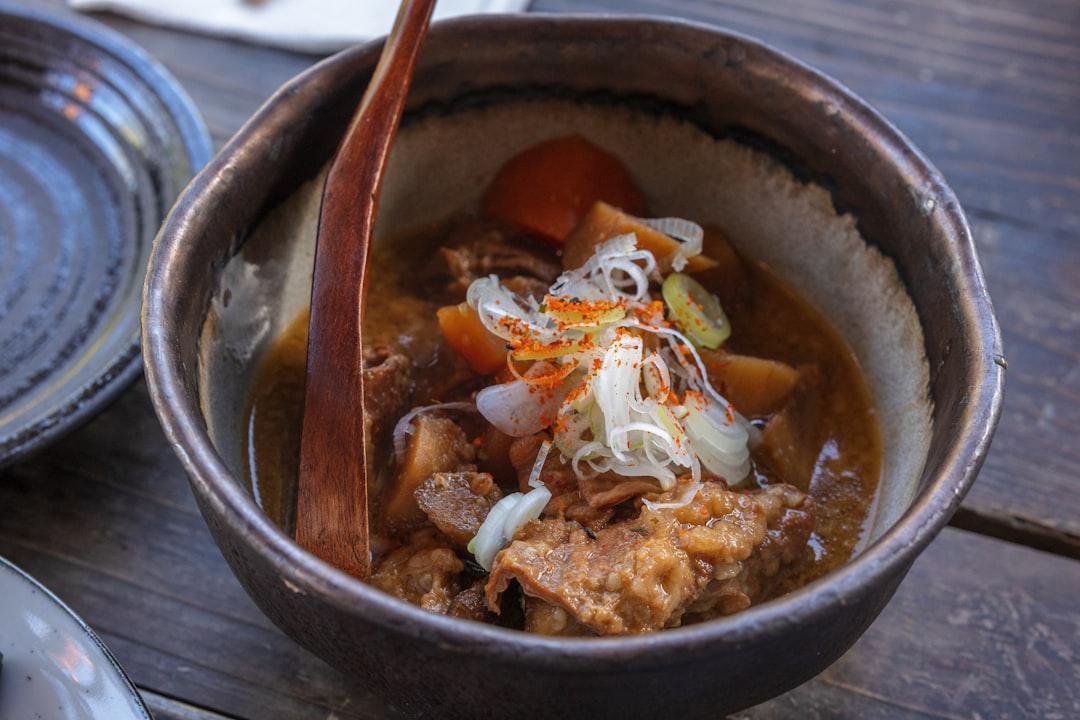
Plate the stew: using a slotted spoon or tongs, divide the beef tendon and vegetables evenly among four bowls or deep serving dishes. Carefully ladle the hot braising liquid around the solids — you want enough liquid to create a light broth. The tendon should glisten and almost jiggle when you move the bowl.
- 12
Garnish and serve: top each bowl with a scatter of sliced green scallions. If desired, sprinkle a tiny pinch of shichimi togarashi over the top for color and warmth. Serve immediately while steaming hot. This stew is best enjoyed with a bowl of plain white rice on the side to soak up the rich, savory sauce.
Tools you’ll need
- large pot with lid
- colander
- cutting board
- chef's knife
- fine-mesh strainer
- slotted spoon
- tongs
- spoon for tasting
- four bowls or deep serving dishes
Cook smarter
Get matched recipes for what’s in your fridge
CookSnap is a free iOS app that finds real recipes from the ingredients you already have. No more grocery-list aspirations.