Russian Blini (Classic Thin Crepes)
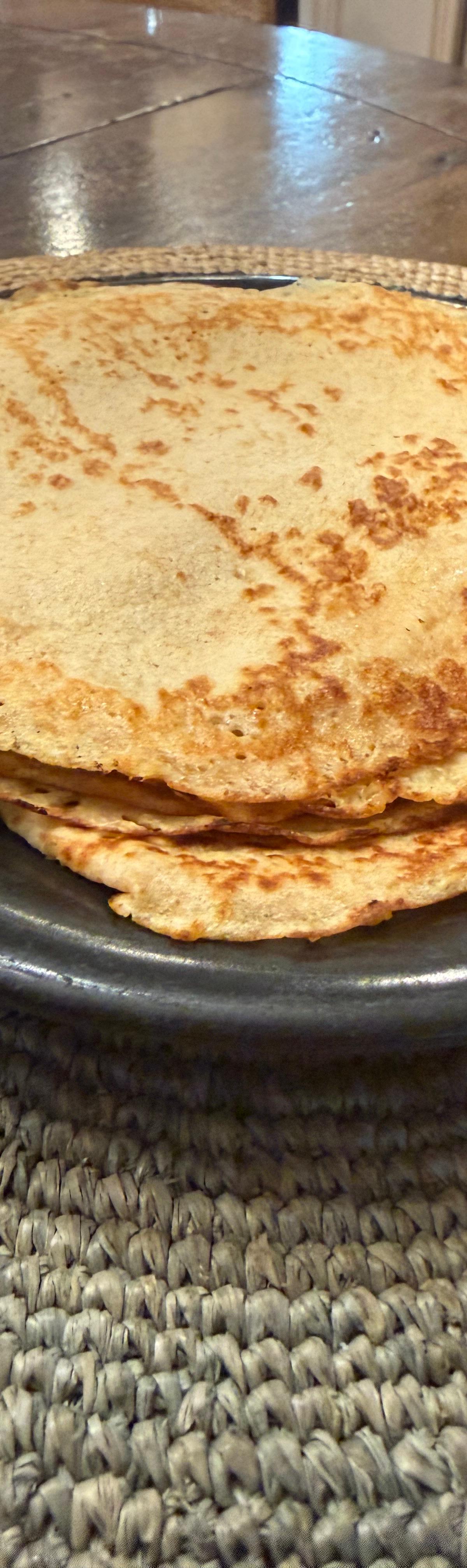
Blini are Russia's beloved paper-thin crepes — delicate, lacy-edged, and golden with caramelized spots that develop in a hot buttered pan. Their neutral, slightly eggy flavor makes them endlessly versatile: dress them up with crème fraîche and caviar for an elegant appetizer, or spread on Nutella and fresh banana slices for a crowd-pleasing dessert. Once you master the wrist-flick swirl of the batter, you'll be stacking these faster than your family can eat them.
- Total time
- 50 min
- Servings
- 4
- Calories
- 210
- Protein
- 7g
Ingredients
- 1 cup (125g) all-purpose flour, sifted
- 2 whole large eggs
- 1.5 cups whole milk, warmed to room temperature
- 1/4 cup warm water (about 110°F / 43°C)
- 2 tbsp unsalted butter, melted and cooled slightly
- 1 tsp granulated sugar
- 1/2 tsp kosher salt
- 1/4 tsp baking powder
- 3 tbsp unsalted butter, for greasing pan between each blini
- 1/2 cup full-fat sour cream or crème fraîche
- 2 oz salmon roe, trout roe, or caviar
- 2 tbsp fresh chives, finely sliced
- 1/2 cup Nutella or other chocolate-hazelnut spread
- 1 medium ripe banana, thinly sliced
- 1 tbsp powdered sugar, for dusting
Instructions
- 1
In a large mixing bowl, whisk together the 2 eggs, 1 tsp sugar, and 1/2 tsp kosher salt until the mixture is pale yellow and slightly frothy, about 1 minute. This early aeration helps the blini stay light and tender.
- 2
Add the 2 tbsp melted (but not hot) butter and the 1/4 cup warm water to the egg mixture and whisk to combine. The water thins the batter for that characteristic crepe-like spread.
- 3
Sift the 1 cup all-purpose flour and 1/4 tsp baking powder directly into the bowl. Whisk steadily from the center outward until no dry streaks or lumps remain — the batter will be thick at this stage, resembling a smooth paste.
- 4
Gradually pour in the 1.5 cups room-temperature whole milk in a slow, steady stream while whisking constantly. The finished batter should be very fluid — thinner than American pancake batter — and fall off the whisk in a smooth, unbroken ribbon. If it looks lumpy, pass it through a fine-mesh sieve.
- 5
Cover the bowl with a clean kitchen towel and let the batter rest at room temperature for 20 minutes. This allows the flour to fully hydrate and the gluten to relax, which gives the blini their delicate, tender texture. Do not skip this step.
- 6
Set a 10-inch nonstick skillet or crêpe pan over medium heat. Let it warm for 2 full minutes — it's ready when a drop of water flicked onto the surface evaporates instantly with a sharp sizzle. The pan must be thoroughly hot before the first blini goes in, or it will stick and tear.
- 7
Using a pastry brush or a folded paper towel held with tongs, coat the entire surface of the hot pan with a very thin, even layer of butter (about 1/2 tsp). You want a sheen, not a pool — excess butter causes uneven browning and greasy edges.
- 8
Lift the pan off the heat with your non-dominant hand. Pour a scant 1/4 cup (about 3 tablespoons) of batter into the center of the pan. Immediately tilt and swirl the pan in a circular motion so the batter spreads into a thin, even round roughly 8–9 inches in diameter. Work quickly — the batter begins setting within seconds of hitting the hot surface.
- 9
Return the pan to medium heat. Cook until the edges of the blini look dry and matte (not shiny), small bubbles appear across the surface, and the underside is golden-brown with irregular caramelized spots — about 1 to 1.5 minutes. Resist the urge to move or shake it during this time; let it cook undisturbed so it sets properly.
- 10
Slide a thin offset spatula under the blini, working from the edge toward the center, and flip in one confident, swift motion. Cook the second side for 30 to 45 seconds until it shows light golden spots — this side will always look paler than the first and that's perfectly normal. Slide the finished blini onto a plate.
- 11
Re-butter the pan lightly between each blini (that thin coat every time is key to even color and easy release), and repeat the pour-swirl-cook process with the remaining batter. Stack finished blini directly on top of each other — they won't stick and the residual steam keeps them pliable and soft. Adjust heat as needed; if the blini are browning in under 45 seconds, reduce to medium-low. You should yield 10–12 blini total.
- 12
Serve the blini warm, stacked on a plate. For a savory presentation, set out small bowls of sour cream or crème fraîche, salmon or trout roe, and sliced chives. Let guests dollop sour cream in the center of a blini, add a small spoonful of roe on top, scatter a few chives, and either fold the blini into quarters (like a handkerchief) or roll it into a cylinder.
- 13
For a sweet presentation, spread a generous tablespoon of Nutella across one blini while it is still warm (it spreads much more easily on warm blini), layer 4–5 thin banana slices over the top half, fold in half and then in half again into a triangle, and dust lightly with powdered sugar. Serve immediately.
Tools you’ll need
- 10-inch nonstick skillet or crêpe pan
- large mixing bowl
- medium mixing bowl
- whisk
- ladle or 1/4-cup dry measuring cup
- silicone spatula or thin offset spatula
- fine-mesh sieve or sifter
- liquid measuring cup
- pastry brush or folded paper towel (for buttering pan)
- plate for stacking finished blini
Cook smarter
Get matched recipes for what’s in your fridge
Custrd is a free iOS app that finds real recipes from the ingredients you already have. No more grocery-list aspirations.