Pan-Seared Filet Mignon with Herb Butter
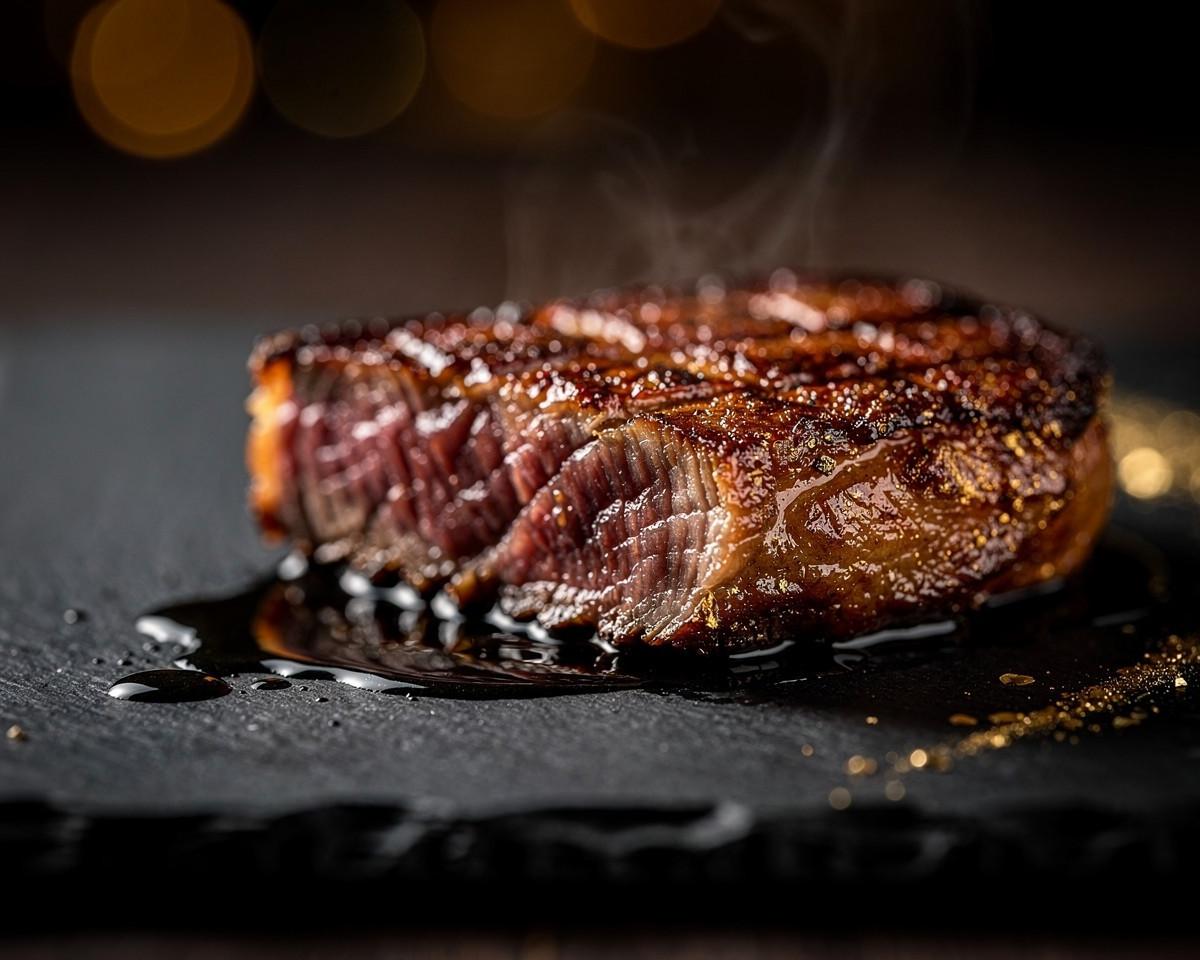
A gloriously seared filet mignon with a lacquered, mahogany crust that crackles at the touch and a buttery, rose-pink interior that melts on the tongue — this is the steak that makes guests fall silent at the first bite. Achieved through a screaming-hot cast iron sear followed by a luxurious herb butter baste, this technique produces steakhouse results in your own kitchen. Reserve this for date nights, anniversaries, or any evening that deserves to feel extraordinary.
- Total time
- 40 min
- Servings
- 2
- Calories
- 620
- Protein
- 52g
Ingredients
- 2 pieces (8 oz each) center-cut filet mignon steaks, 1.5–2 inches thick
- 1.5 tsp, plus more to finish kosher salt
- 1 tsp freshly cracked black pepper
- 2 tbsp neutral high-smoke-point oil (avocado or grapeseed)
- 4 tbsp (57g) unsalted butter, cut into 1-tablespoon pats
- 3 cloves garlic cloves, smashed and skin removed
- 4 sprigs fresh thyme sprigs
- 1 sprig fresh rosemary sprig
- 1/4 tsp flaky sea salt (such as Maldon)
- 1/4 tsp freshly cracked black pepper
Instructions
- 1
Remove the filet mignon steaks from the refrigerator 45 minutes before cooking and place them on a wire rack set over a rimmed baking sheet at room temperature. This critical step allows the internal temperature to rise evenly so the center cooks through without the exterior overcooking. Cold meat hitting a hot pan causes uneven cooking and excessive moisture loss.
- 2
Pat both steaks completely dry on all sides — top, bottom, and the cylindrical edge — using several sheets of paper towels. Press firmly; any surface moisture will steam instead of sear, robbing you of that dark mahogany crust. Repeat until the paper towel comes away virtually dry.
- 3
Season each steak generously and evenly on all surfaces — top, bottom, and around the sides — with 1.5 tsp kosher salt total and 1 tsp freshly cracked black pepper. Press the seasoning gently into the meat with your palm so it adheres. The steaks should look visibly salt-coated, not dusty. Let them sit uncovered on the rack for the remainder of the 45-minute rest.
- 4
Preheat your 10-inch cast iron skillet over high heat for a full 4–5 minutes until it is smoking aggressively. You can test readiness by holding your palm 3 inches above the surface — it should feel intensely radiating within 1 second. A properly preheated pan is the single most important factor in achieving a deep, even sear. Turn on your range hood or open a window now, as this process will produce significant smoke.
- 5
Add the 2 tablespoons of avocado or grapeseed oil to the screaming-hot skillet. The oil will immediately begin to shimmer and send up wisps of smoke — this is correct. Swirl the pan carefully to coat the bottom, using oven mitts as the handle will be dangerously hot.
- 6
Using long-handled metal tongs, carefully lower each steak away from you into the skillet, laying them flat and positioning them at least 1 inch apart. You should hear an immediate, aggressive sizzle — a loud, crackling roar. Do NOT move, press, or disturb the steaks for a full 2.5–3 minutes. Pressing steaks down squeezes out precious juices and interrupts crust formation. Let the pan do its work.
- 7
After 2.5–3 minutes, check the first side by gently lifting one steak with tongs: the bottom crust should be a deep, dark mahogany-brown — nearly the color of dark chocolate — with clearly defined grill-like coloration across the entire surface. If it still looks pale gold, let it go another 30–60 seconds. Once the sear is right, flip each steak exactly once using the tongs.
- 8
Immediately after flipping, reduce the heat to medium-high and add the 4 tablespoons of butter, 3 smashed garlic cloves, 4 thyme sprigs, and 1 rosemary sprig to the skillet around (not on top of) the steaks. The butter will melt quickly and begin to foam white — that foam is water evaporating from the butter and is a good sign.
- 9
Once the butter foam subsides and the butter turns a pale golden color (about 30–45 seconds after adding), begin basting: tilt the skillet slightly toward you so the butter pools at the far edge, then use a large spoon to continuously and rapidly scoop the hot, herb-and-garlic-infused butter up and pour it over the tops of the steaks in a steady stream. Baste continuously, never stopping, for 60–90 seconds. The tops of the steaks will visibly change color from raw pink to a gorgeous, glistening brown as you baste. Watch the garlic — it should smell nutty and fragrant, not bitter or burnt; if it darkens too quickly, reduce heat to medium.
- 10
While basting, use your instant-read thermometer to check the internal temperature by inserting it horizontally through the side of the steak into the very center. For medium-rare (the ideal doneness for filet mignon), pull the steaks off heat at 120–122°F (49–50°C) — they will carry-over cook to a perfect 130°F (54°C) during resting. For medium, pull at 130°F (54°C) to reach 135–140°F (57–60°C) after rest. Avoid going beyond medium — filet mignon becomes dry and loses its signature tenderness when overcooked.
- 11
Once you reach your target pull temperature, use tongs to sear each steak upright on its cylindrical edge for 20–30 seconds per section, rotating slowly around the circumference. This ensures that gorgeous, even crust forms all the way around — just as visible in the photo. Spoon a little butter over the top as you rotate.
- 12
Transfer both steaks to a clean cutting board or the wire rack (do NOT use a plate — the flat surface will trap steam and soften your hard-won crust). Tent loosely — not tightly — with a single sheet of aluminum foil. Resting is non-negotiable: the internal proteins are still contracting from the heat, and resting allows the juices to redistribute throughout the steak. Let rest for exactly 5 minutes for 8 oz filets — no longer or the crust will soften unnecessarily.
- 13
While the steaks rest, pour any remaining pan butter through a fine strainer (discarding the spent herbs and garlic) into a small bowl to use as a finishing drizzle, if desired. This clarified herb butter is deeply savory and aromatic.
- 14
After resting, finish each steak with a pinch of flaky Maldon sea salt and a few extra cracks of fresh black pepper directly on the top surface — the flaky crystals will slightly dissolve against the hot, glistening meat and amplify every savory note. Drizzle a teaspoon of the reserved herb butter over the top if using.
- 15
Plate the steaks individually on warmed plates or present them on a sleek black slate board as shown. The interior should reveal a wall-to-wall blush-pink center with only a very thin, darker band near the crust — this gradient is the mark of proper searing technique. Serve immediately while the crust is still crisp and the steam is still rising. This steak waits for no one.
Tools you’ll need
- 10-inch cast iron skillet
- instant-read meat thermometer
- long-handled metal tongs
- large cutting board
- small saucepan or skillet for warming
- aluminum foil
- pastry brush or large spoon (for basting)
- oven-safe wire rack
- rimmed baking sheet
- sharp chef's knife
- paper towels
- kitchen timer
Cook smarter
Get matched recipes for what’s in your fridge
Custrd is a free iOS app that finds real recipes from the ingredients you already have. No more grocery-list aspirations.



