Whole Roasted Duck with Lemon and Garlic
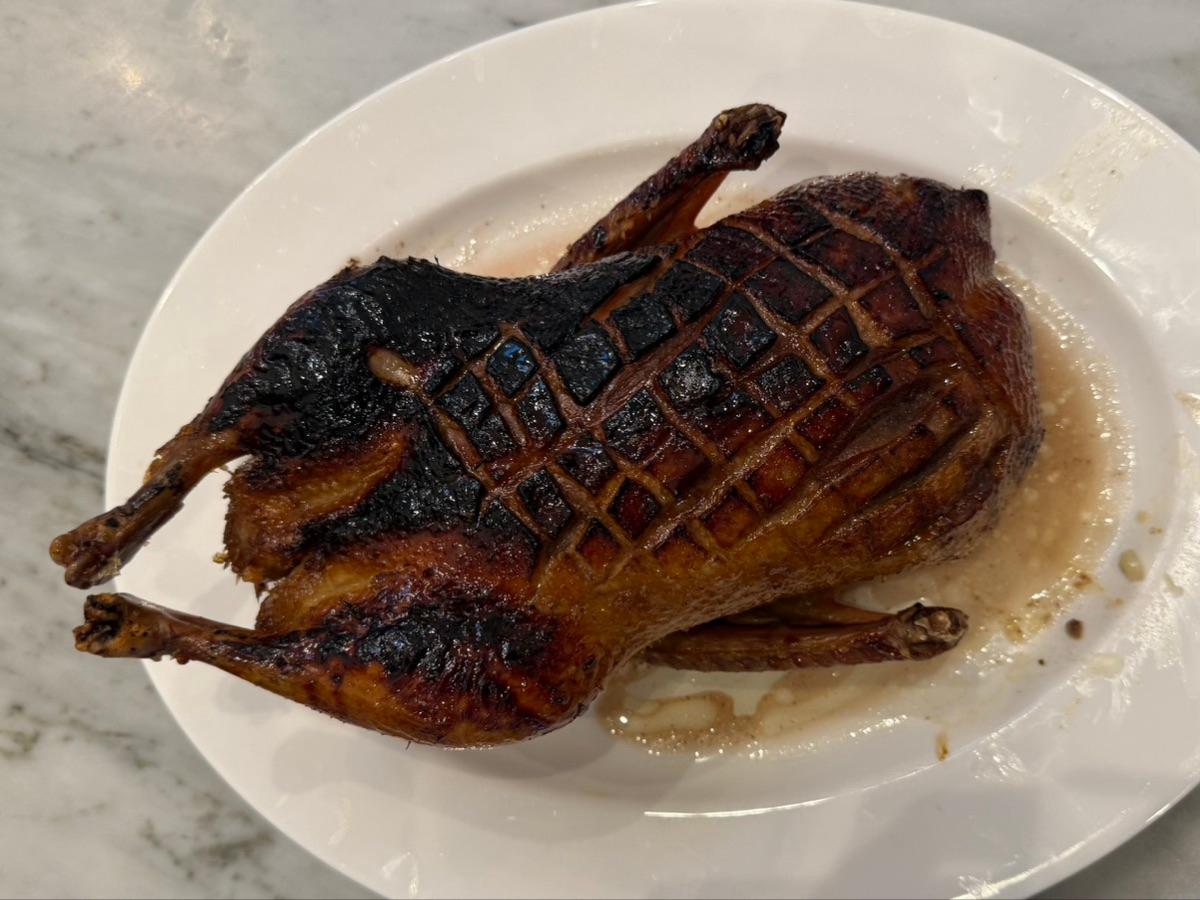
A whole duck slow-roasted to render every last drop of fat through a deep crosshatch-scored skin, stuffed with lemon and garlic for aromatic perfume from the inside out. The skin lacquers to a near-black mahogany during the final blast of heat — crisp, glossy, and deeply savory all the way through.
- Total time
- 195 min
- Servings
- 4
- Calories
- 680
- Protein
- 48g
Ingredients
- 1 whole duck, 5–6 lbs
- 1 kosher salt
- 1 black pepper
- 1 lemon, quartered
- 4 garlic cloves, lightly crushed
- 2 sprigs fresh thyme
- 1 sprig fresh rosemary
- 2 tbsp honey
- 1 tbsp soy sauce
- 1 tbsp fresh lemon juice
- 1 tsp Dijon mustard
Instructions
- 1
Remove the duck from its packaging and pull out the giblets from the cavity — set aside or discard. Trim any large flaps of excess fat hanging from the cavity opening with kitchen shears. Place the duck breast-side up on a rack in the sink. Bring a full kettle of water to a rolling boil and pour it slowly and evenly over the entire top surface of the duck — the skin will visibly tighten and contract. Flip the duck and repeat on the back. This step, borrowed from the Chinese Peking duck method, tightens the skin proteins and is the single most effective thing you can do for crackling skin. Pat the duck completely dry inside and out with paper towels.
- 2
Using the tip of a very sharp paring knife held nearly parallel to the bird, score the breast skin in a tight crosshatch pattern — aim for squares about 1 cm across. Cut deep into the fat layer but stop before hitting the meat. The smaller the squares, the crispier each individual piece will be. Also prick the skin all over the thighs and sides where fat is thick, but do not score the legs as the skin there is thinner and will dry out. Season generously all over with kosher salt and black pepper, rubbing it into the scored cuts so it reaches the fat layer. Season inside the cavity too.
- 3
Stuff the cavity with the quartered lemon, crushed garlic cloves, thyme, and rosemary — these are aromatics only, not for eating, but they perfume the meat from the inside as the duck roasts. Fold the loose skin flaps at each end of the cavity inward to seal in the aromatics. Truss the legs by crossing them and tying firmly with butcher’s twine. Tuck the wings underneath the body. If time allows, place the duck uncovered on the rack in the fridge for at least 4 hours or overnight — this air-dries the skin further and dramatically improves crispiness.
- 4
Remove the duck from the fridge 30 minutes before roasting to take the chill off. Preheat the oven to 350°F. Place the duck breast-side up on the rack in the roasting pan. Roast for 1 hour undisturbed.
- 5
After 1 hour, remove the duck from the oven. Using a sharp knife or fork, prick the skin all over again — the rendered fat will bubble out of the holes freely at this point, which is exactly right. Flip the duck breast-side down and return to the oven for 40 minutes. Breast-side down means the breast meat sits in the rendered fat pooling in the pan, keeping it extraordinarily moist while the back skin crisps.
- 6
After 40 minutes, flip the duck breast-side up again. Prick the skin one final time. Return to the oven and increase the temperature to 400°F. Roast for a further 30 to 40 minutes, basting the duck with the rendered fat from the pan every 15 minutes using a basting brush or large spoon.
- 7
While the duck finishes roasting, combine the honey, soy sauce, lemon juice, and Dijon mustard in a small bowl and whisk until smooth. In the final 15 minutes of roasting, brush the glaze generously over the entire duck — especially the scored breast. The sugars in the honey will caramelize rapidly at 400°F and produce the deep mahogany lacquer visible in the photo. Brush a second coat 7 minutes later.
- 8
The duck is done when an instant-read thermometer inserted into the thickest part of the thigh (without touching bone) reads 165°F. If the breast is done but the thighs are not, tent the breast loosely with foil and return the duck to the oven for 10-minute intervals until the thighs reach temperature.
- 9
Transfer the duck to a large platter and rest uncovered for 15 to 20 minutes — do not tent it during resting or the skin will steam and soften. The internal temperature will continue rising 5 to 8°F during the rest. Carefully remove and discard the lemon, garlic, and herbs from the cavity. Carve by removing the legs and thighs first, then slicing the breast meat off the bone in long, even strokes. Spoon any remaining pan juices over the carved meat before serving.
Tools you’ll need
- Roasting pan with rack
- Sharp paring knife (for scoring)
- Instant-read meat thermometer
- Butcher’s twine
- Kettle (for boiling water blanch)
- Basting brush
- Kitchen shears
- Large platter for resting
Cook smarter
Get matched recipes for what’s in your fridge
CookSnap is a free iOS app that finds real recipes from the ingredients you already have. No more grocery-list aspirations.