Vit Quay
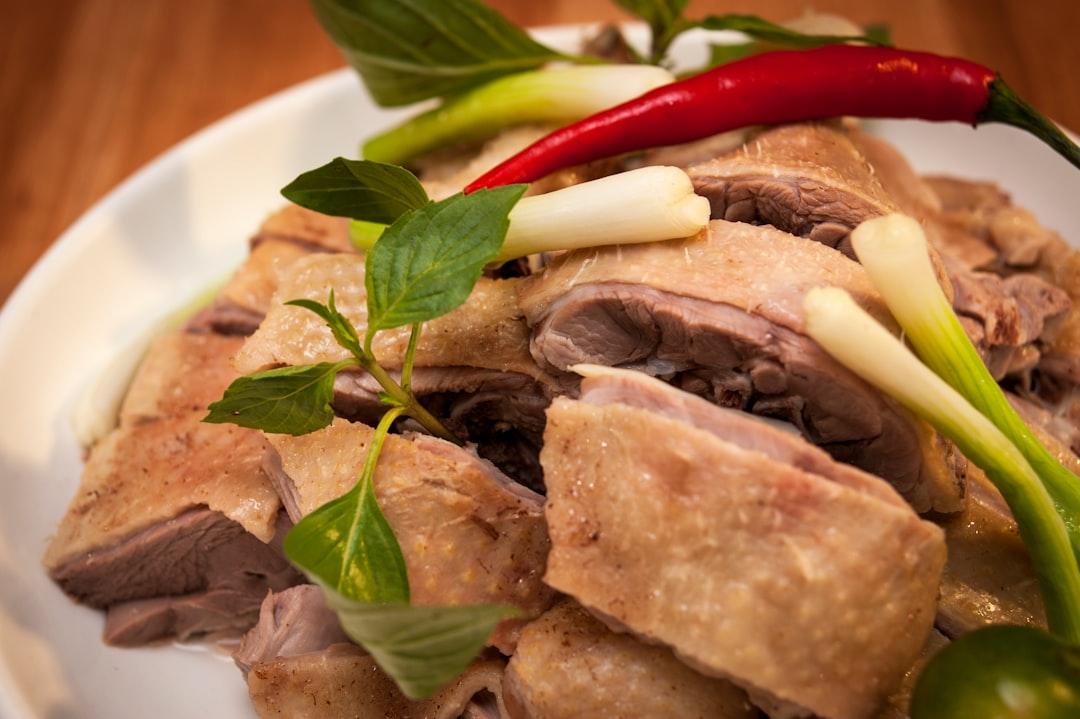
Crispy-skinned roasted duck with a glossy mahogany exterior and tender, succulent meat. A showstopping Vietnamese classic that's surprisingly achievable at home.
- Total time
- 120 min
- Servings
- 4
- Calories
- 485
- Protein
- 42g
Ingredients
- 1 bird (4-5 lbs) whole duck
- 2 tablespoons kosher salt
- 1 teaspoon black pepper
- 1 teaspoon five-spice powder
- 4 cloves garlic cloves, smashed
- 3 slices fresh ginger, coin-sized slices
- 3 stalks scallions, cut into 2-inch pieces
- 3 tablespoons honey
- 2 tablespoons low-sodium soy sauce
- 1 tablespoon rice vinegar
- 2 tablespoons water
- 1 lime fresh lime
- ¼ cup, loosely packed fresh cilantro
- 2 stalks scallions, thinly sliced
Instructions
- 1
Remove the duck from the refrigerator 30 minutes before cooking — this allows it to come closer to room temperature for more even cooking. Pat the duck completely dry inside and out with paper towels, getting into all the crevices. Damp skin will steam instead of crisping.
- 2
Trim excess skin and fat around the neck and cavity opening with kitchen shears or a sharp knife. Leave the skin intact everywhere else — that's what becomes mahogany and crispy. Place the duck on a cutting board.
- 3
Season the cavity generously: sprinkle 0.5 tablespoon kosher salt and 0.25 teaspoon black pepper inside. Stuff the cavity with 4 smashed garlic cloves, 3 coin-sized slices of fresh ginger, and 3 scallion pieces cut into 2-inch lengths. These aromatics steam the inside while flavoring the meat.
- 4
Rub the outside of the duck with the remaining 1.5 tablespoons kosher salt, 0.75 teaspoon black pepper, and 1 teaspoon five-spice powder. Be thorough but gentle — you want an even coating without tearing the skin. Pay special attention to the legs and thighs.
- 5
Position an oven rack in the center and preheat to 450°F. Line a 9×13-inch roasting pan with foil for easy cleanup. Place a V-rack or flat roasting rack in the pan — this elevates the duck so hot air circulates underneath, crisping the skin on all sides. If you don't have a rack, crumple foil into a ring shape in the pan bottom.
- 6
Set the duck breast-side up on the rack. Roast at 450°F for 20 minutes — you're rendering the fat and starting the skin browning. You'll see fat begin to pool in the pan; this is good. Leave the oven closed during this time.
- 7
Lower the heat to 350°F and continue roasting for 50-60 minutes more. The duck is done when an instant-read thermometer inserted into the thickest part of the thigh (without touching bone) reads 165°F. The skin should be deep mahogany brown and crispy-looking.
- 8
While the duck roasts, prepare the glaze: combine 3 tablespoons honey, 2 tablespoons low-sodium soy sauce, 1 tablespoon rice vinegar, and 2 tablespoons water in a small bowl. Whisk until the honey dissolves. Set aside.
- 9
In the final 10 minutes of cooking, brush the glaze evenly over the duck skin. Brush again with the remaining glaze 2-3 minutes before it's done. This creates a lacquered, glossy finish. Watch carefully — if the glaze darkens too much, tent loosely with foil.
- 10
Transfer the duck to a cutting board and rest for 10 minutes before cutting — carryover cooking will bring the internal temperature up slightly, and resting allows juices to redistribute throughout the meat instead of running all over the board.
- 11
Using a sharp chef's knife or kitchen shears, cut the duck into quarters: two legs (thighs and drumsticks attached) and two breast halves. For a more refined presentation, separate the thighs from drumsticks and slice the breast meat against the grain into 0.5-inch strips.
- 12
Arrange the duck on a serving platter. Scatter with 0.25 cup fresh cilantro leaves and 2 thinly sliced scallions. Cut 1 lime into wedges and arrange around the platter. Serve immediately — crispy skin is best eaten right away.
Tools you’ll need
- instant-read thermometer
- 9×13-inch roasting pan
- V-rack or flat roasting rack
- foil
- paper towels
- kitchen shears or sharp chef's knife
- cutting board
- small bowl
- whisk
- brush or spoon for glazing
Cook smarter
Get matched recipes for what’s in your fridge
CookSnap is a free iOS app that finds real recipes from the ingredients you already have. No more grocery-list aspirations.



