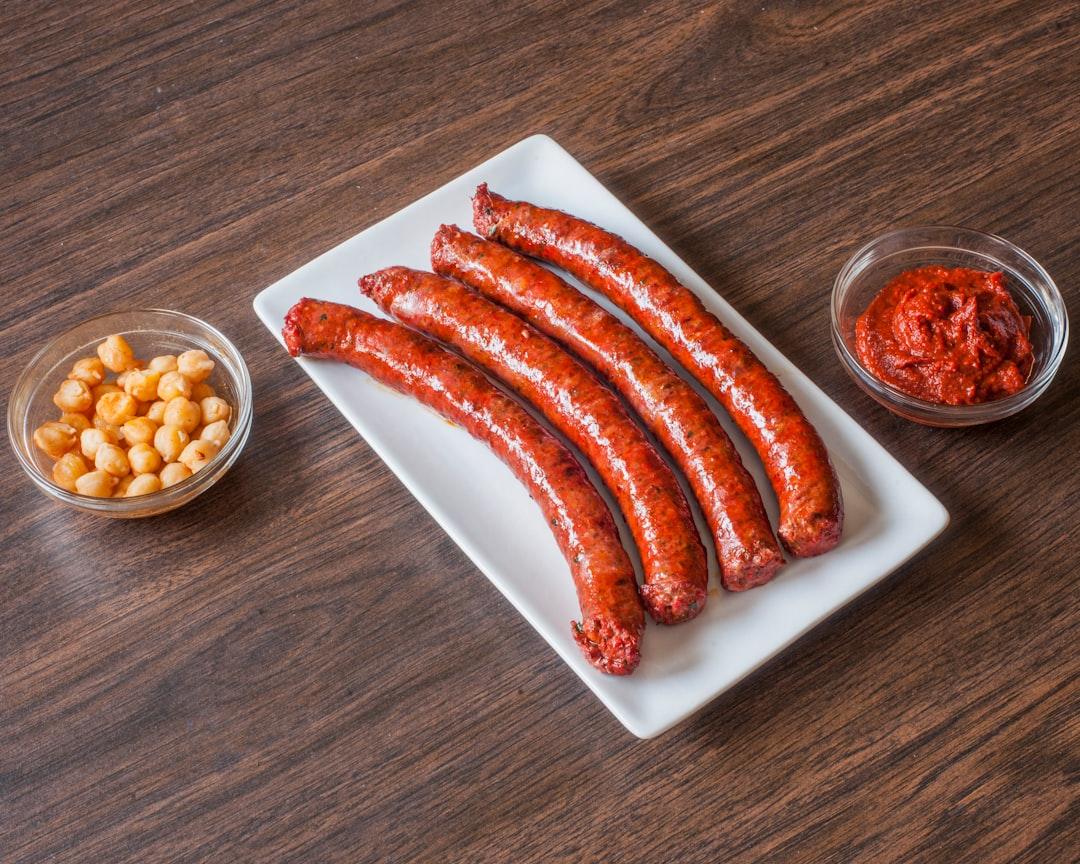
Linguiça Calabresa
A spiced Brazilian pork sausage with smoky depth and fiery heat, traditionally grilled or pan-fried. This homemade version rivals street vendors with vibrant flavor and perfect texture.
- Total time
- 45 min
- Servings
- 4
- Calories
- 520
- Protein
- 32g
Ingredients
- 2 lbs ground pork shoulder
- ½ lbs pork back fat, finely diced
- 6 cloves garlic cloves, minced
- 1.5 tbsp smoked paprika
- 1 tsp cayenne pepper
- 1 tsp black pepper, freshly ground
- 2 tsp kosher salt
- ¼ tsp pink curing salt (sodium nitrite)
- 2 tbsp red wine vinegar
- ¼ cup ice-cold water
- 1 package hog casings, soaked in water for 30 minutes
Instructions
- 1
Set up your sausage-making station: place the grinding bowl and paddle attachment, a 12-inch metal mixing bowl, and your sausage stuffer in the freezer for at least 30 minutes — cold equipment prevents the fat from smearing and gives you better texture.
- 2
Cut the 2 lbs of pork shoulder into 1-inch cubes, removing any large chunks of gristle or silvery sinew as you go. Spread the cubes on a parchment-lined sheet tray and freeze for 20 minutes until very firm but not rock-hard — this keeps the grind light and prevents heat buildup.
- 3
Cut the 0.5 lbs of pork back fat into small dice and freeze separately on another sheet tray for 20 minutes.
- 4
Remove the soaked hog casings from water, rinse gently inside and out under cold running water, and lay them on a wet towel — they should feel slippery and ready to load onto the sausage stuffer horn.
- 5
Remove the cold pork and fat from the freezer. Working in batches if your grinder is small, grind the pork shoulder and fat together through the medium die directly into your pre-chilled metal bowl. The mixture should look evenly textured and cold to the touch — if it feels warm or begins to stick, pause and chill everything for 5 more minutes.
- 6
Mince 6 garlic cloves very finely — you want tiny fragments, not large chunks. Add the minced garlic, 1.5 tbsp smoked paprika, 1 tsp cayenne pepper, 1 tsp freshly ground black pepper, 2 tsp kosher salt, and 0.25 tsp pink curing salt to the ground meat and fat.
- 7
Pour in 2 tbsp red wine vinegar and 0.25 cup ice-cold water. Using a cold wooden spoon or your clean cold hands, mix gently but thoroughly for about 2 minutes — you want the meat and spices fully combined and the mixture to hold together when squeezed. Stop mixing as soon as everything is evenly distributed; overmixing makes the sausage dense and tough.
- 8
Test your seasoning: form a small patty (about 1 tbsp) and cook it in a 10-inch skillet over medium heat for 2-3 minutes per side until cooked through. Taste it — adjust salt, cayenne, or paprika in the remaining mixture if needed. The flavor should be bold, spicy, and unmistakably smoky.
- 9
Fit your sausage stuffer with the medium nozzle and load a soaked hog casing onto the horn — run cold water through it first to ensure it slides on smoothly. Fill the stuffer with the meat mixture and begin extruding, guiding the casing onto the nozzle with your other hand. Fill slowly and steadily; if the casing splits, stop, tie off that section, and begin fresh. You should make about 8-10 sausages, each about 5-6 inches long.
- 10
Once all the meat is stuffed, gently prick each sausage 3-4 times with a fine needle or thin skewer to release any air pockets — this prevents bursting during cooking. Coil the sausages on a parchment-lined tray, cover loosely with plastic wrap, and refrigerate for at least 4 hours or up to overnight — this helps the flavors meld and makes them easier to handle.
- 11
For grill method (traditional): Preheat your grill or grill pan to medium-high heat, about 375°F if you have a thermometer. Place the sausages directly on the grates and grill for 8-10 minutes, turning every 2-3 minutes, until they are deeply browned on all sides and the internal temperature reaches 160°F when measured with an instant-read thermometer inserted horizontally into the thickest part.
- 12
For pan method: Place a 12-inch cast iron skillet over medium-high heat and let it preheat for 2 minutes. Once it's hot enough that a drop of water dances on contact, add the sausages (no oil needed — they release enough fat). Cook for 10-12 minutes, turning every 2-3 minutes, until they are caramelized on all sides and register 160°F internally. Listen for a gentle, steady sizzle — if it's loud and angry, lower the heat slightly.
- 13
Once cooked through, transfer the sausages to a clean cutting board and rest for 3-4 minutes — the internal temperature may climb slightly higher during resting, which is fine and ensures the center is cooked through. They will also firm up slightly, making them easier to slice or serve whole.
- 14
Serve the linguiça calabresa whole or sliced on the bias into 0.75-inch rounds. Plate alongside grilled polenta, white rice, black beans, or fresh lime wedges. A drizzle of hot sauce or a squeeze of lime brightens the deep, smoky flavor. Linguiça is equally delicious in a crusty white sandwich roll with grilled peppers and onions, or chopped into rice and black bean dishes.
Tools you’ll need
- stand mixer with grinding attachment (or hand-crank meat grinder)
- sausage stuffer with medium nozzle
- instant-read thermometer
- 12-inch cast iron skillet or grill pan
- fine needle or thin skewer
- parchment paper
- sheet trays
- 10-inch skillet
- wooden spoon
- cutting board
Cook smarter
Get matched recipes for what’s in your fridge
CookSnap is a free iOS app that finds real recipes from the ingredients you already have. No more grocery-list aspirations.