Thai Crispy Coconut Crepes
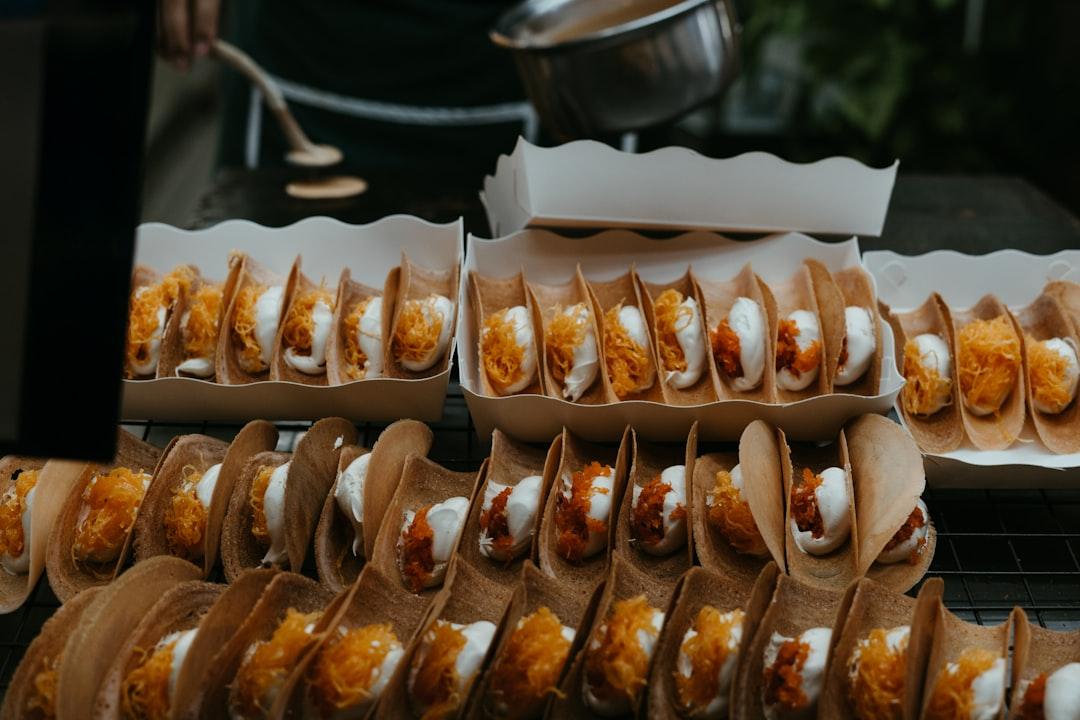
Crispy Thai crepes with sweet custard filling and shredded coconut topping. These delicate, golden shells showcase Thailand's mastery of texture and balance of sweet and savory.
- Total time
- 45 min
- Servings
- 8
- Calories
- 285
- Protein
- 6g
Ingredients
- ¾ cup all-purpose flour
- ¼ cup tapioca starch
- 2 whole large eggs
- ¾ cup coconut milk
- ½ cup water
- 1 tablespoon granulated sugar
- ¼ teaspoon salt
- 2 tablespoons vegetable oil for brushing
- 3 whole large eggs
- ½ cup palm sugar or light brown sugar
- ½ cup coconut milk
- ⅛ teaspoon salt
- 1 cup unsweetened shredded coconut
- ½ cup roasted peanuts, roughly chopped
Instructions
- 1
In a small saucepan, crack 3 large eggs directly into the pan and whisk vigorously with a fork to break the yolks. Add 0.5 cup palm sugar (or light brown sugar, crumbled if packed), 0.5 cup coconut milk, and 0.125 teaspoon salt. Whisk until the sugar begins to dissolve.
- 2
Set the saucepan over medium heat and stir constantly with a wooden spoon, scraping the sides and bottom to prevent lumps. Cook until the mixture thickens into a glossy custard that coats the back of the spoon, about 8-10 minutes — when you run your finger across the coated spoon, it should leave a clean trail. The custard will darken slightly and smell caramelized. Transfer to a bowl to cool while you make the crepes.
- 3
In a large mixing bowl, whisk together 0.75 cup all-purpose flour, 0.25 cup tapioca starch, 1 tablespoon granulated sugar, and 0.25 teaspoon salt. The tapioca starch creates the signature crispy, slightly chewy texture.
- 4
Crack 2 large eggs into a separate bowl and whisk with a fork until the yolks and whites are fully combined. Pour the eggs into the dry ingredients along with 0.75 cup coconut milk and 0.5 cup water. Whisk until you have a smooth, thin batter with the consistency of heavy cream — no lumps. Let the batter rest for 10 minutes so the starches hydrate.
- 5
Place a khanom buang mold (or small crepe pan) over medium-high heat — if using a specialty mold with two hinged metal shells, clamp it closed first. Let it preheat for 2 minutes until a drop of water sizzles immediately on contact. You should see thin wisps of steam rising from the mold.
- 6
Lightly brush the inside of the preheated mold with vegetable oil using a silicone brush. This prevents sticking and creates even browning.
- 7
Dip a small ladle into the rested batter and pour about 3 tablespoons into the mold — the amount depends on your mold size, but the batter should coat the entire interior in a thin, even layer. Quickly close the mold if it's the hinged type, or use two small wooden paddles to spread the batter thinly if using a traditional two-pan method.
- 8
Cook for 1.5 to 2 minutes, then flip or open the mold. The crepe should be golden brown and starting to crisp at the edges. Cook the other side for another 1 to 1.5 minutes until the entire shell is evenly golden and the edges begin to curl slightly — this indicates the crepe is crisping. The shell should smell nutty and caramelized.
- 9
Carefully remove the hot crepe with a wooden stick or small metal spatula and place it on a wire cooling rack, curved-side up to form a boat shape — the heat will continue to set the structure. Work quickly as the crepe hardens as it cools. Repeat with remaining batter, re-oiling the mold between batches. You should yield 8-10 crepes depending on mold size.
- 10
Toast 1 cup unsweetened shredded coconut in a dry 10-inch skillet over medium heat, stirring constantly with a wooden spoon. Toast until fragrant and light golden, about 3-4 minutes — watch carefully as it browns quickly and can scorch. Transfer to a small bowl to cool.
- 11
Roughly chop 0.5 cup roasted peanuts into small pieces — you want varied sizes for texture.
- 12
Fill each cooled crepe shell with about 2 tablespoons of the custard filling, mounding it slightly in the center. Sprinkle 2 tablespoons of the toasted shredded coconut over the custard, then scatter about 1 tablespoon of the chopped peanuts on top. Serve immediately on a small plate — khanom buang are best enjoyed fresh and warm, with the contrasting temperatures and textures of crispy shell, cool custard, and crunchy toppings.
Tools you’ll need
- small saucepan
- wooden spoon
- large mixing bowl
- whisk
- fork
- separate bowl
- khanom buang mold (or crepe pan with wooden paddles)
- silicone brush
- small ladle
- wooden stick or small metal spatula
- wire cooling rack
- 10-inch skillet
- small bowls
Cook smarter
Get matched recipes for what’s in your fridge
CookSnap is a free iOS app that finds real recipes from the ingredients you already have. No more grocery-list aspirations.