What Can I Make with Egg and Rice Noodles?
With egg and rice noodles, you can make 15-Min Boat Noodle Soup with Beef & Soft Egg, a classic Thai dish combining tender noodles, a runny egg, and savory broth. These two ingredients are staples in Southeast Asian cuisine and pair beautifully with aromatics, proteins, and sauces to create restaurant-quality meals in minutes.
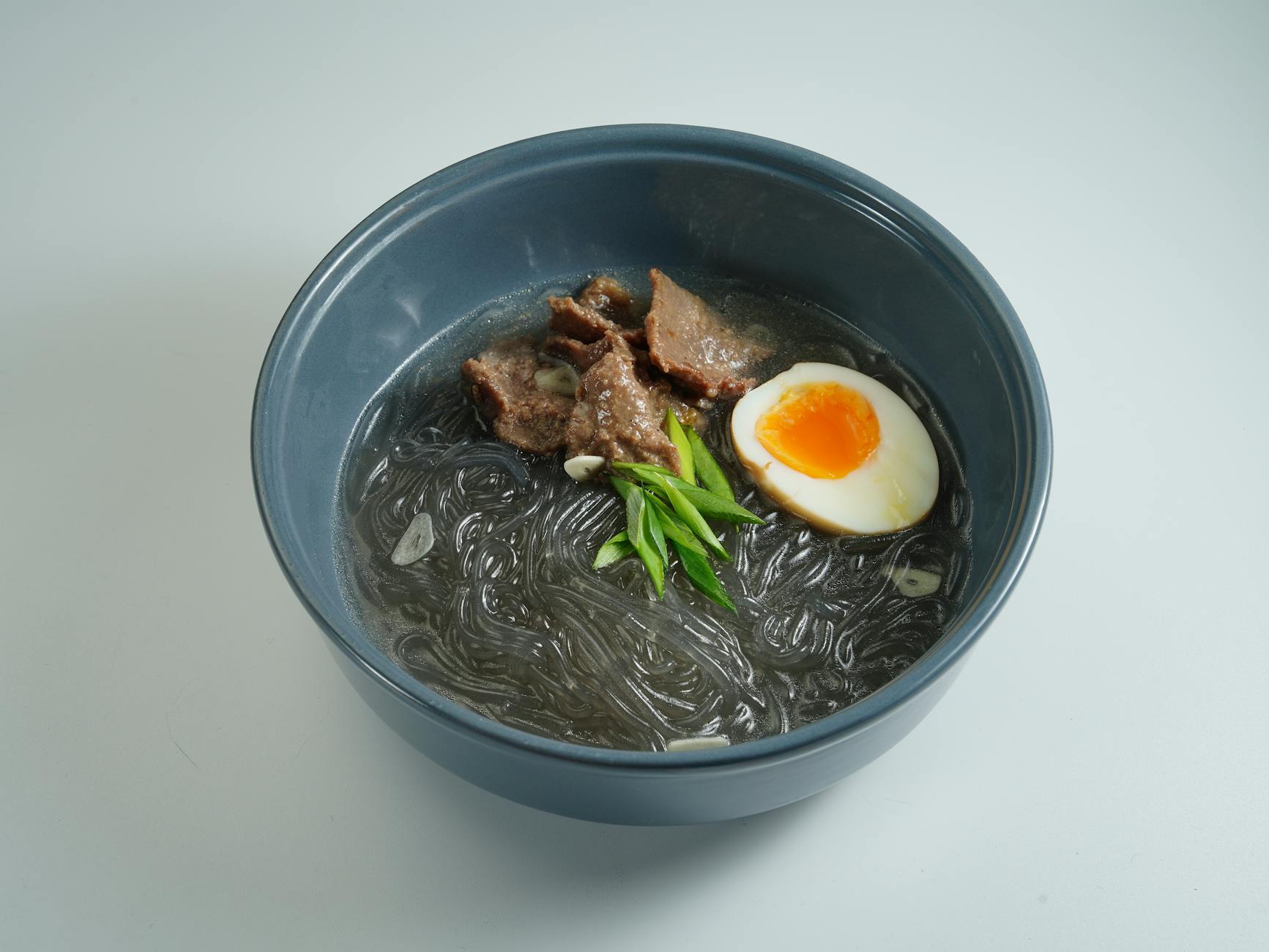 Top recipe
15-Min Boat Noodle Soup with Beef & Soft Egg
Dark, aromatic Thai broth infused with soy and garlic, spiked with chili. Beef, noodles, and a soft-boiled egg come together in under 15 minutes—the weeknight version of Bangkok's famous street soup.
Ingredients
- •beef broth
- •soy sauce
- •ground beef
- •rice noodles (dried)
- •eggs
- •red chili flakes
Steps
- 1Bring a pot of water to boil. Add eggs and cook 6 minutes until soft-boiled, whites set but yolks still runny.
- 2In the same pot, add beef broth and soy sauce. Bring to a boil over high heat.
- 3Add ground beef, breaking it up with a spoon until no pink remains, about 3 minutes.
- 4Add rice noodles directly to the broth. Stir and cook until tender, 4-5 minutes.
- 5Stir in chili flakes. Taste and adjust soy sauce as needed for depth.
- 6Ladle soup into bowls. Peel soft-boiled eggs and halve them, nestle into each bowl, and serve hot.
Why this works
Egg and rice noodles are a dynamic duo in Asian cooking because they complement each other in texture and nutrition. Rice noodles provide a delicate, slightly chewy base that absorbs flavors without overpowering them, while eggs add richness, protein, and body to both broths and stir-fries. The soft yolk acts as a natural sauce, coating the noodles and creating a silky mouthfeel.
From a cooking perspective, these ingredients work across multiple techniques—simmering in aromatic broths for soups, stir-frying with high heat for wok dishes, or poaching gently in simmering liquid. The egg's quick cooking time (3-5 minutes for a soft-boiled egg) matches rice noodles' minimal cooking needs (often just soaking in hot water), making them ideal for fast, weeknight meals.
Flavorwise, eggs are incredibly versatile. They pair with spicy, tangy, and savory elements—think Thai curry pastes, fish sauce, tamarind, and soy sauce. Whether you're making a light, broth-based soup or a rich, wok-charred noodle dish, eggs elevate the dish with umami depth and a luxurious finish that transforms simple ingredients into something memorable.
More you can make
Open in CookSnap to unlock all of these.
Have different ingredients?
Try our free ingredient finder.
Open the recipe finder →Frequently asked
What can I add to egg and rice noodles if I don't have beef?
You can easily substitute beef with pork, shrimp, chicken, or tofu. Pork works great in Pad See Ew, shrimp is perfect for laksa, and plant-based options like tofu suit any stir-fry or soup. The cooking time remains the same, so your 15-minute meal timeline stays intact.
How do I cook the egg perfectly for noodle dishes?
For a soft-boiled egg with a runny yolk (ideal for soups), boil for 5-6 minutes. For a jammy egg, go for 6.5-7 minutes. If you're stir-frying, scramble the egg first and set aside, then add back at the end. For poached eggs in broth, gently crack into simmering liquid and cook for 3-4 minutes.
Do I need to cook rice noodles before adding them to soup?
It depends on thickness. Thin rice noodles (like vermicelli) can go straight into hot broth and soften in 2-3 minutes. Thicker noodles benefit from a quick 1-2 minute soak in boiling water first. Always check package instructions, as cooking times vary by brand and noodle width.
What other ingredients transform these basics into different dishes?
Add coconut milk and curry paste for Thai curries, soy sauce and garlic for stir-fries, tamarind and fish sauce for laksa, or caramel and fish sauce for Vietnamese caramel dishes. Even simple broths with aromatics like ginger, star anise, and scallions create depth. The same base becomes entirely different meals with minimal additions.
Can I meal-prep egg and rice noodle dishes?
Cook noodles and store separately from broth to prevent sogginess—they'll keep 3-4 days in the fridge. Eggs are best cooked fresh, but you can prep hard-boiled eggs ahead. Broths and sauces actually taste better the next day as flavors develop. Just reheat gently and assemble when serving.
Want 15+ more meal ideas from your ingredients?
CookSnap finds dozens of recipes from a single fridge photo, with smart filters for diet, time, and macros.
Get CookSnap — Free