What Can I Make with Egg, Lime, and Rice Noodles?
With egg, lime, and rice noodles, you can make Pad Thai Poo—a classic Southeast Asian dish that combines tender rice noodles with scrambled egg, bright lime juice, and savory seasonings. These three ingredients form the foundation of this beloved street food favorite, with the lime providing acidity that balances the richness of the egg.
 Top recipe
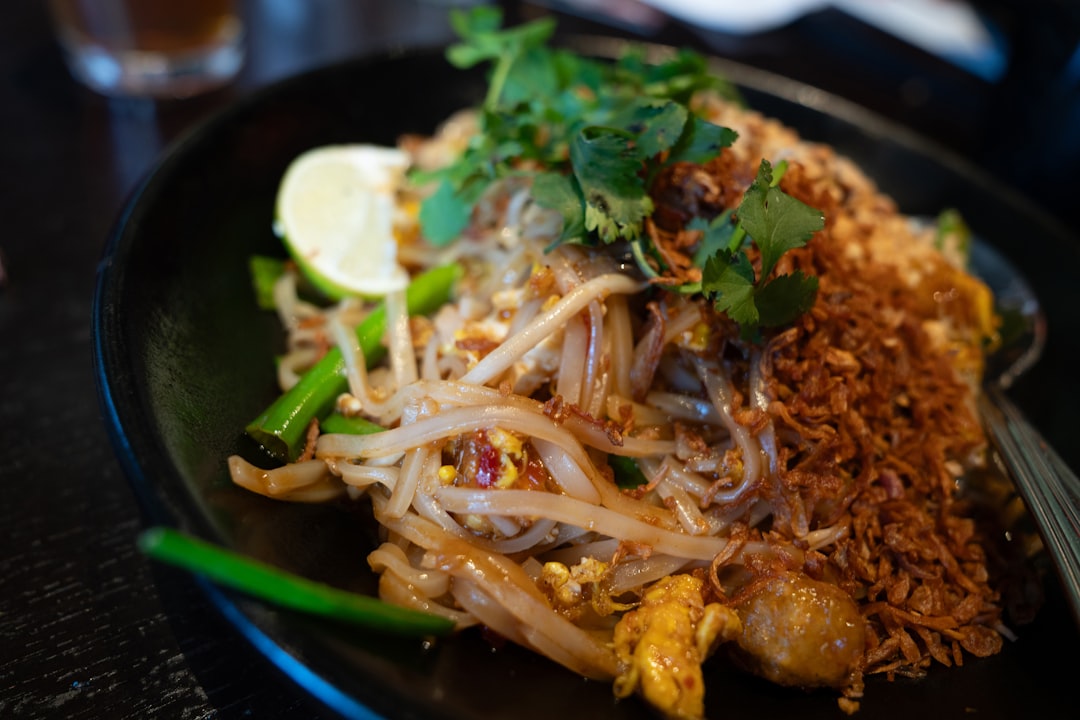
Pad Thai Poo
Thailand's beloved stir-fried rice noodles with succulent crab, finished with a balance of sweet, sour, and salty flavors. Topped with crushed peanuts and a squeeze of lime for brightness.
Ingredients
- •tamarind paste
- •fish sauce
- •palm sugar (or brown sugar)
- •lime juice
- •dried rice noodles (1/4-inch wide)
- •crab meat (fresh or canned, drained)
- •garlic cloves
- •shallot
- •large eggs
- •bean sprouts
- •roasted peanuts, unsalted (roughly crushed)
- •scallions (green parts only)
Steps
- 1Soak the rice noodles in a bowl of room-temperature water for 20 minutes, until they are pliable but still firm enough to hold their shape—they should bend without breaking.
- 2While noodles soak, whisk together the tamarind paste, fish sauce, palm sugar, and lime juice in a small bowl until the sugar dissolves completely.
- 3Mince the garlic cloves until the pieces are smaller than a grain of rice—about the size of pencil-tip dots—and place in a small bowl.
- 4Slice the shallot in half lengthwise from root to tip, then slice each half crosswise into thin half-rings about 1/8-inch thick.
- 5Crack the eggs into a separate small bowl and whisk together with a fork until the yolks and whites are fully combined.
- 6Slice the scallions crosswise at an angle into 1-inch pieces, keeping white parts separate from green parts in two small bowls.
- 7Drain the soaked noodles in a colander, shaking them gently to remove excess water, then spread them on a clean kitchen towel.
- 8Heat 2 tablespoons of oil in a 12-inch skillet or wok over medium-high heat until the oil shimmers and slides quickly across the pan, about 90 seconds.
- 9Add the minced garlic to the hot oil and stir constantly for 15 seconds until the aroma becomes intensely fragrant and fills the kitchen—do not let it brown.
- 10Add the sliced shallot to the pan and stir once every 2–3 seconds for about 1 minute, until the shallots are soft and beginning to turn golden at the edges.
- 11Pour the whisked eggs into the center of the pan and let them sit without stirring for 10 seconds, then scramble them with a wooden spoon into small, bite-sized curds.
- 12Push the egg curds to one side of the pan, then slide the drained rice noodles into the empty space and let them rest undisturbed for 20 seconds—this helps them separate.
- 13Pour the sauce over the noodles and stir the entire mixture with a wooden spoon for 2 minutes, turning and flipping constantly so the noodles coat evenly with sauce.
- 14Add the crab meat and the white parts of the scallions to the pan, then stir constantly for 1 minute until the crab is warmed through and the noodles are tender.
- 15Remove the pan from heat, then taste a small bite of noodle and add a pinch more salt if needed—the dish should taste equally sweet, salty, and sour.
- 16Divide the noodle mixture between two plates, mounding it in the center of each plate and leaving a 1-inch border around the edge.
- 17Scatter the bean sprouts in a loose handful on top of each mound of noodles.
- 18Sprinkle the crushed peanuts evenly over the top of both plates, using about 2 tablespoons per plate.
- 19Scatter the green parts of the scallions and any remaining white parts over the top as a final garnish.
Why this works
Egg, lime, and rice noodles are a naturally harmonious trio rooted in Southeast Asian cooking traditions. Rice noodles provide a delicate, neutral base that absorbs flavors without overpowering, while eggs add protein, richness, and a silky texture when scrambled or fried. The lime juice cuts through the richness of the egg with bright acidity, creating balance and preventing the dish from feeling heavy—this contrast is essential to authentic pad thai flavor profiles.
Chemically, these ingredients work together through both texture and taste. The acid in lime juice helps emulsify the egg and breaks down proteins slightly, creating a more cohesive sauce when combined with other seasonings. Rice noodles have a porous structure that readily absorbs the tangy lime juice and any accompanying sauces or oils, distributing flavor evenly throughout the dish. Together, they create depth: the noodle's starch carries flavor, the egg binds and enriches, and the lime brightens everything.
More you can make
Open in CookSnap to unlock all of these.
Have different ingredients?
Try our free ingredient finder.
Open the recipe finder →Frequently asked
Can I substitute the egg in this recipe?
Yes, you can use tofu for a vegetarian option, or omit it entirely for a lighter noodle dish. However, egg adds important protein and richness that helps create the authentic pad thai texture and mouthfeel.
What other recipes can I make with these three ingredients?
Beyond Pad Thai Poo, you can make simple lime noodle bowls, egg drop noodle soup, or fresh noodle salads. Check CookSnap for more recipe variations using egg, lime, and rice noodles in different cuisines.
How do I prep rice noodles for Pad Thai Poo?
Soak dried rice noodles in room temperature water for 30-40 minutes until pliable but still firm, then drain well. Some cooks prefer boiling for 2-3 minutes. Drain thoroughly to prevent excess moisture in the final dish.
Should I use fresh or bottled lime juice?
Fresh lime juice is strongly recommended for the best flavor and acidity balance. Bottled juice can taste metallic and won't provide the same brightness that fresh lime brings to Pad Thai Poo.
What can I add to make this more filling?
Consider adding protein like shrimp or chicken, or vegetables like bell peppers and green onions. Shrimp Pad Thai is another popular variation that builds on this same ingredient base with additional seafood.
Want 15+ more meal ideas from your ingredients?
CookSnap finds dozens of recipes from a single fridge photo, with smart filters for diet, time, and macros.
Get CookSnap — Free