Silky Watercress, Potato, Carrot & Parsnip Soup Passé
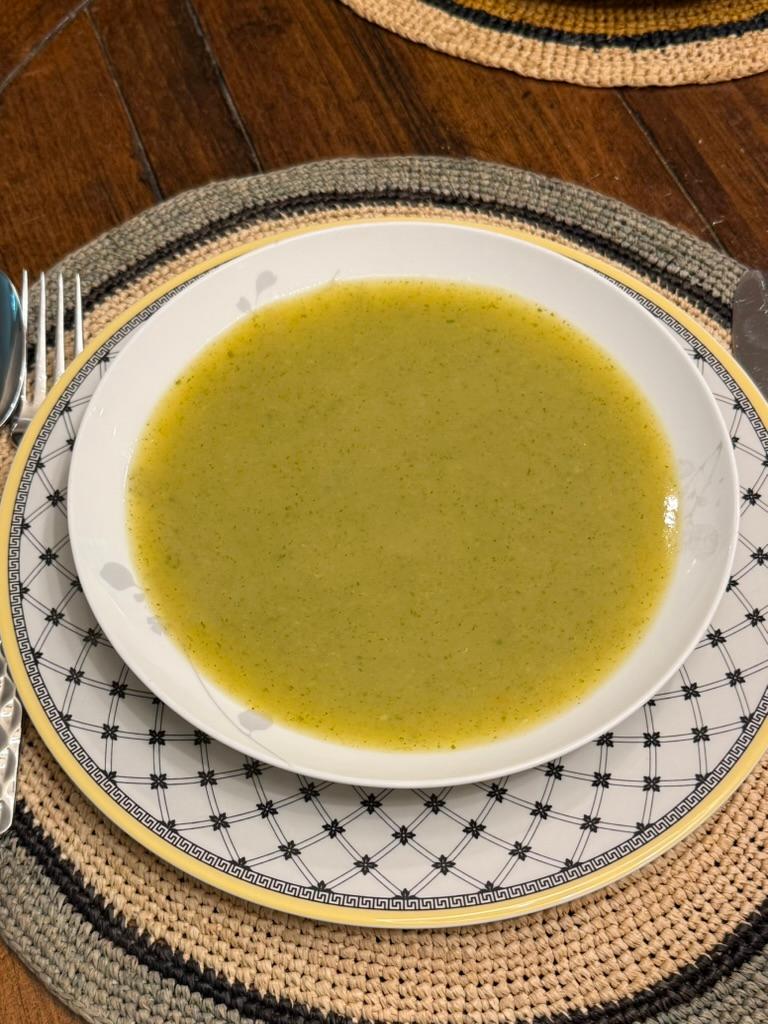
This velvety, vibrant green-gold soup passé blends the peppery bite of fresh watercress with the earthy sweetness of potato, carrot, and parsnip into a silky, restaurant-smooth purée. The vegetables are gently sweated in butter before simmering in a light stock, then blended until perfectly smooth — a technique that coaxes out maximum sweetness and body. It is warming, nourishing, and elegant enough to start a dinner party yet simple enough for a weeknight.
- Total time
- 55 min
- Servings
- 4
- Calories
- 185
- Protein
- 4g
Ingredients
- 2 tbsp unsalted butter
- 1 large (about 200g) yellow onion, peeled and roughly chopped
- 2 cloves garlic cloves, peeled and smashed
- 350 g floury potatoes (such as Maris Piper or Russet), peeled and cut into 2cm cubes
- 2 medium (about 180g total) medium carrots, peeled and cut into 1cm rounds
- 2 medium (about 200g total) parsnips, peeled and cut into 2cm cubes, woody core removed if thick
- 1.2 litres vegetable stock (low-sodium, good quality)
- 100 g fresh watercress, thick stalks trimmed, washed and dried
- 1.5 tsp, plus more to taste kosher salt
- 1/2 tsp, plus more to taste freshly ground white or black pepper
- 60 ml whole milk or single cream (optional, for finishing)
Instructions
- 1
Peel and roughly chop the onion into 2cm pieces — it will be blended later so precision isn't critical. Smash the garlic cloves with the flat of your knife to loosen the skins, then peel and set aside. Peel the potatoes and cut into 2cm cubes, placing them in a bowl of cold water as you work to prevent browning. Peel the carrots and slice into 1cm rounds. Peel the parsnips, halve them lengthways, and if the core looks fibrous and woody (common in large parsnips), cut it away with a shallow V-cut along the length — the core can turn stringy when blended. Cut the parsnip flesh into 2cm cubes. Drain and pat the potatoes dry with a clean towel.
- 2
Wash the watercress thoroughly in a bowl of cold water, swishing gently to dislodge any grit. Lift it out, leaving any sediment behind, and spin or pat dry. Trim away any very thick, tough lower stalks but keep the tender stems — they are full of flavour. Set the watercress aside separately from the root vegetables; it will be added at the very end of cooking to preserve its vivid green colour and peppery character.
- 3
Place your large saucepan or Dutch oven over medium-low heat and add the 2 tablespoons of unsalted butter. Allow the butter to melt completely until it foams and the foam begins to subside — this takes about 1 minute. Do not let it brown; you want a gentle, neutral fat base, not a nutty flavour.
- 4
Add the chopped onion and smashed garlic to the pan. Stir to coat in the butter, then cook over medium-low heat, stirring occasionally with a wooden spoon, until the onion is completely soft, translucent, and smells sweet — about 8 to 10 minutes. Do not rush this step or allow the onion to brown; if it starts to colour at the edges, lower the heat and add a splash of water. Golden or brown onions will dull the bright colour of the finished soup.
- 5
Add the dried potato cubes, carrot rounds, and parsnip cubes to the pan. Stir everything together so the vegetables are coated in the buttery onion base. Cook for 3 minutes, stirring occasionally, until the vegetables begin to smell sweet and slightly earthy — you're just starting to soften their raw edges before adding liquid.
- 6
Pour in all 1.2 litres of vegetable stock. The liquid should come up to roughly 2–3cm above the vegetables; if not, add a little water. Stir in 1.5 teaspoons of kosher salt and 1/2 teaspoon of pepper. Raise the heat to medium-high and bring the soup to a brisk simmer — you'll see small, steady bubbles breaking the surface. Once simmering, reduce the heat to medium-low, partially cover the pan with a lid (leave a 2cm gap for steam to escape), and cook for 20 to 25 minutes, until a potato cube and a parsnip cube can be pierced effortlessly with a fork and offer no resistance.
- 7
Remove the pan from the heat. Add all of the watercress directly into the hot soup and push it under the surface with a spoon — the residual heat will wilt it within 30 to 60 seconds. Do not return the pan to the heat and do not cook the watercress for more than 1 minute total; prolonged cooking turns it khaki and bitter. The soup will now look vivid and deeply green.
- 8
If using a countertop blender: carefully ladle the soup in batches (no more than half-full each time) into the blender jug. SAFETY NOTE: hot liquid creates steam pressure — remove the small cap from the blender lid and cover the opening with a folded kitchen towel held firmly down with your hand to allow steam to escape while preventing splatter. Blend each batch on high speed for 60 to 90 seconds until completely smooth and silky, with no visible fibres or lumps. Pour blended batches into a large clean bowl or pot as you go. If using an immersion blender: leave the soup in the pot, immerse the blender fully before switching it on to avoid splashing, and blend continuously for 2 to 3 minutes, moving through the entire pot until no lumps remain.
- 9
For a restaurant-quality finish, pass the blended soup through a fine-mesh sieve into a clean saucepan, pressing the purée firmly through with the back of a ladle. Discard any fibrous residue left in the sieve. This step is optional but produces an extraordinarily silky, smooth texture. If you skip the sieve, the soup will still be excellent.
- 10
Return the blended soup to the saucepan over medium-low heat. If the consistency seems very thick (it should pour slowly but smoothly from a ladle), loosen it with a splash of additional stock or water — add 30ml at a time until you reach a consistency that coats the back of a spoon lightly. If you want a creamier, richer flavour, stir in 60ml of whole milk or single cream now. Heat gently for 2 to 3 minutes, stirring, until the soup is steaming and hot throughout but not boiling.
- 11
Taste the soup carefully and adjust the seasoning: add more kosher salt in 1/4 teaspoon increments, tasting between each addition. The watercress should be the leading flavour — bright, slightly peppery, and green — with the sweet earthiness of parsnip and carrot as a backdrop and the potato providing body. Add more black or white pepper if needed.
- 12
Ladle the soup into warmed wide, shallow bowls — warm the bowls by filling them with boiling water for 1 minute, then emptying and drying before serving. Serve immediately. Optional garnishes: a swirl of cold cream on the surface, a few fresh watercress leaves, a drizzle of good olive oil, or a grinding of black pepper. Crusty bread or warm rolls on the side are ideal.
Tools you’ll need
- large heavy-bottomed saucepan or Dutch oven (at least 4-quart)
- sharp chef's knife
- cutting board
- vegetable peeler
- wooden spoon
- ladle
- high-powered blender or immersion blender
- fine-mesh sieve (optional, for extra silkiness)
- measuring cups and spoons
- large bowl (for blending in batches)
Cook smarter
Get matched recipes for what’s in your fridge
Custrd is a free iOS app that finds real recipes from the ingredients you already have. No more grocery-list aspirations.



