Five-Cheese Cast Iron Skillet Mac and Cheese
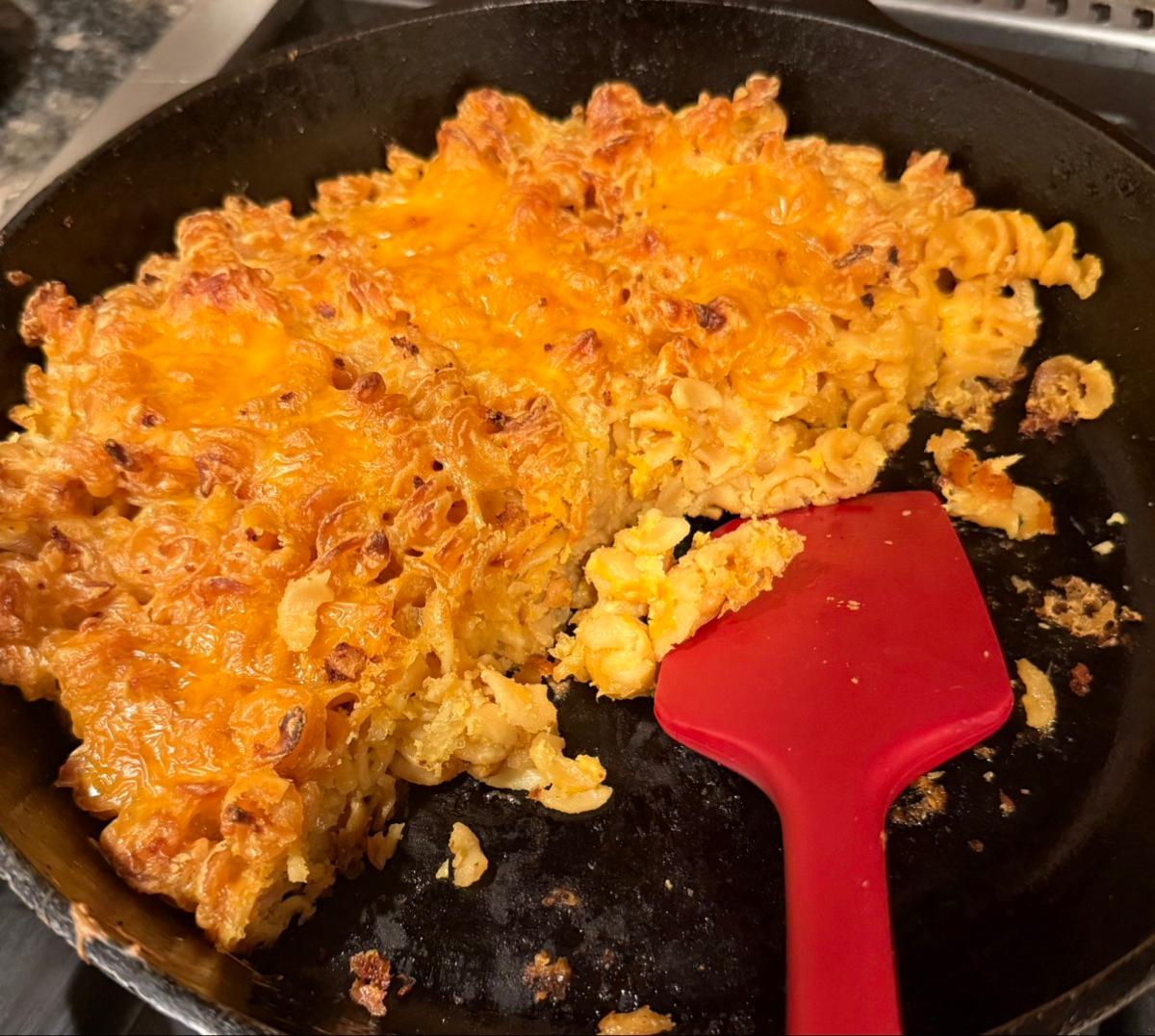
A deeply Southern-style baked mac and cheese made with a roux-based five-cheese sauce — sharp cheddar, gruyère, gouda, mozzarella, and cream cheese — loaded into a cast iron skillet and broiled until the top is blistered, bubbly, and caramelized. The cream cheese is the secret weapon that makes the sauce impossibly silky and keeps it from drying out.
- Total time
- 50 min
- Servings
- 4
- Calories
- 680
- Protein
- 28g
Ingredients
- 0 340 g fusilli or rotini pasta — the corkscrew shape is key; the spiral grooves trap and hold cheese sauce far better than elbow macaroni, ensuring every bite is fully coated rather than just the surface
- 0 1 tbsp sea salt (for pasta water)
- 0 4 tbsp unsalted butter — the base of the roux; use real butter, not margarine, as margarine contains more water which can make the sauce thin and greasy
- 0 3 tbsp all-purpose flour — combined with the butter to form the roux that thickens the entire sauce; cook it long enough to lose the raw flour smell before adding any liquid
- 0 480 ml whole milk, warmed — whole milk produces a richer, more stable sauce than low-fat; warming it before adding prevents the roux from seizing and forming lumps
- 0 240 ml heavy cream — adds body and richness to the sauce and prevents it from tightening up and becoming dry during baking
- 0 115 g cream cheese, softened to room temperature — the fifth cheese and the secret to this recipe’s texture; it melts into the sauce as a stabilizer, creating a silky, glossy consistency that holds up under the broiler without breaking or turning greasy
- 0 150 g sharp cheddar, freshly grated, divided — grate it yourself from a block; pre-shredded cheddar contains anti-caking agents (cellulose powder) that prevent clean melting and produce a grainy, powdery sauce
- 0 100 g gruyère, freshly grated — adds a nutty, slightly sweet depth that cheddar alone cannot provide; the high fat content makes it one of the best melting cheeses for a smooth sauce
- 0 80 g smoked gouda, freshly grated — provides a subtle smokiness that reads as complexity without being obvious; cold-smoked gouda melts better than hot-smoked
- 0 80 g low-moisture mozzarella, freshly grated — the stretch cheese; it pulls the sauce together and creates those long, satisfying cheese pulls when you dig in with the spatula
- 0 1 tsp dijon mustard — a classic mac and cheese trick; the mild acidity sharpens the overall cheesiness without tasting like mustard at all
- 0 1/2 tsp garlic powder
- 0 1/2 tsp onion powder
- 0 1/4 tsp smoked paprika — adds color to the sauce and a faint warmth in the background
- 0 1/4 tsp cayenne pepper — just enough to notice without heat; skip if cooking for children
- 0 1 tsp sea salt
- 0 1/4 tsp black pepper
- 0 60 g sharp cheddar, freshly grated — reserved from above specifically for the top layer; cheddar browns and blisters under the broiler better than the other cheeses in this blend
Instructions
- 1
Bring a large pot of water to a rolling boil. Add the tablespoon of salt — the water should taste noticeably salty, like a mild broth. Add the fusilli and cook for exactly 1 minute less than the package directions indicate. You are intentionally undercooking it at this stage because it will continue cooking in the sauce and again under the broiler. Overcooked pasta absorbs too much sauce and the finished dish becomes dry and stodgy. Drain through a colander and immediately toss the hot pasta with 1 tbsp of butter from the measured amount — this thin coat of fat prevents the pasta from absorbing more liquid while you make the sauce.
- 2
In the cast iron skillet, melt the remaining 3 tbsp of butter over medium heat. Once the butter is fully melted and beginning to foam slightly, add the flour all at once. Whisk constantly and vigorously for 90 seconds to 2 minutes — the mixture will form a smooth paste that pulls away slightly from the sides of the pan. Cook until the raw flour smell disappears and the roux smells faintly nutty. Do not let it darken to brown or the sauce will taste bitter.
- 3
Reduce the heat to medium-low. Begin adding the warmed milk very slowly — pour in about 60 ml at a time, whisking constantly after each addition until fully incorporated before adding more. This slow addition is what prevents lumps from forming. Once all the milk is incorporated and smooth, pour in the heavy cream and whisk to combine. Increase heat to medium and cook, stirring frequently, for 3 to 4 minutes until the sauce thickens enough to coat the back of a spoon — if you draw your finger across the back of the spoon, the line should hold clean.
- 4
Reduce heat to low. Add the softened cream cheese in small spoonfuls and whisk until completely melted into the sauce with no lumps remaining — because it’s at room temperature it will melt in under 1 minute. If it’s cold from the fridge it will leave white lumps no matter how hard you whisk.
- 5
Turn the heat off entirely. Add the grated gruyère, smoked gouda, and mozzarella, and 90 g of the sharp cheddar (reserve the remaining 60 g for the broiled top). Stir with the silicone spatula in slow, deliberate folds until every cheese has fully melted into the sauce. Add the dijon mustard, garlic powder, onion powder, smoked paprika, cayenne, salt, and black pepper. Taste the sauce at this point and adjust salt if needed — it should taste slightly over-seasoned on its own, as the pasta will dilute it.
- 6
Add the buttered, drained pasta to the cheese sauce directly in the skillet. Fold thoroughly with the silicone spatula until every spiral is fully coated in sauce and the pasta and sauce are evenly combined throughout the pan. Spread into a flat, even layer — do not press down hard, just level the surface so it broils evenly.
- 7
Scatter the reserved 60 g of sharp cheddar evenly across the entire surface of the pasta. Do not leave any bare patches — this layer is what creates the deeply caramelized, blistered crust visible in the photo.
- 8
Position the oven rack in the upper third of the oven, about 6 to 8 inches from the broiler element. Switch the oven to broil on high. Carefully transfer the skillet to the oven using thick oven mitts — the cast iron handle will be extremely hot. Broil for 3 to 5 minutes, watching through the oven window continuously. The cheese on top should bubble vigorously, turn deep golden orange, and develop dark caramelized spots in places — this is correct and exactly what you want. Pull it the moment the darkest spots look close to burning.
- 9
Remove from the oven and let the skillet rest on a trivet or folded kitchen towel for 5 minutes before serving — the sauce continues to thicken slightly as it cools and the pasta will be dangerously hot straight from the broiler. Serve directly from the skillet.
Tools you’ll need
- 12-inch cast iron skillet (oven-safe)
- Large pot (for boiling pasta)
- Box grater
- Whisk
- Silicone spatula
- Oven mitts
- Colander
Cook smarter
Get matched recipes for what’s in your fridge
CookSnap is a free iOS app that finds real recipes from the ingredients you already have. No more grocery-list aspirations.