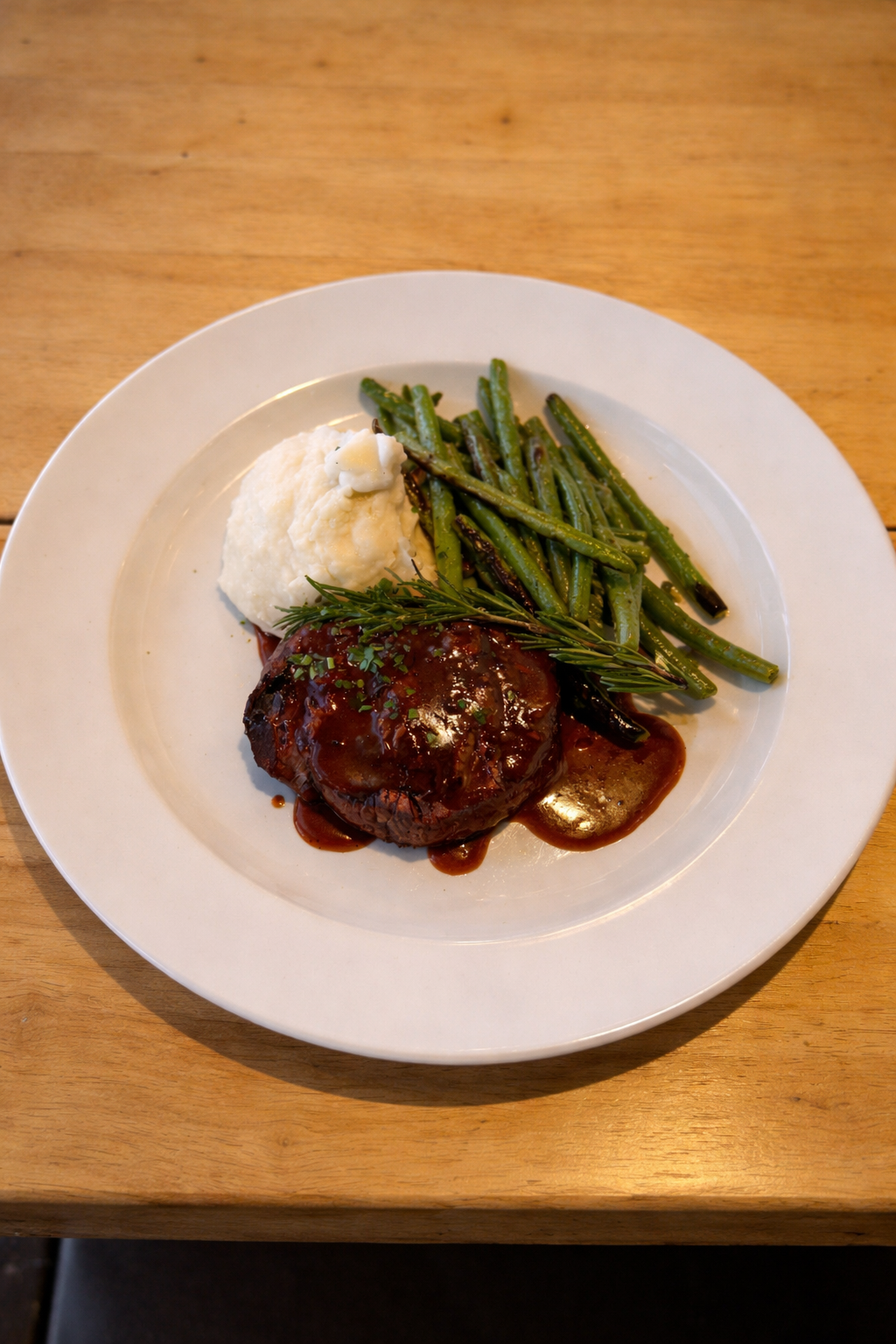
Filet Mignon with Mashed Potatoes and Garlic String Beans
A refined steak dinner featuring a tender filet mignon topped with a rich glaze and fresh rosemary. The steak is served with smooth mashed potatoes and lightly blistered garlic string beans, creating a balanced combination of protein, vegetables, and creamy textures.
- Total time
- 45 min
- Servings
- 1
- Calories
- 640
- Protein
- 46g
Ingredients
- 200 g filet mignon, 1.5 to 2 inches thick
- 1 tsp kosher salt
- ½ tsp coarse black pepper
- 1 tbsp neutral oil with high smoke point (avocado or grapeseed)
- 2 tbsp unsalted butter
- 2 whole garlic cloves, lightly crushed
- 1 whole fresh rosemary sprig
- 2 whole fresh thyme sprig
- 400 g Yukon Gold potatoes, peeled and cubed
- 3 tbsp unsalted butter
- 80 ml heavy cream, warmed
- ¾ tsp kosher salt
- ¼ tsp white pepper
- 200 g fresh green beans, trimmed
- 2 whole garlic cloves, thinly sliced
- 1 tbsp unsalted butter
- 1 tbsp olive oil
- ¼ tsp kosher salt
- ¼ tsp black pepper
- 1 tsp lemon juice
- 60 ml beef demi-glace or good-quality beef stock
- 1 tbsp unsalted butter, cold
Instructions
- 1
Remove the filet from the fridge 30 minutes before cooking and set on a plate at room temperature — this is called tempering, and it is the most skipped and most important step. A cold steak placed directly in a screaming hot pan will burn on the outside before the center reaches temperature, creating an overcooked grey band just under the crust. Season all sides generously with kosher salt and black pepper, pressing the seasoning firmly into the meat so it adheres. Pat the surface completely dry with paper towels after seasoning — surface moisture turns to steam in the pan and prevents the Maillard reaction crust from forming.
- 2
Fill a large saucepan with cold water and add the cubed Yukon Gold potatoes. Bring to a boil over high heat, add 1 tsp salt to the water, then reduce to a steady simmer. Cook for 15 to 20 minutes until the potatoes are completely tender — a fork or knife should slide through with zero resistance. While the potatoes cook, warm the heavy cream in a small saucepan over low heat until just steaming but not boiling. Drain the potatoes and return them to the hot pot over low heat for 1 minute, shaking occasionally, to steam off any excess moisture — dry potatoes absorb butter better and produce a fluffier, less gluey mash.
- 3
Heat a cast iron or heavy stainless skillet over high heat for 2 full minutes until the pan is smoking and radiating intense heat — this level of heat is what creates the deep mahogany crust rather than a pale grey exterior. Add the neutral oil and swirl to coat. Carefully lay the filet in the pan away from you — it will sear loudly. Do not move it. Cook for 2.5 to 3 minutes until the bottom releases cleanly from the pan and a deep, dark crust has formed. Flip once with tongs.
- 4
Immediately after flipping, reduce the heat to medium and add the butter, crushed garlic cloves, rosemary, and thyme to the pan. As the butter melts and begins to foam, tilt the pan toward you so the butter pools at the edge. Using a large spoon, scoop the foaming herb-infused butter continuously over the top and sides of the filet — this is called arrosage (butter basting). Continue basting constantly for 90 seconds to 2 minutes. For medium-rare, pull the filet when an instant-read thermometer reads 125°F — the temperature will rise to 130 to 133°F as it rests. For medium, pull at 135°F.
- 5
Transfer the filet to a cutting board and tent loosely with foil. Rest for a minimum of 8 minutes — do not skip or shorten this. During the rest, the muscle fibers relax and reabsorb the juices that were driven to the center by heat. Cutting too early means those juices flood the board instead of staying in the meat.
- 6
While the steak rests, discard the garlic and herb sprigs from the pan but keep all the brown butter and fond (the dark caramelized bits stuck to the pan — this is concentrated flavor). Pour the demi-glace or beef stock into the hot pan over medium heat and whisk vigorously to deglaze, scraping all the fond from the bottom. Simmer for 1 to 2 minutes until the sauce reduces slightly and coats a spoon. Remove from heat and whisk in the cold tablespoon of butter until glossy. Season with a pinch of salt. The cold butter finishing technique (called monter au beurre) gives the sauce a restaurant-quality sheen and rounded flavor.
- 7
Pass the drained potatoes through a fine-mesh ricer or food mill directly back into the warm pot for the smoothest possible texture — mashing by hand leaves lumps and overworking with a mixer develops gluten, making the potatoes gluey. Add the warm cream first, then the butter in pieces, folding gently with a spatula rather than stirring aggressively. Season with salt and white pepper. Taste and adjust — mashed potatoes should be well-seasoned and noticeably buttery. Keep warm over the lowest possible heat.
- 8
In a separate skillet, heat the olive oil and butter over medium-high heat until the butter stops foaming. Add the green beans in a single layer — they should sizzle immediately. Cook undisturbed for 2 minutes until lightly charred on the underside. Add the sliced garlic and toss constantly for 30 seconds until golden and fragrant — watch carefully, as sliced garlic burns quickly and turns bitter. Season with salt and pepper and finish with a squeeze of lemon juice. Remove immediately from heat.
- 9
Spoon the mashed potatoes onto the center of a warm plate, using the back of the spoon to create a slight well. Place the rested filet mignon directly on top. Arrange the garlic string beans alongside. Spoon the pan sauce over the filet — not the potatoes, which would dilute the sauce. Garnish with the spent rosemary sprig from the pan if desired. Serve immediately while the steak and potatoes are still hot.
Tools you’ll need
- 12-inch cast iron or heavy stainless steel skillet
- large saucepan
- small saucepan
- potato ricer or food mill
- instant-read meat thermometer
- tongs
- large basting spoon
- cutting board
- aluminum foil
- fine-mesh sieve or colander
- whisk
Cook smarter
Get matched recipes for what’s in your fridge
CookSnap is a free iOS app that finds real recipes from the ingredients you already have. No more grocery-list aspirations.