Tokyo Shoyu Ramen
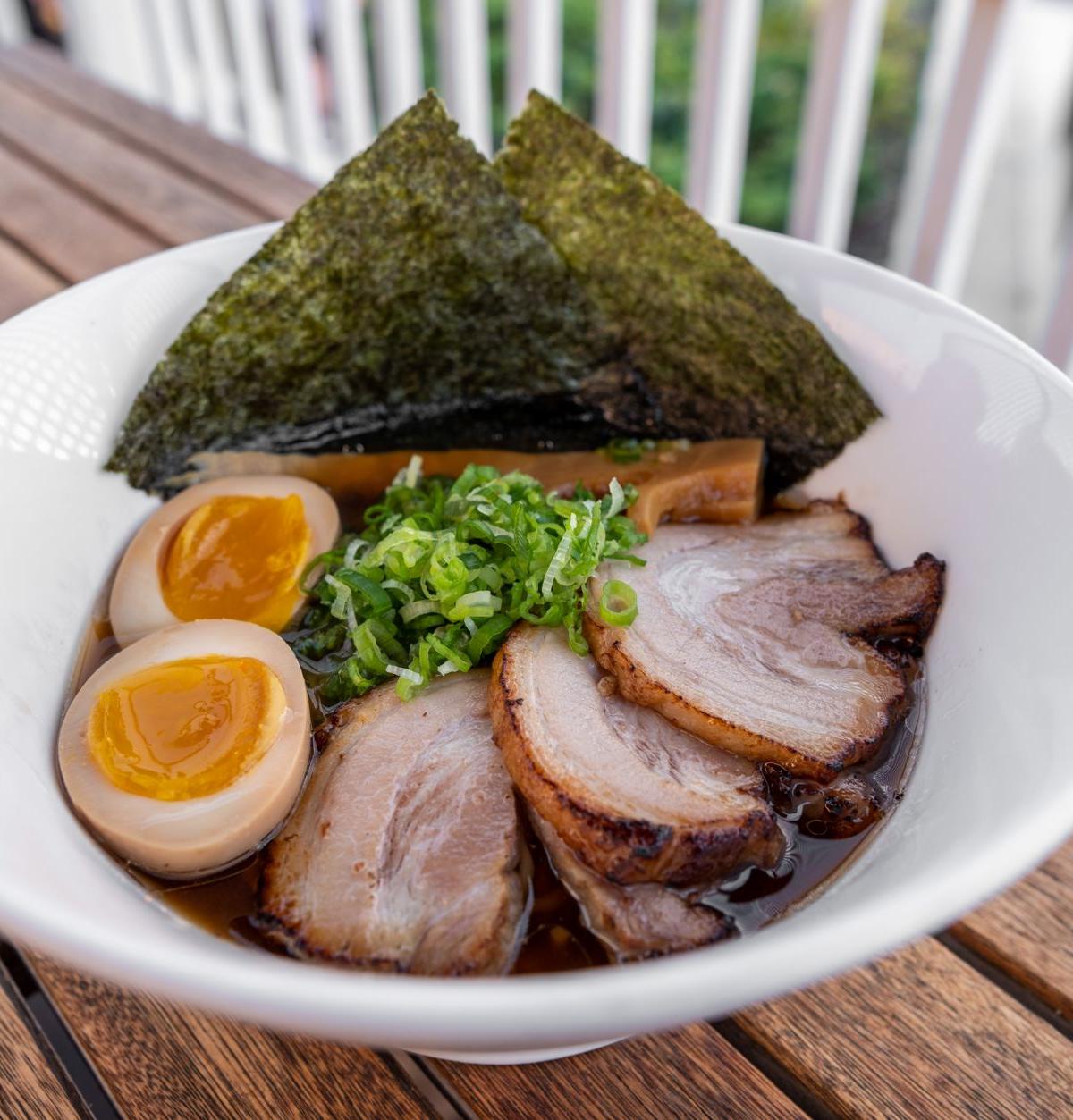
Rich soy-based broth with tender chashu pork, soft-boiled eggs, and springy noodles — a silky, deeply savory bowl that's surprisingly achievable at home.
- Total time
- 45 min
- Servings
- 2
- Calories
- 680
- Protein
- 52g
Ingredients
- 1.5 lb pork belly, skin removed, rolled and tied with kitchen twine
- ¼ cup low-sodium soy sauce
- 3 tablespoons mirin (sweet rice wine)
- 3 tablespoons sake (rice wine)
- 1 piece fresh ginger, 1-inch piece, sliced
- 2 whole scallions, white parts only, halved
- 3 tablespoons low-sodium soy sauce
- 1 tablespoon mirin (sweet rice wine)
- 4 cups dashi stock or chicken stock
- 2 whole whole dried shiitake mushrooms
- 1 piece kombu (dried kelp), 2-inch piece
- 8 oz ramen noodles, fresh or dried
- 2 whole large eggs
- 2 whole scallions, green parts only, cut into 1-inch pieces
- ½ sheet nori (seaweed sheets), cut into strips
- ¼ teaspoon shichimi togarashi (Japanese seven-spice blend)
Instructions
- 1
Pat the 1.5 lb pork belly dry with paper towels — this ensures good browning. Set a 12-inch stainless steel skillet over medium-high heat and let it preheat for 2 minutes until a drop of water dances on the surface.
- 2
Carefully place the pork belly, skin-side down first, in the hot dry skillet. Sear for 3-4 minutes until the fat renders and the surface turns deep golden brown — you should hear an active sizzle. Flip and sear the other sides for 2 minutes each until all exposed meat is browned.
- 3
Pour 0.25 cup of low-sodium soy sauce, 3 tablespoons of mirin, and 3 tablespoons of sake into the skillet around the pork. Slice a 1-inch piece of fresh ginger on the bias and add it along with 2 halved scallion whites. Bring the liquid to a gentle simmer — you should see small bubbles breaking the surface consistently.
- 4
Reduce the heat to medium-low and cover the skillet partially with a lid or aluminum foil. Simmer for 25-30 minutes, turning the pork halfway through, until it's fork-tender and the braising liquid has reduced by half and coats the meat glossily. The pork is done when a fork pierces it with no resistance.
- 5
Transfer the pork to a cutting board and let it rest for 5 minutes while you finish the broth. Once cool enough to handle, remove the twine and slice the pork into 0.5-inch thick slices — aim for clean cuts so the meat holds its shape.
- 6
While the pork simmers, make the tare (concentrated seasoning base). In a small bowl, whisk together 3 tablespoons of low-sodium soy sauce and 1 tablespoon of mirin. Divide this mixture evenly between two large ramen bowls — this concentrates the umami so the broth tastes rich, not diluted.
- 7
Pour 4 cups of dashi stock into a large saucepan and set it over medium heat. Add 2 whole dried shiitake mushrooms and a 2-inch piece of kombu. Bring to a gentle simmer and cook for 10 minutes — the broth will darken and develop a complex, layered flavor. Do not boil aggressively or the broth will become cloudy.
- 8
While the broth steeps, bring a separate small pot of water to a rolling boil over high heat. Carefully lower 2 large eggs into the boiling water and set a timer for 6.5 minutes — this yields a soft-boiled egg with a jammy yolk and just-set whites. For a fully hard-boiled egg, cook for 10 minutes.
- 9
When the eggs are done, transfer them immediately to an ice bath — a bowl filled with ice and cold water. Let them cool for 2 minutes, then gently peel under cool running water, starting at the wider end where the air pocket makes it easier. The ice bath stops the cooking and prevents that gray-green ring around the yolk.
- 10
Bring a large pot of water to a rolling boil over high heat. Add 8 oz of fresh or dried ramen noodles and cook according to package directions — fresh noodles usually take 2-3 minutes, dried take 4-5 minutes. Stir occasionally to prevent sticking. The noodles are done when they're tender but still have a slight chew (al dente), not mushy.
- 11
Strain the ramen noodles in a fine-mesh strainer and divide them evenly between the two bowls containing the tare. The hot noodles will warm the tare slightly — give it a quick stir to combine.
- 12
Remove the shiitake and kombu from the broth and discard (or save for stock-making another time). Ladle 2 cups of the hot broth into each bowl — pour slowly and carefully over the noodles so the tare fully dissolves and seasons the broth evenly.
- 13
Arrange the chashu pork slices on top of the noodles in each bowl, fanning them slightly for presentation. Cut each soft-boiled egg in half and nestle the halves among the noodles — the jammy yolk will create a silky sauce when mixed in. Top each bowl with the reserved 2 scallion green pieces cut into 1-inch pieces and a few strips of nori. Finish with a light pinch of shichimi togarashi (about 0.25 teaspoon divided between the bowls) for heat and depth.
- 14
Serve immediately while the broth is steaming hot. Instruct your guest to stir gently before eating so the egg yolk, tare, and broth fully combine, creating a silky, deeply savory bowl.
Tools you’ll need
- 12-inch stainless steel skillet
- large saucepan
- small saucepan
- large pot for boiling noodles
- fine-mesh strainer
- small bowl
- whisk
- instant-read thermometer (optional)
- kitchen twine
- paper towels
- two large ramen bowls
- ladle
Cook smarter
Get matched recipes for what’s in your fridge
CookSnap is a free iOS app that finds real recipes from the ingredients you already have. No more grocery-list aspirations.



