Terrine de Foie Gras
A silky, luxurious French pâté of foie gras with a delicate, buttery texture that melts on the tongue. This show-stopping charcuterie centerpiece requires precision and patience but rewards with an elegant, restaurant-quality result.
- Total time
- 45 min
- Servings
- 8
- Calories
- 420
- Protein
- 8g
Ingredients
- 1 lobe (about 1 lb) Grade A foie gras (1 whole lobe)
- ½ teaspoon Fine sea salt
- ¼ teaspoon Freshly ground white pepper
- 1 teaspoon Pink peppercorns
- 2 tablespoons Cognac or Armagnac
- 1 tablespoon Port wine
- 3 tablespoons Unsalted butter
Instructions
- 1
Remove the foie gras from the refrigerator and let it sit at room temperature for 45 minutes to 1 hour — it should be soft enough to handle but still cold. This warmth makes it pliable without becoming oily or separating.
- 2
Place a 3-cup terrine mold lined with plastic wrap in the freezer. You want it ice-cold when you fill it — cold surfaces help the foie gras set evenly and maintain its texture.
- 3
Fill a large bowl with ice water and set it nearby. You'll use this to keep your hands and tools cold while working, which prevents the foie gras from becoming greasy.
- 4
Carefully separate the two lobes of foie gras if still attached. Using a sharp knife dipped in hot water (wipe dry between cuts), gently remove any visible blood vessels and green bile spots — they taste bitter and will mar the final texture. Work quickly and rinse the knife in hot water frequently.
- 5
Tear the cleaned foie gras into rough chunks about the size of walnuts and place them in a large, very cold mixing bowl. Sprinkle with 0.5 teaspoon fine sea salt, 0.25 teaspoon white pepper, and 1 teaspoon pink peppercorns. Pour in 2 tablespoons Cognac and 1 tablespoon Port wine. Let sit for 2 minutes to allow the seasonings to begin infusing.
- 6
Using a rubber spatula, gently fold the foie gras mixture over itself 6 to 8 times — don't stir or beat it. You're aiming to distribute seasonings evenly while keeping the structure intact. The mixture should look slightly marbled, not homogeneous or whipped. If it begins to feel warm or greasy, return the bowl to the ice water bath for 1 minute.
- 7
Cut 3 tablespoons of unsalted butter into thin pats. Scatter the cold butter pieces across the foie gras mixture and gently fold them in with 2 more folds of the spatula — the butter will help create a silky, cohesive texture as it sets.
- 8
Remove the cold terrine mold from the freezer. Working quickly, gently press the foie gras mixture into the mold using the rubber spatula, filling it evenly and eliminating air pockets. The surface should be level and smooth. Fold the plastic wrap over the top to seal it completely.
- 9
Place the sealed terrine in a roasting pan and fill the pan with hot (not boiling) water until it reaches halfway up the sides of the mold — this water bath ensures gentle, even cooking. Transfer the pan to a preheated 150°F oven.
- 10
Cook for 30 to 35 minutes. The terrine is done when a skewer inserted into the center comes out warm to the touch (about 109°F internal temperature at the thickest point), and the surface feels set but still slightly yielding. There should be a thin golden film on top. Do not overcook — overdone foie gras becomes grainy and separates.
- 11
Remove the terrine from the water bath and let it cool to room temperature, about 45 minutes, without opening it. This gradual cooling prevents cracking. Once cooled, refrigerate for at least 24 hours (or up to 3 days) before serving — chilling allows the flavors to meld and the texture to set to its perfect silky consistency.
- 12
To unmold, briefly dip the terrine in hot water to loosen it, then invert onto a chilled serving platter. Carefully peel away the plastic wrap.
- 13
Using a very sharp knife dipped in hot water and wiped clean between each cut, slice the terrine into 0.5-inch-thick portions. Wipe the blade after each cut to keep slices clean and pristine.
- 14
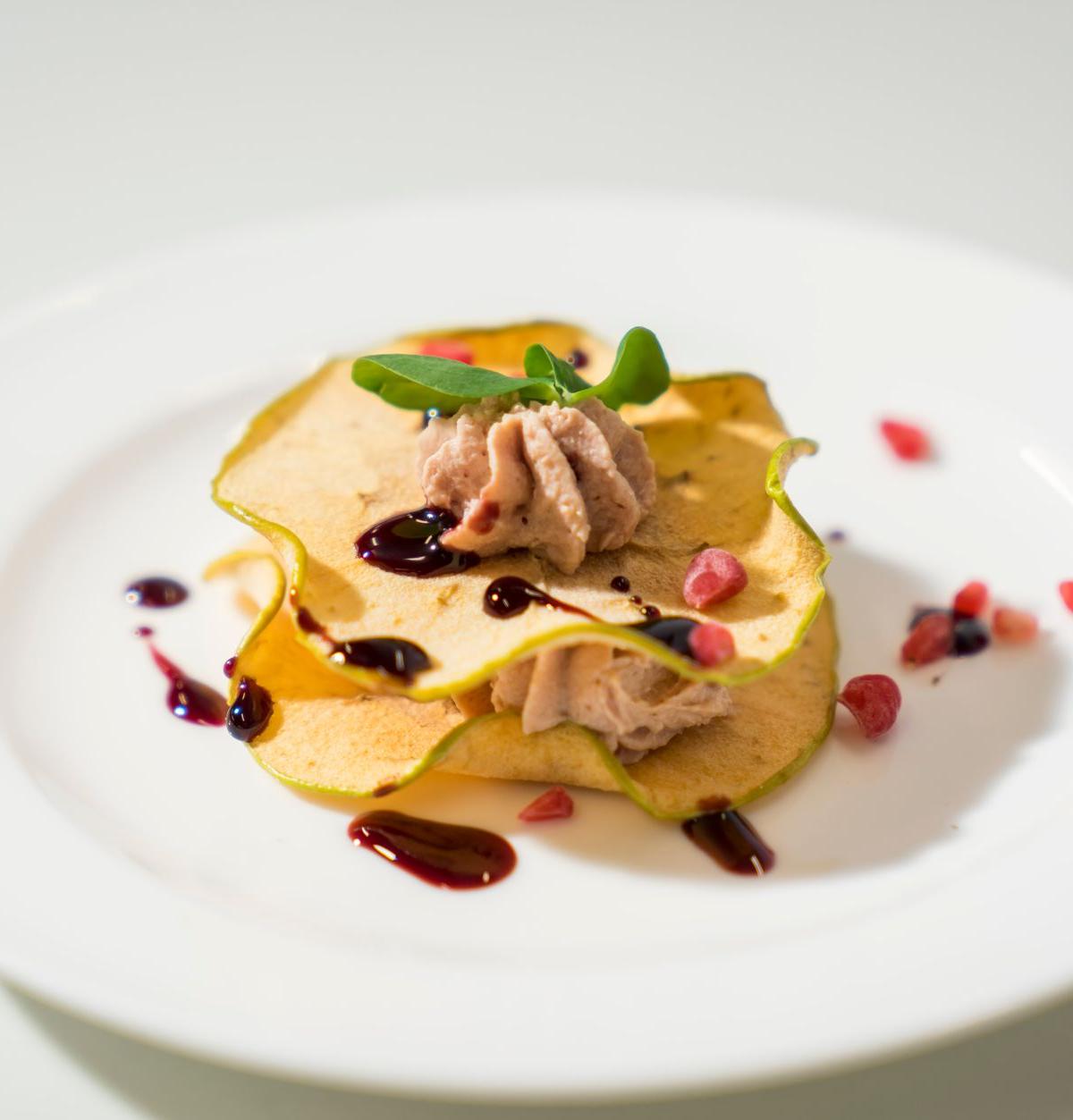
Serve each slice on a chilled plate with toasted brioche, Melba toast, or crusty bread, a small spoonful of fleur de sel, and cornichons or fig compote on the side. The cold terrine should be luxuriously smooth and should melt delicately on the tongue.
Tools you’ll need
- Sharp chef's knife
- 3-cup terrine mold with plastic wrap
- Large mixing bowl
- Rubber spatula
- Instant-read thermometer
- Roasting pan
- Oven (preheated to 150°F)
Cook smarter
Get matched recipes for what’s in your fridge
CookSnap is a free iOS app that finds real recipes from the ingredients you already have. No more grocery-list aspirations.