Saucisson Sec
A traditional French dry-cured pork sausage with deep, concentrated flavors from garlic, spices, and salt-driven fermentation. This showstopping charcuterie requires patience but minimal hands-on work, making it perfect for adventurous home cooks.
- Total time
- 2880 min
- Servings
- 12
- Calories
- 285
- Protein
- 22g
Ingredients
- 2 pounds pork shoulder, cut into 1-inch cubes
- ½ pound pork fatback, cut into 1-inch cubes
- 20 grams kosher salt
- ¼ teaspoon pink curing salt (sodium nitrite)
- 6 whole garlic cloves, peeled
- 1 teaspoon whole black peppercorns
- ½ teaspoon whole juniper berries
- ¼ teaspoon dried thyme
- ⅛ teaspoon ground coriander
- ½ teaspoon sugar
- 3 tablespoons water, ice-cold
- 1 package hog casings, 32-35mm
Instructions
- 1
You're now entering the curing phase — this is where we'll prepare the meat and spices for fermentation. Start by placing the 2 pounds of pork shoulder cubes and 0.5 pound of pork fatback cubes in the freezer for 30 minutes. Partially freezing the meat makes it easier to grind evenly and helps develop the proper texture.
- 2
While the meat chills, rinse the hog casings under cold running water, then soak them in a bowl of cool water for 15 minutes. This softens them and makes them easier to stuff without tearing.
- 3
Toast 1 teaspoon of whole black peppercorns and 0.5 teaspoon of juniper berries in a small dry skillet over medium heat, shaking the pan occasionally, until fragrant — about 2 minutes. You'll smell the aromatics brighten. Transfer to a cutting board, let cool for 1 minute, then coarsely crush them with the bottom of a heavy pan or a mortar and pestle. Set aside with 0.25 teaspoon of dried thyme, 0.125 teaspoon of ground coriander, and 0.5 teaspoon of sugar.
- 4
Now you're grinding and mixing the cure into the meat. Set up your meat grinder with the small (3mm) die, making sure all parts are ice-cold — run them under cold water and pat dry, or chill in the freezer for 5 minutes. This keeps the fat from smearing, which creates a better texture.
- 5
Grind the chilled pork shoulder and fatback cubes through the small die into a chilled mixing bowl. Work quickly to prevent the meat from warming.
- 6
Add 20 grams of kosher salt and 0.25 teaspoon of pink curing salt to the ground meat. Peel and finely mince the 6 garlic cloves on a microplane or with a knife until you have a fine paste. Add the minced garlic and the toasted spice mixture (black pepper, juniper, thyme, coriander, sugar) to the bowl.
- 7
Pour in 3 tablespoons of ice-cold water. Using a wooden spoon or your (clean) hands, mix for 2–3 minutes, stirring in one direction. You'll feel the mixture become slightly sticky and develop a finer texture — this is the muscle protein beginning to bind, which helps the sausage hold together during curing. Stop when the mixture is uniform and tacky.
- 8
Cover the mixture with plastic wrap and refrigerate for 24 hours. This allows the cure to distribute evenly and the flavors to meld.
- 9
You're now in the stuffing and long-cure phase. Remove the cured meat mixture from the refrigerator and set it in a bowl of ice to keep it cold during stuffing.
- 10
Assemble your sausage stuffer with the small (32-35mm) die. Take one soaked hog casing, rinse it gently under cold water, and thread it onto the nozzle — oil the nozzle very lightly first so it slides on without tearing. Push the entire casing onto the nozzle in accordion folds.
- 11
Feed the chilled meat mixture into the hopper and begin stuffing, using steady, even pressure. As the casing fills, ease it off the nozzle with your other hand, keeping gentle tension so it doesn't twist or burst. Stop when you reach about 1 inch from the end, then slide the casing off the nozzle.
- 12
Tie a kitchen knot at the end of the casing you just filled. Gently prick the surface of the sausage all over with a sterile needle or sausage pricker — make 20–30 tiny holes. This allows trapped air to escape and lets the surface dry more evenly during curing.
- 13
Weigh the finished sausage on a kitchen scale and write the weight on a label you'll attach to it later — you'll need this to know when it's done curing. Saucisson sec loses about 25–30% of its weight during the cure.
- 14
Hang the sausage in a cool, humid space — ideally 55–65°F and 80–90% relative humidity (an unheated basement, wine fridge, or dedicated curing chamber works well). Avoid direct sunlight and drafts. If you don't have proper conditions, you can also place it in the coldest part of your regular refrigerator, though the cure will be slower.
- 15
Monitor the sausage daily for mold growth — white mold is good and can be left alone (it actually helps the cure), but green or black mold is a sign of contamination and must be wiped off immediately with a cloth dampened in white vinegar. Check the weight every few days.
- 16
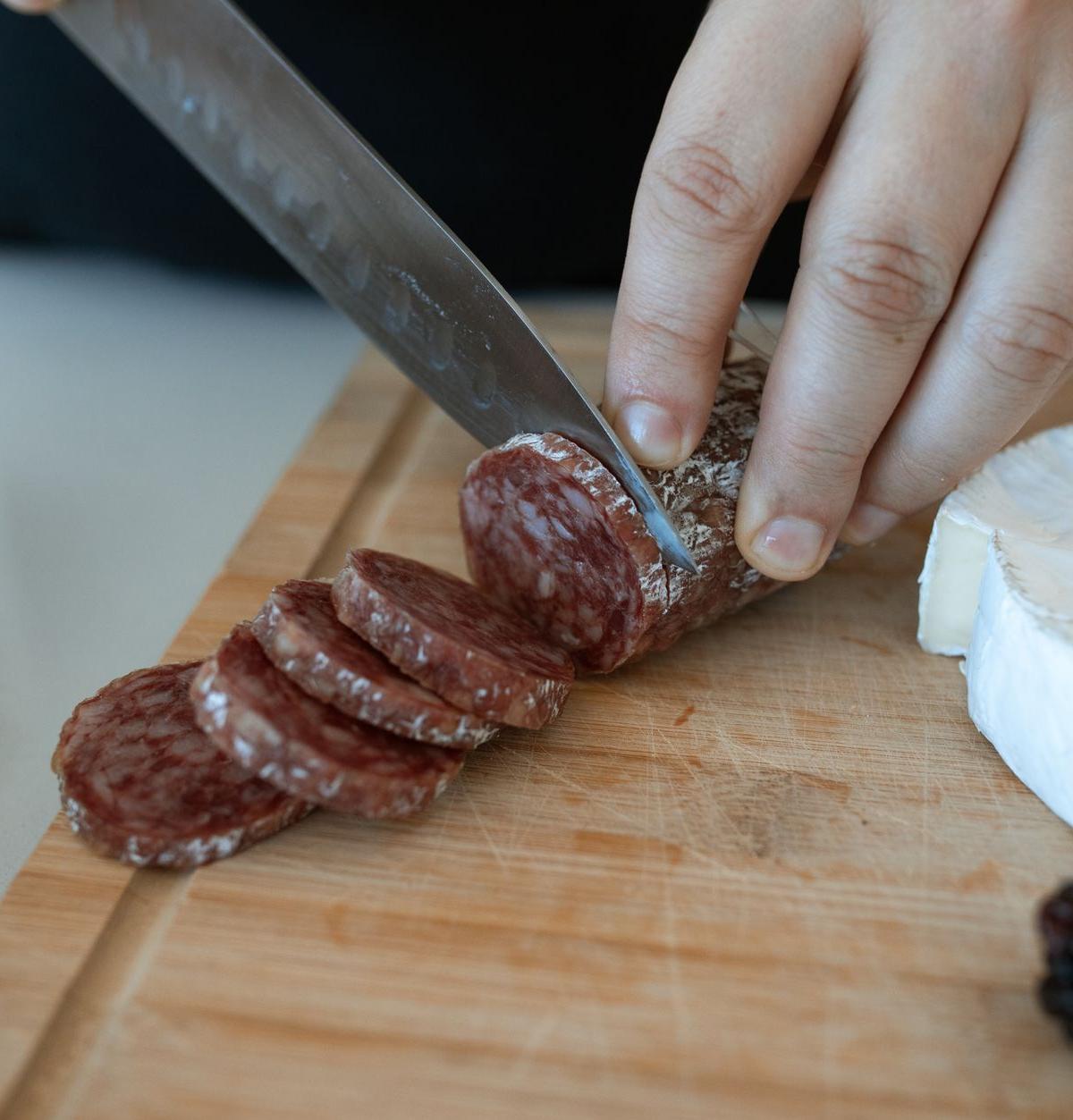
The sausage is ready when it has lost 25–30% of its original weight — this usually takes 3–4 weeks, depending on thickness and humidity. Slice thinly and serve at room temperature as an appetizer or charcuterie board item. Once cured, wrap tightly and refrigerate for up to 3 months.
Tools you’ll need
- freezer
- bowl
- small dry skillet
- cutting board
- heavy pan or mortar and pestle
- meat grinder with small (3mm) die
- chilled mixing bowl
- wooden spoon
- plastic wrap
- kitchen scale
- sausage stuffer with small (32-35mm) die
- sterile needle or sausage pricker
- kitchen knife
- label
- cloth
- white vinegar
Cook smarter
Get matched recipes for what’s in your fridge
CookSnap is a free iOS app that finds real recipes from the ingredients you already have. No more grocery-list aspirations.