Pane di Altamura
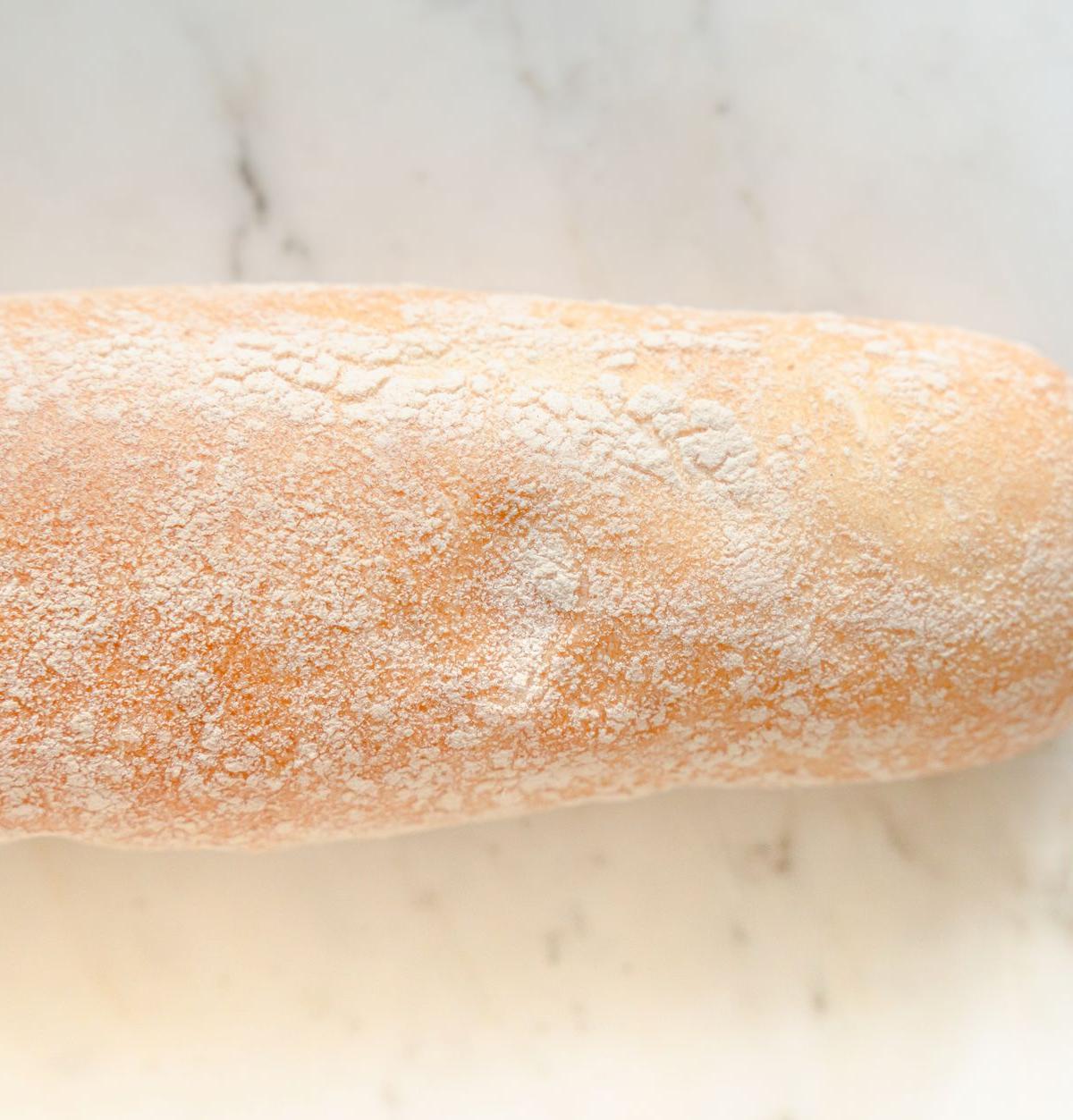
A rustic Italian bread made with durum wheat semolina, yielding a golden, nutty loaf with a chewy crumb and crispy crust. This traditional Pugliese bread requires only flour, water, salt, and time—a masterclass in simplicity and technique.
- Total time
- 720 min
- Servings
- 1
- Calories
- 1480
- Protein
- 52g
Ingredients
- 500 g durum wheat semolina flour (tipo rimacinata or durum wheat flour)
- 325 ml filtered or bottled water, room temperature
- 10 g fine sea salt
- 1 g active dry yeast or instant yeast
Instructions
- 1
Measure out 500 g of durum wheat semolina flour into a large mixing bowl. Pour in 325 ml of room-temperature filtered water slowly, stirring with your fingers or a wooden spoon until all the flour is hydrated and you have a shaggy, wet dough with no dry flour pockets remaining. Cover the bowl with a damp kitchen towel and let it rest undisturbed at room temperature for 30 minutes. This resting period, called an autolyse, allows the flour to fully absorb water and develop gluten naturally without kneading.
- 2
After 30 minutes, sprinkle 10 g of fine sea salt and 1 g of instant yeast evenly over the dough. Using wet fingers or a damp hand, pinch and fold the dough over itself repeatedly for 3-4 minutes until the salt and yeast are fully incorporated. The dough will feel very sticky and loose—this is correct. Cover again with the damp towel.
- 3
You are now entering the long bulk fermentation phase, which is the heart of this bread's flavor and texture development. Perform a series of stretch-and-folds over the next 2 hours: every 20 minutes, wet your hand and grab one side of the dough, stretch it up, and fold it over the center; rotate the bowl 90 degrees and repeat from all four sides until the dough tightens slightly. After 4 sets of stretch-and-folds (about 1.5 hours), the dough will firm up noticeably and should hold its shape better. Let it rest without further folds for the remaining 30 minutes.
- 4
After bulk fermentation is complete (2 hours total), the dough should have increased in volume by 50-70%, smell rich and slightly sweet, and jiggle when you gently shake the bowl. This is the signal that fermentation is complete. Do not over-ferment or the dough will collapse.
- 5
Turn the dough out onto a work surface dusted generously with semolina flour (do not use all-purpose flour, as it will absorb into the dough). Using a bench scraper, gently shape the very wet dough into a round boule: flip one edge toward the center, rotate the bowl 90 degrees, and repeat until you have formed a rough ball. The dough will still be sticky and soft—handle it gently. Dust the top and sides generously with semolina flour.
- 6
Place the shaped dough seam-side-up into a banneton basket (or a bowl lined with a well-floured linen towel). Cover loosely with plastic wrap and transfer to your refrigerator. Refrigerate for at least 12 hours, preferably 16-18 hours. The cold slows fermentation dramatically, allowing the flavors to deepen and making the dough easier to score and bake. This overnight rest is what gives Pane di Altamura its characteristic complex, wheaty flavor.
- 7
About 30-45 minutes before baking, remove the dough from the refrigerator and preheat your oven to 450°F (230°C). Position an oven rack in the lower third of the oven. If you have a Dutch oven or covered baking vessel, place it in the oven to preheat as well. The vessel will trap steam, which is essential for developing the bread's crispy, shattered crust.
- 8
Turn the cold dough out of the banneton onto a piece of parchment paper, seam-side-down. Using a very sharp bread lame or knife, score the top with a single deep slash or an X pattern, cutting at a 45-degree angle about 1/4 inch deep. The score prevents the bread from bursting randomly and directs the oven spring upward.
- 9
Carefully transfer the parchment paper and dough to the preheated Dutch oven (or place on a preheated baking stone). Cover with the lid (or a large roasting pan if using a stone) and bake at 450°F (230°C) for 30 minutes. The enclosed environment will fill with steam, which keeps the crust soft enough to expand. You will hear the dough sizzle and crackle—this is the Maillard reaction beginning.
- 10
After 30 minutes, remove the lid or covering and continue baking, uncovered, for 20-25 minutes more until the crust is deep golden-brown, almost mahogany in color. The bread should smell intensely wheaty and nutty, and the crust should sound hollow when you tap it with your knuckles. The internal temperature should reach 205-210°F (96-99°C) when measured with an instant-read thermometer inserted into the thickest part of the loaf.
- 11
Transfer the bread to a wire cooling rack and let it cool completely at room temperature for at least 1-2 hours before slicing. During cooling, the internal structure sets and the crumb develops its final texture. Slicing too early will result in a gummy interior. Once cool, slice with a serrated bread knife using a gentle sawing motion.
Tools you’ll need
- large mixing bowl
- wooden spoon or damp hand
- damp kitchen towel
- bench scraper
- banneton proofing basket or mixing bowl and linen towel
- plastic wrap
- Dutch oven or covered baking vessel
- sharp bread lame or chef's knife
- parchment paper
- instant-read thermometer
- wire cooling rack
- serrated bread knife
Cook smarter
Get matched recipes for what’s in your fridge
CookSnap is a free iOS app that finds real recipes from the ingredients you already have. No more grocery-list aspirations.