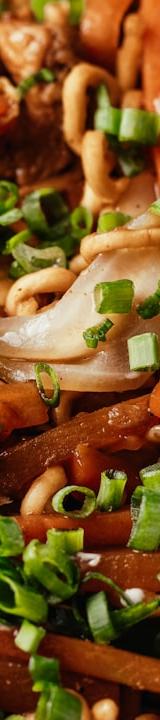
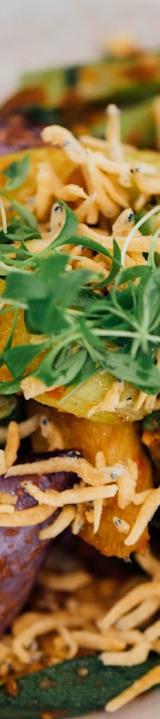
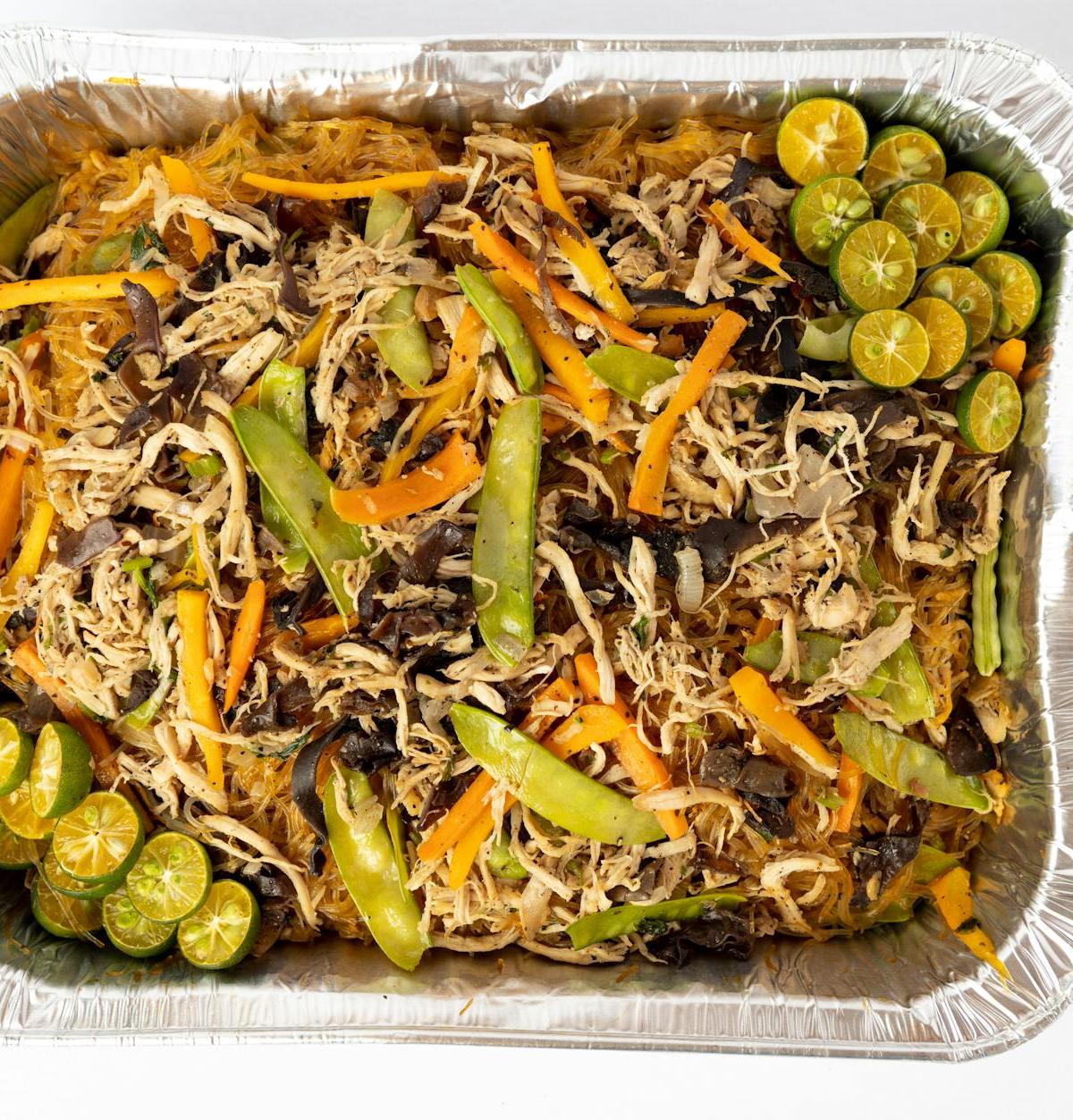
Pancit Sotanghon
A stir-fried glass noodle dish with vegetables and savory soy-based broth, finished with a squeeze of calamansi lime. Filipino comfort food that's quick, satisfying, and full of umami flavor.
- Total time
- 25 min
- Servings
- 4
- Calories
- 285
- Protein
- 6g
Ingredients
- 8 oz dried rice vermicelli (sotanghon)
- 3 tablespoons extra-virgin olive oil
- 1 whole large yellow onion, thinly sliced
- 4 whole garlic cloves, minced
- 2 whole medium carrots, julienned
- 6 oz fresh shiitake mushrooms, sliced thin
- 4 cups green cabbage, sliced into 1/4-inch ribbons
- 1 cup fresh snap peas, cut into 2-inch lengths
- 3 tablespoons low-sodium soy sauce
- 1 tablespoon oyster sauce
- 1 cup vegetable broth
- ¼ teaspoon white pepper
- 2 whole calamansi lime or regular lime, halved
- 3 whole fresh green onions, thinly sliced on the bias
- 2 tablespoons fresh cilantro, leaves only
Instructions
- 1
Bring a large pot of water to a boil over high heat. Remove from heat and add 8 oz of dried rice vermicelli (sotanghon). Let it sit for 3–4 minutes until just tender but still with a slight bite — the noodles will soften further when stir-fried. Drain in a fine-mesh strainer, rinse briefly with cool water to stop cooking, and set aside. If the noodles clump together, toss gently with a fork.
- 2
While the noodles soak, prepare all vegetables: peel and thinly slice 1 large yellow onion into half-moons; mince 4 garlic cloves; peel 2 medium carrots and julienne them into thin matchsticks; slice 6 oz of fresh shiitake mushrooms into 1/4-inch-thick pieces; slice 4 cups of green cabbage into 1/4-inch ribbons; and cut 1 cup of fresh snap peas into 2-inch lengths. Arrange all prepped items on a cutting board so you can add them quickly during cooking.
- 3
In a small bowl, whisk together 3 tablespoons of low-sodium soy sauce, 1 tablespoon of oyster sauce, 1 cup of vegetable broth, and 0.25 teaspoon of white pepper. This is your aromatic liquid — set it within arm's reach of the stove.
- 4
Set a 14-inch wok or large skillet over medium-high heat and let it preheat for 2 minutes. You're ready when a drop of water dances across the surface and evaporates immediately. This high heat is essential for that signature wok-kissed flavor and to prevent the noodles from becoming gummy.
- 5
Pour 3 tablespoons of extra-virgin olive oil into the hot wok and swirl to coat evenly. Add the sliced onion and cook, stirring frequently, until the edges turn golden and the onion becomes translucent, about 2 minutes. The aromatics should begin filling the air.
- 6
Add the minced garlic to the wok and stir constantly for 30 seconds until fragrant — this prevents the garlic from burning while releasing its flavor into the oil. You'll smell a pungent, sharp aroma at the peak of fragrance.
- 7
Add the julienned carrots and sliced shiitake mushrooms. Stir-fry over medium-high heat for 2–3 minutes, stirring every 30 seconds, until the mushrooms release their moisture and become soft at the edges. The carrots should still have a slight snap when you bite one.
- 8
Add the sliced cabbage and snap peas to the wok and toss well. Stir-fry for 2 minutes, stirring frequently, until the cabbage wilts slightly but the snap peas remain bright green — you want some contrast in texture and color on the plate.
- 9
Add the cooked sotanghon noodles to the wok, breaking up any clumps with your spatula or wooden spoon as you add them. Toss everything together for about 1 minute until the noodles begin to incorporate with the vegetables.
- 10
Pour the soy-oyster sauce mixture (the seasoned broth) into the wok and stir constantly for 2–3 minutes, tossing the noodles and vegetables until they absorb the liquid. The sauce should coat everything evenly and reduce slightly — you should hear a gentle sizzle and smell the soy-forward umami building. The noodles should glisten but not be swimming in liquid.
- 11
Remove the wok from heat. Squeeze the juice of 2 calamansi limes (or 1 regular lime) over the noodles and toss once more — the acid brightens everything and is traditional to the dish. Taste a noodle: it should be savory, slightly tangy, and well-seasoned. Adjust with extra soy sauce or lime juice if needed.
- 12
Divide the pancit sotanghon among 4 bowls or plates. Garnish each portion with fresh green onions (thinly sliced on the bias) and a small handful of fresh cilantro leaves. Serve immediately while still hot, with extra lime wedges on the side for those who want more brightness.
Tools you’ll need
- large pot
- fine-mesh strainer
- cutting board
- sharp chef's knife
- microplane or box grater
- 14-inch wok or large skillet
- wooden spoon or wok spatula
- small mixing bowl
- whisk
- instant-read thermometer (optional)
Cook smarter
Get matched recipes for what’s in your fridge
CookSnap is a free iOS app that finds real recipes from the ingredients you already have. No more grocery-list aspirations.