Norwegian Potato Flatbread
Soft, pillowy Norwegian flatbread made with potatoes and flour, cooked on a griddle until pale and tender. A traditional Scandinavian staple that pairs perfectly with butter, jam, or savory fillings.
- Total time
- 45 min
- Servings
- 8
- Calories
- 220
- Protein
- 4g
Ingredients
- 1.5 lbs russet potatoes
- 1.5 cups all-purpose flour
- 4 tablespoons unsalted butter, melted
- ¼ cup whole milk, warmed
- 1.5 teaspoons kosher salt
- ½ teaspoon freshly ground black pepper
Instructions
- 1
Peel 1.5 lbs russet potatoes with a vegetable peeler and cut them into 1-inch chunks. Place them in a large pot, cover with cold water by 2 inches, and add 1 teaspoon of salt. Bring to a boil over high heat, then reduce to medium and simmer until the potatoes are completely tender and a fork pierces them with no resistance, about 12-15 minutes.
- 2
Drain the potatoes thoroughly in a colander, shaking well to remove as much moisture as possible — this is crucial for tender lefse. Return them to the pot and let them sit uncovered for 1-2 minutes to steam off any remaining water.
- 3
Rice the hot potatoes through a ricer or food mill directly into a large mixing bowl, working quickly while they're still warm. If you don't have a ricer, mash them very thoroughly with a potato masher until completely smooth with no lumps.
- 4
While the potatoes are still warm, add 4 tablespoons of melted unsalted butter, 0.25 cup of warmed whole milk, 1.5 teaspoons of kosher salt, and 0.5 teaspoon of freshly ground black pepper to the bowl. Stir gently with a rubber spatula until everything is evenly combined.
- 5
Sprinkle 1.5 cups of all-purpose flour over the potato mixture in three batches, gently folding it in with the spatula after each addition — handle the dough as little as possible. Once all the flour is incorporated and the dough comes together, stop mixing. The dough should be soft but not sticky; if it sticks to your fingers, dust with a bit more flour.
- 6
Divide the dough into 8 equal portions and gently roll each into a ball. Place the balls on a lightly floured surface and let them rest for 5 minutes — this makes them easier to roll out.
- 7
Heat a 12-inch cast iron skillet or griddle over medium-high heat for 2-3 minutes until moderately hot. Test the temperature by sprinkling a few drops of water on the surface — they should sizzle gently and evaporate in about 2 seconds.
- 8
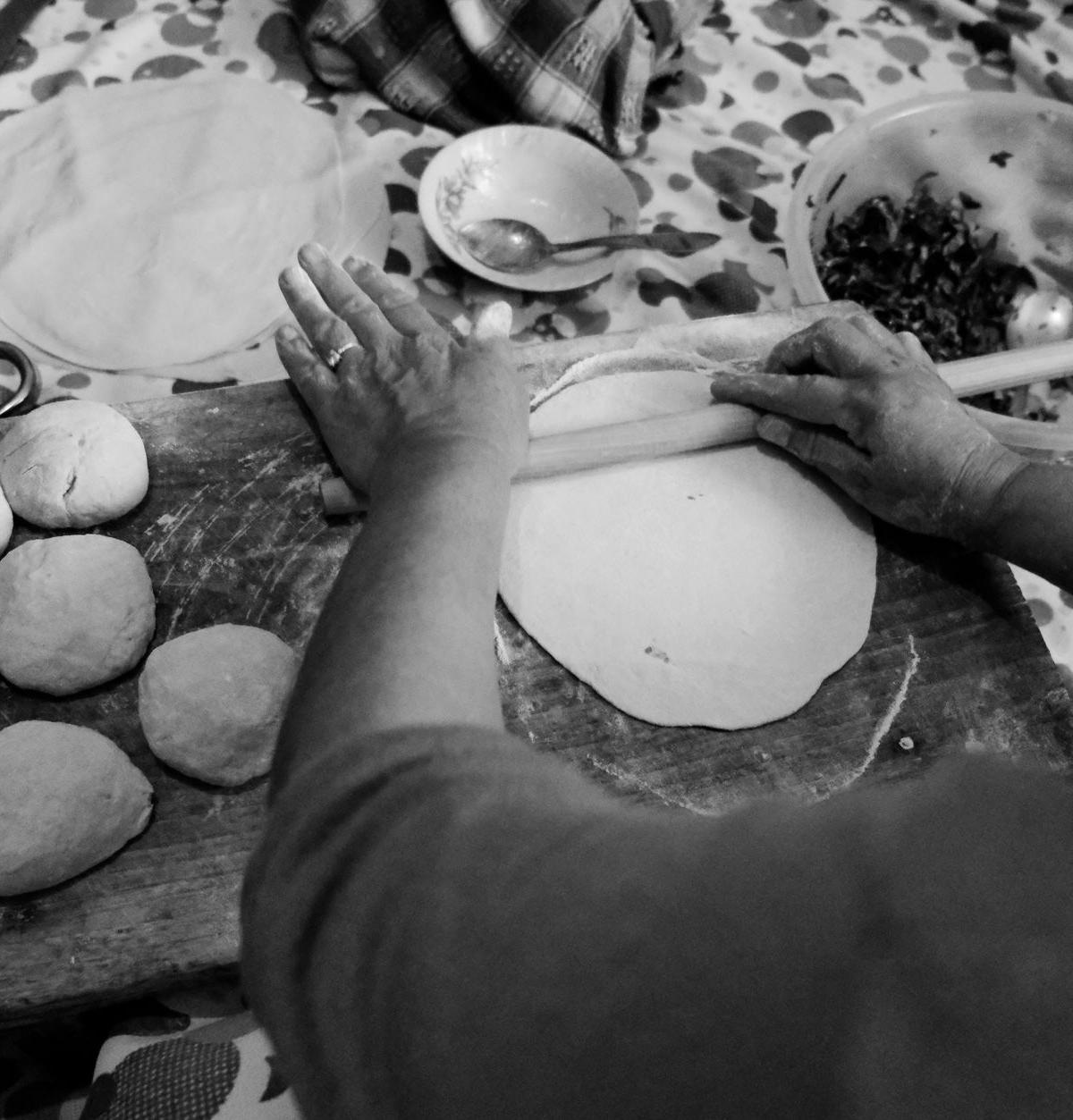
Working with one dough ball at a time, place it on a lightly floured work surface. Using a rolling pin, gently roll it out into a very thin circle about 8-10 inches in diameter — the dough should be almost translucent. Try to keep the edges slightly thinner than the center.
- 9
Carefully transfer the rolled lefse to the hot skillet by lifting it with both hands or rolling it onto the rolling pin and unrolling it onto the griddle. Cook for about 30-45 seconds on the first side, watching closely — the bottom should develop faint brown or golden spots, and you may see a few small bubbles forming. You should hear a gentle, steady sizzle.
- 10
Using a wide spatula, flip the lefse and cook the other side for another 20-30 seconds until it's also pale golden with light brown spots. The lefse should be soft and pliable, not crispy.
- 11
Transfer the cooked lefse to a clean kitchen towel and fold the towel over it to keep it warm and soft. Repeat steps 5-7 with the remaining dough balls, stacking each finished lefse in the towel as you go.
- 12
Serve the lefse warm, still stacked in the towel to retain moisture. It's traditionally served with butter, jam, cinnamon sugar, or thin-sliced deli meats and cheese. Lefse tastes best eaten within a few hours of cooking but can be wrapped tightly and refrigerated for up to 2 days.
Tools you’ll need
- 12-inch cast iron skillet or griddle
- large pot
- colander
- ricer or food mill
- large mixing bowl
- rubber spatula
- rolling pin
- wide spatula or fish spatula
- clean kitchen towel
- vegetable peeler
Cook smarter
Get matched recipes for what’s in your fridge
CookSnap is a free iOS app that finds real recipes from the ingredients you already have. No more grocery-list aspirations.



