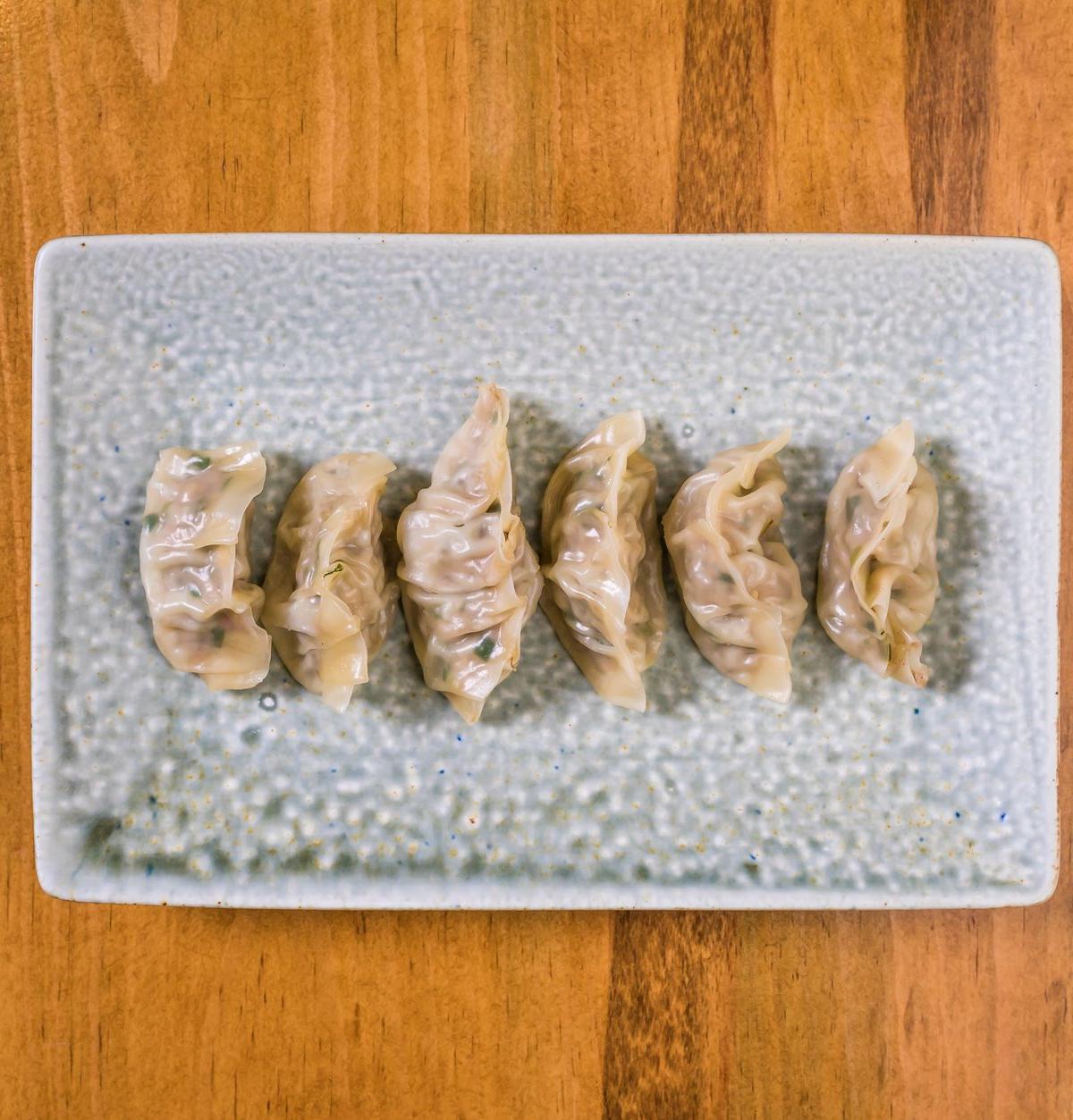
Korean Pork Mandu
Delicate steamed and pan-fried dumplings filled with seasoned ground pork, tofu, and vegetables. These are a beloved Korean comfort food that can be served as appetizers or a light meal.
- Total time
- 45 min
- Servings
- 4
- Calories
- 285
- Protein
- 16g
Ingredients
- ½ lb ground pork
- 7 oz firm tofu
- 1.5 cups napa cabbage, finely chopped
- 2 stalks green onion
- 3 whole garlic cloves
- 2 tablespoons low-sodium soy sauce
- 1 tablespoon sesame oil
- ¼ teaspoon kosher salt
- ⅛ teaspoon black pepper
- 24 whole round mandu wrappers (gyoza-style)
- 2 tablespoons vegetable oil
- ½ cup water
- 3 tablespoons low-sodium soy sauce
- 1 tablespoon rice vinegar
- 1 tablespoon sesame seeds
- ½ teaspoon Korean red pepper flakes (gochugaru), optional
Instructions
- 1
Prepare the filling components. Press the 7 oz of firm tofu between paper towels with a weight (a cast iron skillet works well) for 10 minutes to remove excess moisture — drier tofu means a better texture in the filling. While the tofu drains, finely chop 1.5 cups of napa cabbage by cutting it into very thin ribbons and then crosscutting into small pieces. Slice 2 green onion stalks into thin rings, separating white and light green parts. Peel and finely mince 3 garlic cloves on a microplane or with a knife.
- 2
Crumble the drained tofu with your fingers into small, rice-sized pieces into a medium bowl — you want texture, not a paste. Add the 0.5 lb ground pork, chopped cabbage, green onion, minced garlic, 2 tablespoons soy sauce, 1 tablespoon sesame oil, 0.25 teaspoon kosher salt, and 0.125 teaspoon black pepper. Using your hands or a wooden spoon, gently fold everything together just until combined — avoid overworking, which makes the filling dense and tough.
- 3
Set up your dumpling assembly station: place the 24 mandu wrappers on a cutting board, put a small bowl of water within reach, and have a parchment-lined sheet tray ready. Working with one wrapper at a time, place it flat in your palm and add about 1 teaspoon of filling (roughly the size of a grape) slightly off-center on the wrapper. Dip your finger in the water and wet the edge of the wrapper all the way around.
- 4
Fold the wrapper in half over the filling to form a half-moon, pressing the edges firmly to seal — use the tines of a fork to crimp the edges if you'd like a traditional ribbed look. If you want a more decorative purse-shaped mandu, bring the two bottom corners of the half-moon together above the filling and pinch to seal, creating a little bundle. Place each finished dumpling on the parchment-lined tray. Repeat until you've filled all 24 wrappers.
- 5
You're now ready to cook the mandu using a steam-and-sear method that gives you tender, cooked filling with crispy, golden bottoms. Set a 12-inch nonstick skillet or cast iron skillet over medium-high heat and add 2 tablespoons of vegetable oil. Let the oil heat for about 1 minute until it shimmers and moves easily across the pan — you should see the oil begin to smoke slightly at the edges.
- 6
Carefully place the mandu flat-side down into the hot oil, flat side touching the pan first — you can fit about 12 dumplings comfortably in one batch without crowding. Listen for a lively sizzle; if it's loud and aggressive, lower the heat slightly to medium-high. Let them sear undisturbed for 2-3 minutes until the bottoms turn deep golden brown and the oil smells nutty and fragrant.
- 7
Pour in 0.5 cup of water along the edge of the skillet — stand back slightly as the water hits the hot oil and steam rises dramatically. Immediately cover the skillet with a lid or a baking sheet to trap the steam. Reduce the heat to medium and let the mandu steam for 5-7 minutes until the water is nearly evaporated. You'll hear the sizzle soften and become gentler — this is the signal that the water level is dropping.
- 8
Uncover the skillet carefully, tilting the lid away from you to avoid the steam. Tilt the pan slightly and check that almost no liquid remains on the bottom — if there's still visible water, cover again for another 1-2 minutes. The mandu are done when the filling is cooked through and the bottoms are deeply caramelized. Transfer the cooked batch to a serving plate and repeat with the remaining dumplings if needed.
- 9
Make a quick dipping sauce by stirring together 3 tablespoons soy sauce and 1 tablespoon rice vinegar in a small bowl. If you like heat, add 0.5 teaspoon gochugaru (Korean red pepper flakes) and stir until combined. Taste and adjust the balance — more vinegar for tang, more soy for saltiness.
- 10
Arrange the finished mandu on a serving platter and sprinkle with 1 tablespoon sesame seeds. Serve hot or at room temperature with the dipping sauce on the side. Mandu are best eaten within a few hours of cooking, but they reheat gently in a steamer basket or microwave if needed.
Tools you’ll need
- 12-inch nonstick or cast iron skillet
- medium bowl
- small bowl
- microplane or sharp knife
- paper towels
- cutting board
- parchment-lined sheet tray
- fork
- lid or baking sheet for skillet
- wooden spoon or hands for mixing
Cook smarter
Get matched recipes for what’s in your fridge
CookSnap is a free iOS app that finds real recipes from the ingredients you already have. No more grocery-list aspirations.