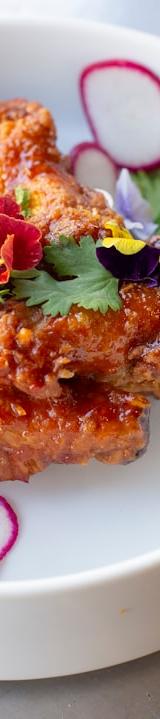
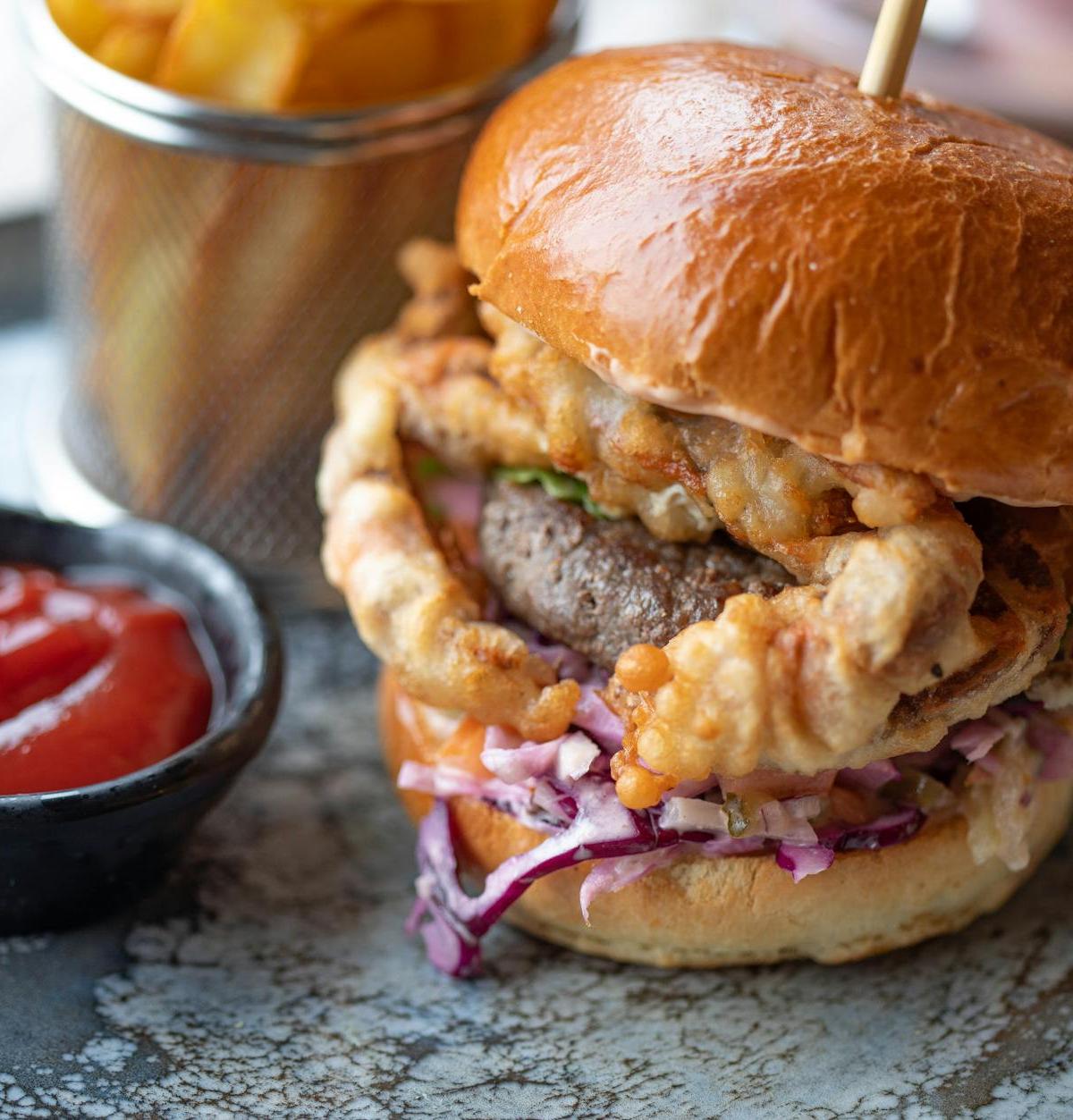
Korean Fried Chicken Burger
Crispy double-fried chicken thighs glazed in sweet and spicy gochujang sauce, stacked on a toasted bun with cooling pickled daikon and creamy mayo. A juicy, messy, craveable burger that delivers Korean street food flavor in every bite.
- Total time
- 45 min
- Servings
- 2
- Calories
- 745
- Protein
- 32g
Ingredients
- 4 oz boneless skinless chicken thighs
- ½ cup all-purpose flour
- 3 tablespoons cornstarch
- ½ teaspoon baking powder
- ¾ teaspoon kosher salt
- ¼ teaspoon black pepper
- ½ teaspoon garlic powder
- 3 cups vegetable oil for frying
- 3 tablespoons gochujang (Korean red chili paste)
- 2 tablespoons honey
- 1 tablespoon rice vinegar
- ½ tablespoon soy sauce
- 1 clove garlic, minced
- ½ teaspoon sesame oil
- ½ tablespoon butter
- 2 whole hamburger buns
- 3 tablespoons mayonnaise
- ½ cup pickled daikon radish (or store-bought)
- 1 tablespoon sesame seeds
- 2 stalks fresh scallions, thinly sliced
Instructions
- 1
Pat the 4 boneless skinless chicken thighs completely dry with paper towels — this is critical for a crispy crust. If the thighs are thicker than 0.75 inches, use a meat mallet to gently pound them to an even thickness so they cook through evenly. Set aside on a plate.
- 2
In a shallow bowl, whisk together 0.5 cup all-purpose flour, 3 tablespoons cornstarch, 0.5 teaspoon baking powder, 0.75 teaspoon kosher salt, 0.25 teaspoon black pepper, and 0.5 teaspoon garlic powder. The baking powder is the secret to extra-crispy edges — it creates tiny bubbles that fry up light and crunchy.
- 3
Make the gochujang glaze: in a small saucepan over medium heat, melt 0.5 tablespoon butter. Add 1 minced garlic clove and cook for 30 seconds until fragrant. Stir in 3 tablespoons gochujang, 2 tablespoons honey, 1 tablespoon rice vinegar, 0.5 tablespoon soy sauce, and 0.5 teaspoon sesame oil. Simmer gently for 2-3 minutes, stirring occasionally, until the sauce thickens slightly and the raw chile heat mellows. Set aside off heat.
- 4
Heat 3 cups vegetable oil in a heavy-bottomed pot to 325°F, measuring the temperature with an instant-read thermometer clipped to the side of the pot. This lower first fry temperature ensures the chicken cooks through without the coating burning.
- 5
Working with one chicken thigh at a time, coat both sides thoroughly in the flour mixture, pressing gently so the coating adheres. Shake off excess. Carefully lower 2 thighs into the hot oil — the oil should bubble and sizzle steadily but not violently. Fry for 8-10 minutes, turning halfway through, until the coating is light golden and the internal temperature reads 165°F at the thickest part.
- 6
Transfer the first batch to a paper towel-lined plate to drain. Repeat with the remaining 2 chicken thighs.
- 7
Let the oil return to 350°F — this second fry crisps up the exterior. Working in batches again, fry the chicken a second time for 2-3 minutes per side, until the coating is deep golden brown and ultra-crispy. Transfer to a clean paper towel-lined plate.
- 8
Split the 2 hamburger buns and lightly toast them cut-side down in a dry skillet over medium heat for 1-2 minutes until they're warm and slightly crispy. Transfer to serving plates.
- 9
Brush the bottom half of each bun with 1.5 tablespoons of mayonnaise. While the chicken is still hot, place 2 fried thighs on each bun and immediately drizzle the warm gochujang glaze over the chicken, letting it seep into the crevices.
- 10
Top with 0.25 cup pickled daikon radish on each burger. Sprinkle 0.5 tablespoon sesame seeds and 1 sliced scallion stalk per burger. Place the top bun on each and serve immediately — the heat will soften the crust if you wait, and the glaze and pickles are best enjoyed while the chicken is still hot.
Tools you’ll need
- paper towels
- meat mallet
- shallow bowl
- whisk
- small saucepan
- instant-read thermometer
- heavy-bottomed pot
- slotted spoon or spider skimmer
- paper towel-lined plate
- 12-inch skillet
- brush or spoon
Cook smarter
Get matched recipes for what’s in your fridge
CookSnap is a free iOS app that finds real recipes from the ingredients you already have. No more grocery-list aspirations.