Kenyan Chapati
Soft, flaky flatbread layered with butter and pan-fried until golden. A staple of East African cuisine that's surprisingly simple to master at home.
- Total time
- 45 min
- Servings
- 4
- Calories
- 380
- Protein
- 6g
Ingredients
- 2 cups all-purpose flour
- ½ teaspoon salt
- ¾ cup warm water
- ¼ cup unsalted butter, melted
- 2 tablespoons vegetable oil for cooking
Instructions
- 1
Pour 2 cups all-purpose flour and 0.5 teaspoon salt into a large mixing bowl. Make a well in the center and slowly add 0.75 cup warm water while stirring with your fingers. Mix until a shaggy dough forms — it should be slightly sticky but hold together. If it's too dry, add water 1 tablespoon at a time; if it's too wet, dust with a bit more flour.
- 2
Transfer the dough to a clean work surface and knead for 8–10 minutes. Push the dough away from you with the heel of your hand, fold it back over itself, rotate it a quarter turn, and repeat. The dough should transform from rough and sticky to smooth, elastic, and soft — you'll feel the texture change under your hands. This development creates the tender, pliable dough you need for flaky chapati.
- 3
Lightly brush the kneaded dough with a small amount of vegetable oil, place it in a clean bowl, and cover with a damp kitchen towel. Let it rest at room temperature for 30 minutes. This resting period allows the gluten to relax, making the dough easier to roll out.
- 4
Divide the rested dough into 4 equal portions. Roll each portion into a tight ball between your palms — this helps trap steam and creates layers.
- 5
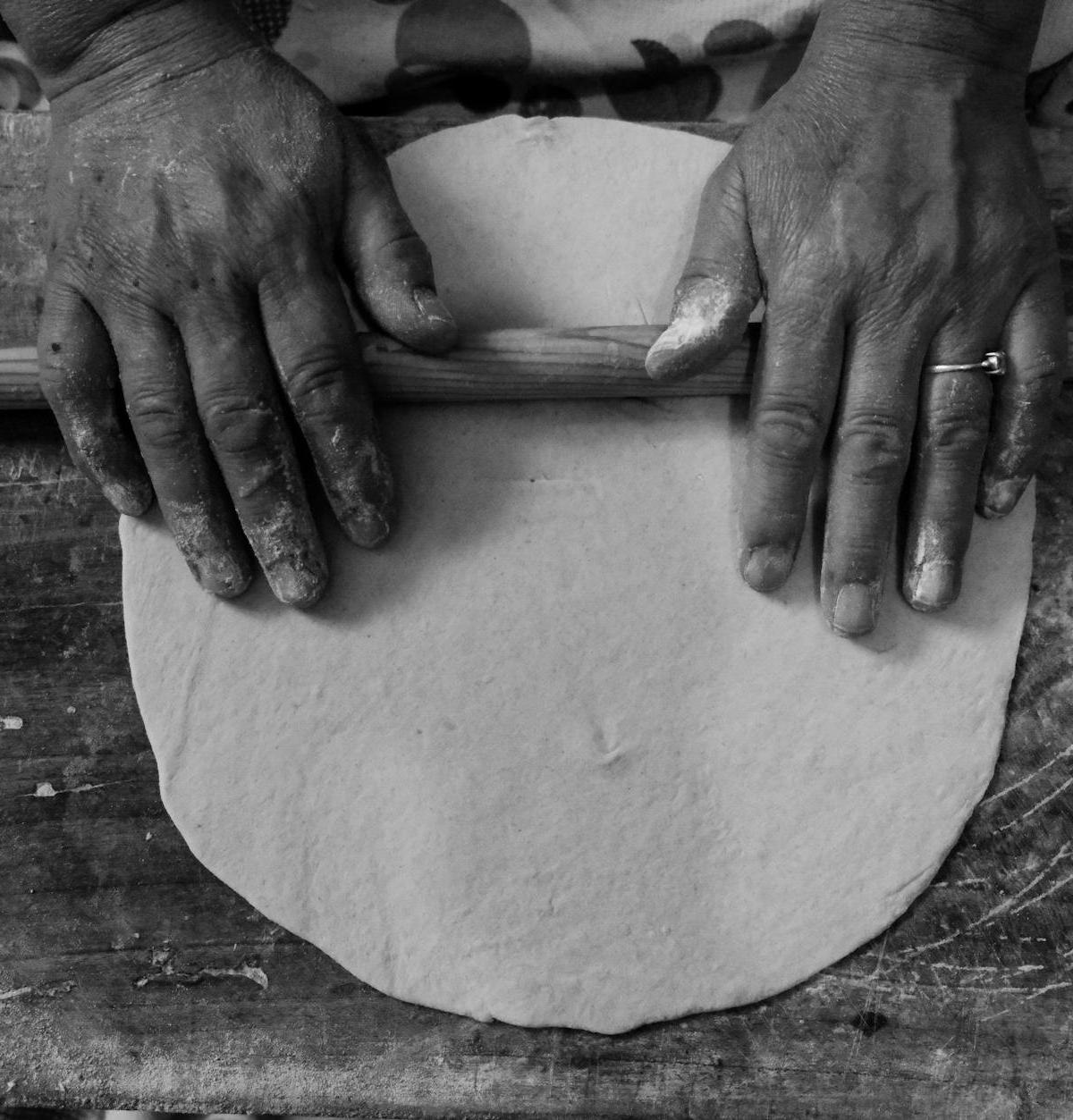
On a lightly oiled work surface, take one dough ball and use a rolling pin to flatten it into a thin 8-inch round, about the thickness of a playing card. Brush the entire surface evenly with some of the 0.25 cup melted butter — use about 1 tablespoon per round. The butter is what creates the signature flaky layers.
- 6
Starting from one edge of the buttered round, tightly roll the dough into a long rope, then coil that rope into a spiral (like a snail shell). Tuck the end underneath and gently press the coil flat into a disk about 0.25 inch thick. This coiling technique creates the many internal layers. Repeat with the remaining dough balls.
- 7
Set a 12-inch cast iron skillet or non-stick skillet over medium-high heat and add 0.5 tablespoon vegetable oil. Once the oil shimmers and a small piece of dough immediately sizzles when dropped in, the pan is ready.
- 8
Carefully place one coiled dough disk into the hot skillet. Cook undisturbed for 2–3 minutes until the bottom is golden brown with darker speckled spots — listen for a gentle, steady sizzle. Flip gently using a fish spatula and cook the other side for another 2–3 minutes until it's equally golden and the chapati puffs slightly. The dough should feel soft and pliable when you press it lightly, not firm or crispy.
- 9
Transfer the cooked chapati to a clean kitchen towel or paper towels and cover loosely to keep warm. Repeat with the remaining dough disks, wiping out the skillet between batches if oil accumulates, and adding a tiny bit more oil if it looks dry.
- 10
Serve the chapati warm, stacked on a plate and wrapped in a kitchen towel to keep them soft and pliable. Tear off pieces by hand or fold them in quarters. They're wonderful served alongside beans, lentils, or a simple vegetable curry.
Tools you’ll need
- large mixing bowl
- 12-inch cast iron skillet or non-stick skillet
- rolling pin
- fish spatula
- clean kitchen towel
- damp kitchen towel
Cook smarter
Get matched recipes for what’s in your fridge
CookSnap is a free iOS app that finds real recipes from the ingredients you already have. No more grocery-list aspirations.