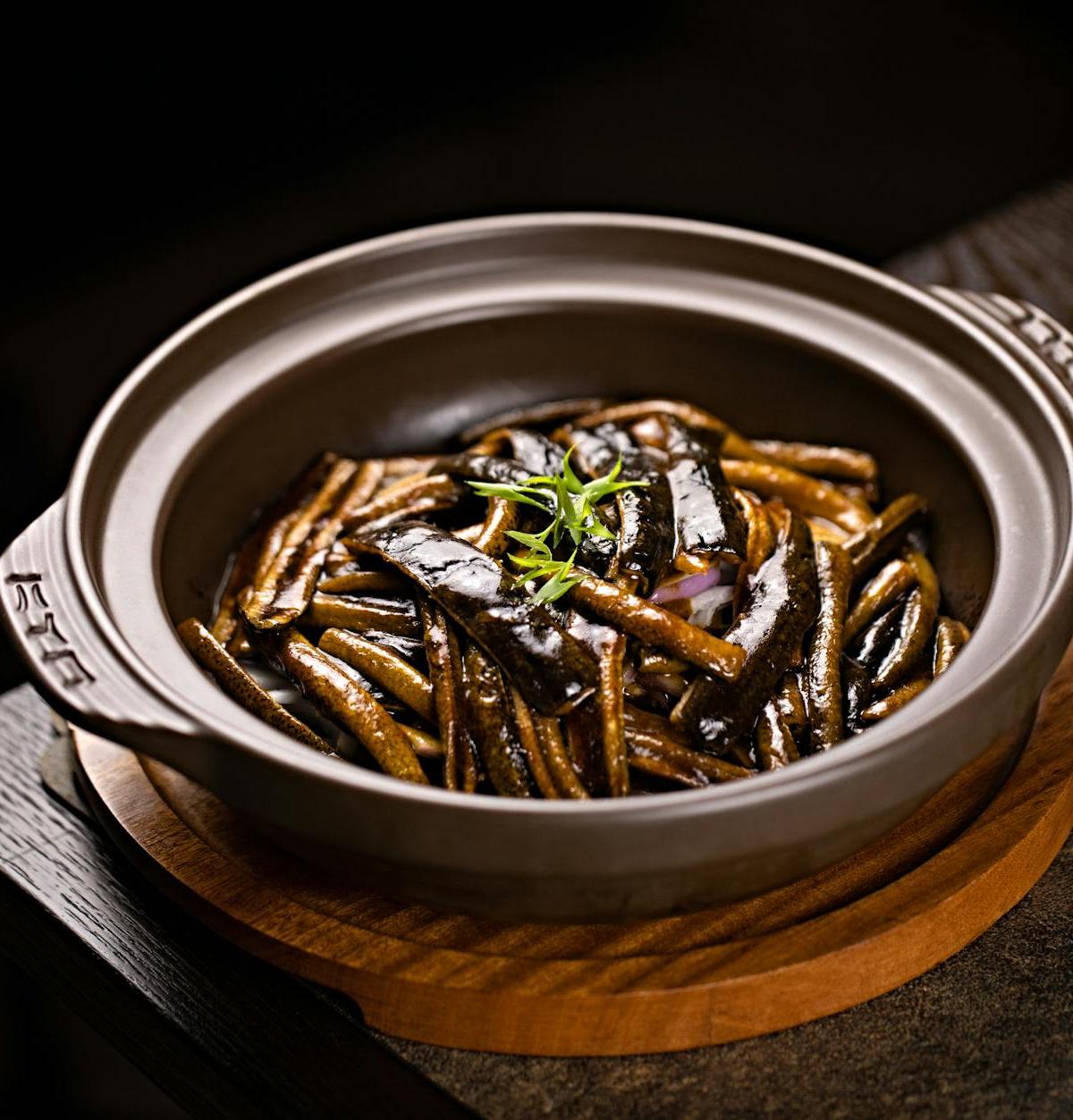
Japanese Simmered Seaweed and Vegetables
A delicate Japanese simmered dish of rehydrated hijiki seaweed with carrots, aburaage, and shiitake mushrooms in a savory-sweet dashi broth. This humble, nutrient-dense side dish comes together in minutes and pairs beautifully with rice and grilled fish.
- Total time
- 25 min
- Servings
- 4
- Calories
- 95
- Protein
- 4g
Ingredients
- 1 oz dried hijiki seaweed
- 3 oz shiitake mushrooms, fresh
- 1 whole medium carrot
- 2 whole aburaage (fried tofu pouches)
- 1 cup dashi stock (or water with 1 tsp dashi powder)
- 1.5 tablespoons low-sodium soy sauce
- 1 tablespoon mirin
- ½ teaspoon granulated sugar
- 2 tablespoons sake (or water)
- ½ tablespoon neutral oil
Instructions
- 1
Place 1 oz of dried hijiki seaweed in a fine-mesh strainer and rinse under cold running water for about 30 seconds. Transfer to a bowl and cover with lukewarm water. Let it soak for 5-8 minutes until the seaweed softens and expands to roughly 3 times its original volume — you should see it become dark green and slightly tender to the touch. Drain well through the strainer, pressing gently with your fingers to remove excess water.
- 2
Trim the stem ends off 3 oz of fresh shiitake mushrooms, wipe the caps clean with a damp paper towel (don't soak them), and slice them into thin strips about 1/4-inch thick. Aim for uniform thickness so they cook evenly.
- 3
Peel 1 medium carrot and slice it diagonally into thin 1/8-inch slices — rotating the carrot a quarter turn with each slice creates attractive oval shapes that cook quickly and catch the sauce nicely.
- 4
Place 2 aburaage (fried tofu pouches) on a cutting board. If they feel very oily, pour hot water over them in a strainer to lightly blanch and remove excess oil. Once cool, slice them lengthwise in half, then cut crosswise into 1/2-inch strips so they cook into small, tender pieces.
- 5
Set a 10-inch saucepan or small Dutch oven over medium heat. Add 0.5 tablespoon of neutral oil and let it heat for about 30 seconds until it shimmers. You should smell a faint toasted aroma when the pan is ready.
- 6
Add the sliced shiitake mushrooms to the hot oil and sauté for 2-3 minutes, stirring occasionally with a wooden spoon. Watch for the edges of the mushrooms to darken slightly and for their aroma to become deeper and earthier — this is when their umami flavors are developing. Don't rush this step; it builds the foundation of the dish's flavor.
- 7
Add the carrot slices and aburaage strips to the pan and stir everything together. Sauté for another 1-2 minutes until the carrot pieces are heated through and the ingredients are well mixed.
- 8
Pour in 1 cup of dashi stock, 2 tablespoons of sake, 1.5 tablespoons of low-sodium soy sauce, 1 tablespoon of mirin, and 0.5 teaspoon of granulated sugar. Stir gently to dissolve the sugar and distribute the seasonings. Bring the liquid to a simmer over medium heat — you should see small bubbles forming steadily around the edges, not a rolling boil.
- 9
Add the drained hijiki seaweed to the simmering liquid and stir gently to submerge it. Reduce the heat to medium-low so the liquid maintains a gentle, barely visible simmer with just a few bubbles breaking the surface. This gentle heat prevents the seaweed from becoming tough.
- 10
Simmer uncovered for 10-12 minutes, stirring occasionally, until most of the liquid has been absorbed and the remaining sauce coats the seaweed and vegetables in a glossy sheen. The hijiki should be tender enough to break easily with a wooden spoon, and the carrot should be fork-tender but still hold its shape. You'll know it's done when there's just a thin film of liquid remaining in the bottom of the pan.
- 11
Remove from heat and let the nimono rest in the pan for 2 minutes so the flavors meld. Taste a spoonful and adjust seasoning if needed — add a touch more soy sauce if it needs more saltiness, or a few drops of mirin if you want more sweetness. Transfer to a serving bowl and allow it to cool to room temperature before serving, as nimono is traditionally eaten at room temperature or chilled. This makes it perfect for meal prep.
Tools you’ll need
- fine-mesh strainer
- small mixing bowl
- chef's knife
- cutting board
- 10-inch saucepan or small Dutch oven
- wooden spoon
- measuring spoons
- measuring cups
Cook smarter
Get matched recipes for what’s in your fridge
CookSnap is a free iOS app that finds real recipes from the ingredients you already have. No more grocery-list aspirations.