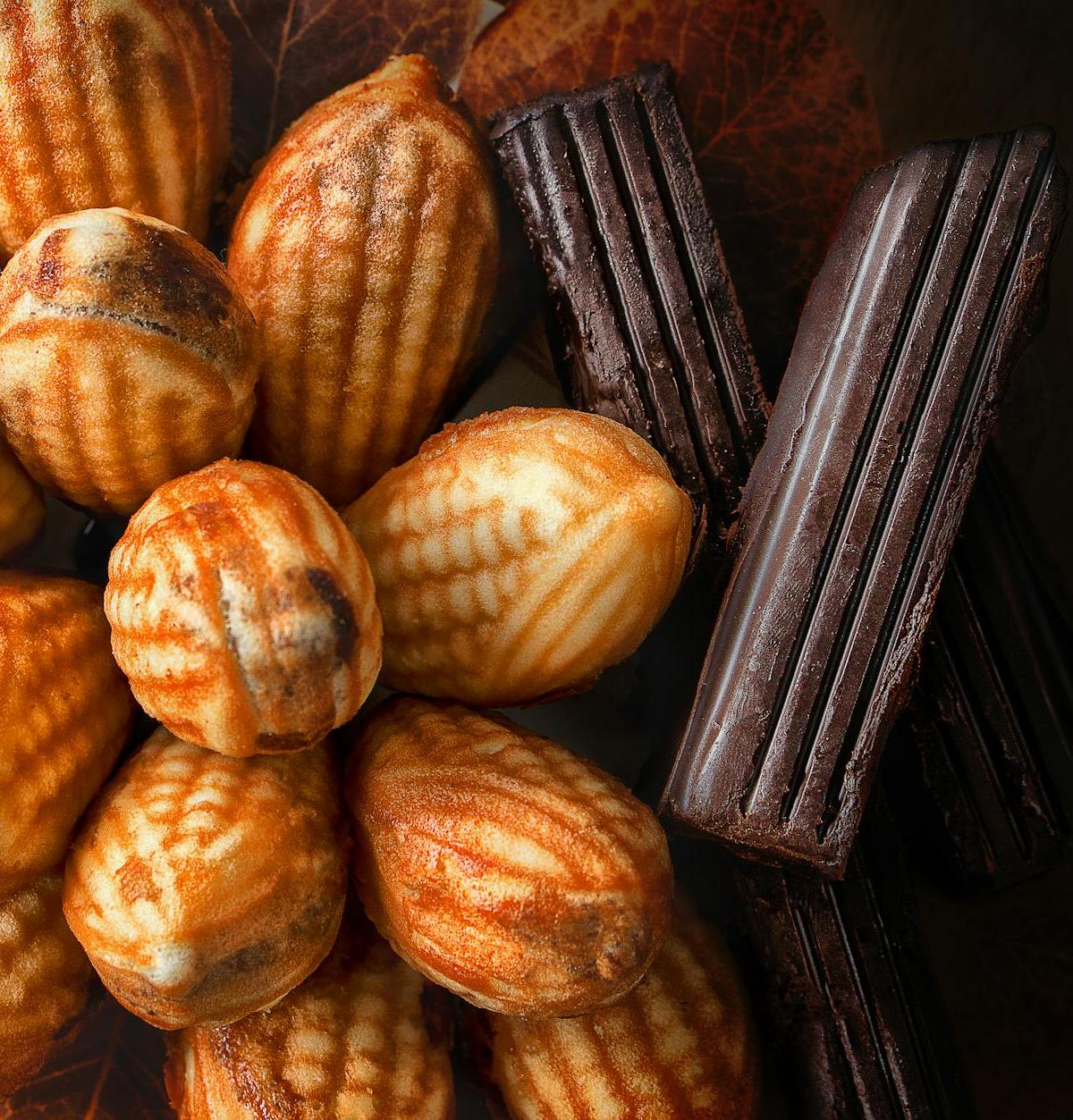
French Madeleines
Tender, buttery French sponge cakes with a delicate crumb and golden exterior. These iconic shell-shaped treats are perfect for tea time or as an elegant homemade gift.
- Total time
- 35 min
- Servings
- 12
- Calories
- 156
- Protein
- 3g
Ingredients
- 2 whole large eggs
- 100 g granulated sugar
- 100 g all-purpose flour
- 85 g unsalted butter, melted and cooled
- 1 tablespoon honey
- ½ teaspoon vanilla extract
- ¼ teaspoon salt
- 1 tablespoon unsalted butter, for the pan
- 1 tablespoon all-purpose flour, for dusting
Instructions
- 1
Position a rack in the upper third of your oven and preheat to 375°F (190°C). You want the top of your madeleines to bake quickly and develop that signature hump.
- 2
Brush a standard 12-cavity madeleine mold generously with 1 tablespoon of softened unsalted butter, working into every crevice and seam. Dust the entire mold with 1 tablespoon of all-purpose flour, tapping out excess. This creates the crispy, detailed exterior the cakes are known for.
- 3
Crack 2 large eggs into a medium heatproof bowl and whisk in 100 grams of granulated sugar. Set the bowl over a pot of gently simmering water (the bottom should not touch the water), and whisk constantly for 3-4 minutes until the mixture is warm to the touch and pale, about 110°F on an instant-read thermometer. This creates small air bubbles that give madeleines their signature tender crumb.
- 4
Remove the bowl from heat and continue whisking for 2-3 minutes until the mixture cools slightly and forms ribbons when the whisk is lifted — this means you've incorporated enough air.
- 5
Sift 100 grams of all-purpose flour and 0.25 teaspoon of salt together onto a sheet of parchment paper. Sifting removes lumps and aerates the flour, preventing a dense crumb.
- 6
Gently fold the flour mixture into the egg mixture in three additions, using a rubber spatula and folding just until combined after each addition. Do not overmix — stop as soon as no white streaks remain. Overmixing deflates the aerated eggs and creates a tough, rubbery cake.
- 7
Pour 85 grams of cooled melted unsalted butter and 0.5 teaspoon of vanilla extract into a small bowl and stir to combine. Fold this butter mixture into the batter in two additions, folding gently just until no streaks of butter remain. The batter will be loose and glossy.
- 8
Fold in 1 tablespoon of honey, stirring just until evenly distributed. The honey adds subtle sweetness and helps the cakes brown beautifully.
- 9
Spoon the batter into the prepared mold cavities, filling each one about three-quarters full. Use a small spoon or pastry bag fitted with a plain tip for even distribution — this helps each madeleine bake uniformly.
- 10
Bake for 10-12 minutes, watching carefully through the oven window. The madeleines are done when the edges are golden brown and springy, and a toothpick inserted into the thickest part comes out clean. The characteristic hump should be well-defined and slightly browned.
- 11
Remove from the oven and let cool in the mold for 1-2 minutes — this allows the structure to set slightly. Then gently run a thin knife around the edges and invert the mold onto a wire rack, tapping lightly until the madeleines fall out. Cool completely on the rack before serving, about 10 minutes.
- 12
Serve the madeleines at room temperature or slightly warm, plain or dusted with powdered sugar. They are best eaten the same day they are baked, when the exterior is crisp and the interior still tender.
Tools you’ll need
- 12-cavity madeleine mold
- medium heatproof bowl
- pot for simmering water
- whisk
- instant-read thermometer
- rubber spatula
- parchment paper
- fine-mesh sieve or sifter
- small spoon or pastry bag
- thin knife
- wire rack
Cook smarter
Get matched recipes for what’s in your fridge
CookSnap is a free iOS app that finds real recipes from the ingredients you already have. No more grocery-list aspirations.



