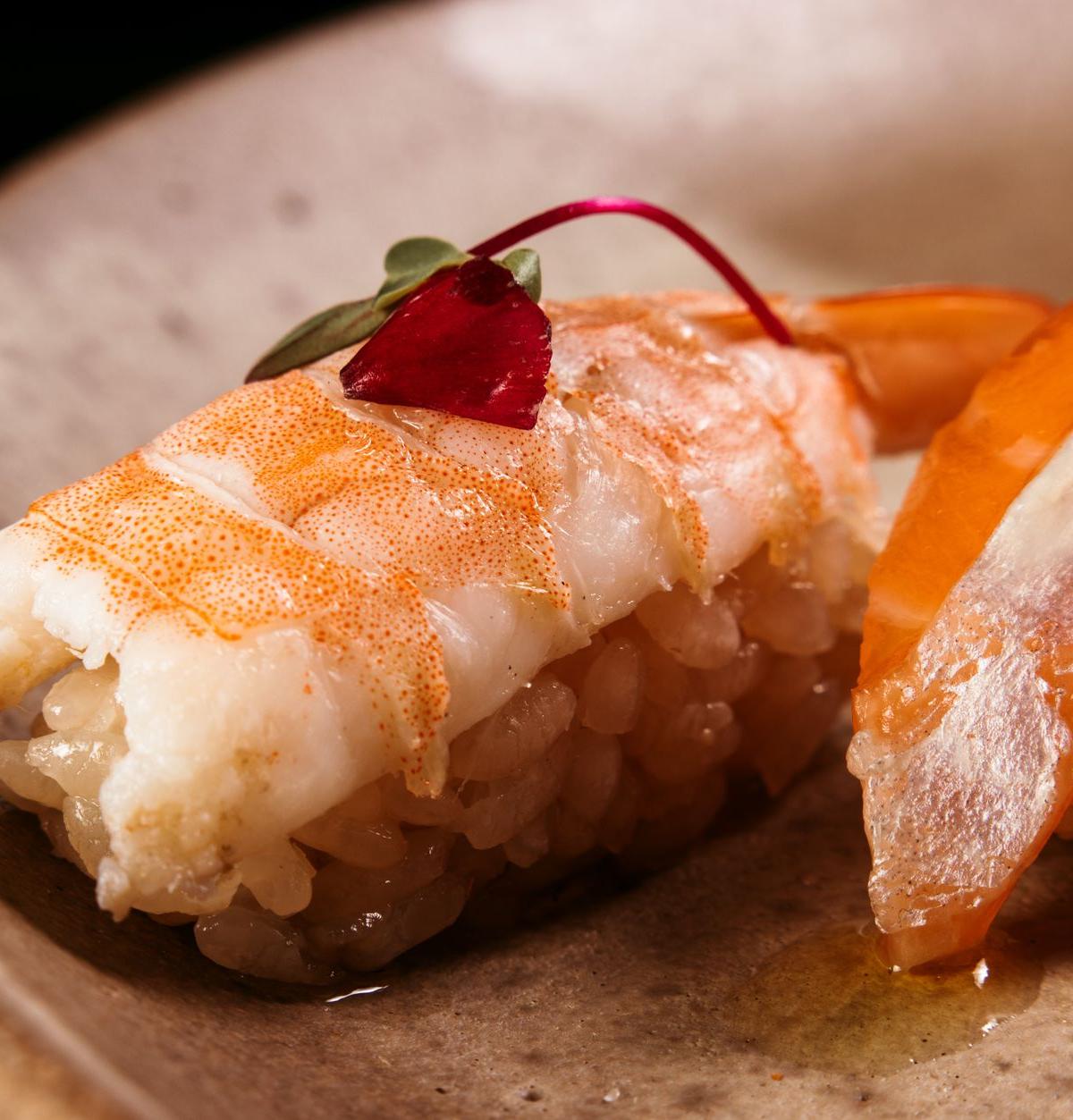
Japanese Cooked Shrimp Sushi
Delicate cooked shrimp atop perfect sushi rice with a whisper of wasabi. A elegant Japanese classic that showcases pristine seafood technique.
- Total time
- 25 min
- Servings
- 2
- Calories
- 142
- Protein
- 12g
Ingredients
- 1 cup sushi rice
- 1.25 cups water
- 2 tablespoons rice vinegar
- 1 tablespoon granulated sugar
- ½ teaspoon fine sea salt
- 8 whole large raw shrimp (26-30 count), head-on or headless
- 2 cups water
- 1 teaspoon fine sea salt
- ½ teaspoon wasabi
- 2 tablespoons pickled ginger (gari)
- 2 tablespoons low-sodium soy sauce (shoyu)
Instructions
- 1
Rinse 1 cup of sushi rice in a fine-mesh strainer under cold running water, stirring gently with your fingers, until the water runs almost clear — this removes excess starch so the rice stays separate and glossy. Drain well.
- 2
Pour 1.25 cups of water into a medium saucepan and bring to a boil over high heat. Add the rinsed rice, stir once, and reduce heat to low. Cover with a tight-fitting lid and simmer for 15 minutes without peeking — the rice will absorb all the water and become tender.
- 3
While the rice cooks, pour 2 tablespoons of rice vinegar, 1 tablespoon of granulated sugar, and 0.5 teaspoon of fine sea salt into a small bowl. Stir until the sugar and salt dissolve completely — this is your sushi seasoning.
- 4
When the rice is done, transfer it to a large shallow bowl or wooden sushi oke (wooden rice tub). Pour the vinegar mixture over the hot rice and fold gently with a wooden spatula or rice paddle, turning the rice over and over for about 2 minutes. This distributes the seasoning and allows steam to escape, cooling the rice and giving it a glossy shine. Set aside to cool to room temperature, about 5 minutes.
- 5
Bring 2 cups of water to a boil in a small saucepan over high heat. Add 1 teaspoon of fine sea salt — the water should taste like the sea. Gently add 8 large raw shrimp to the boiling water.
- 6
The shrimp will sink at first, then float to the surface when they're nearly done. Once they float, cook for exactly 1-2 minutes more — you're looking for the shells to turn bright pink-orange and the flesh to turn opaque white. Do not overcook, or the shrimp will become rubbery and stringy.
- 7
Using a slotted spoon, transfer the cooked shrimp immediately to an ice bath (a bowl of ice water) to stop the cooking process. Let them chill for 1 minute, then drain on a clean kitchen towel and pat dry.
- 8
Once the shrimp are cool enough to handle, gently peel away the shell by pinching the legs and pulling the shell and tail away. Leave the tail on for presentation — it's traditional and helps you grip the nigiri.
- 9
Using a sharp paring knife, make a shallow cut along the belly of each shrimp from head to tail, cutting about halfway through the flesh. Do not cut all the way through. Gently open the shrimp like a book so it lies flat — this is called butterflying. Pat with a paper towel to remove excess moisture.
- 10
Fill a small bowl with water and add a pinch of salt — this is your hand water, which prevents the sticky rice from clinging to your fingers. Wet your hands in this water, then shake off excess.
- 11
Grab about 2 tablespoons (roughly a golf-ball-size portion) of cooled sushi rice in the palm of your hand. Gently press and shape it into a compact, oblong mound by passing it back and forth between your palms and shaping with your fingers — it should be about 2 inches long, 0.75 inches wide, and slightly domed on top. The rice should be firm enough to hold together but not compressed hard.
- 12
With a wet finger, apply a tiny dab of wasabi (about the size of a rice grain) on top of the rice mound. Lay one butterflied cooked shrimp on top, pink side up, pressing gently so it adheres. The tail should drape slightly off the back. Repeat to form 8 nigiri total.
- 13
Arrange the ebi nigiri on a small ceramic or wooden plate. Serve immediately with a small dish of soy sauce and a small mound of pickled ginger alongside. Dip the shrimp side into the soy sauce (not the rice, which will absorb too much liquid and fall apart) and eat in one bite. The wasabi will warm your sinuses pleasantly.
Tools you’ll need
- fine-mesh strainer
- medium saucepan with tight-fitting lid
- small saucepan
- large shallow bowl or wooden sushi oke
- wooden rice paddle or spatula
- slotted spoon
- ice bath (bowl)
- sharp paring knife
- small bowl for hand water
- ceramic or wooden serving plate
Cook smarter
Get matched recipes for what’s in your fridge
CookSnap is a free iOS app that finds real recipes from the ingredients you already have. No more grocery-list aspirations.