Coffee Walnut Cake
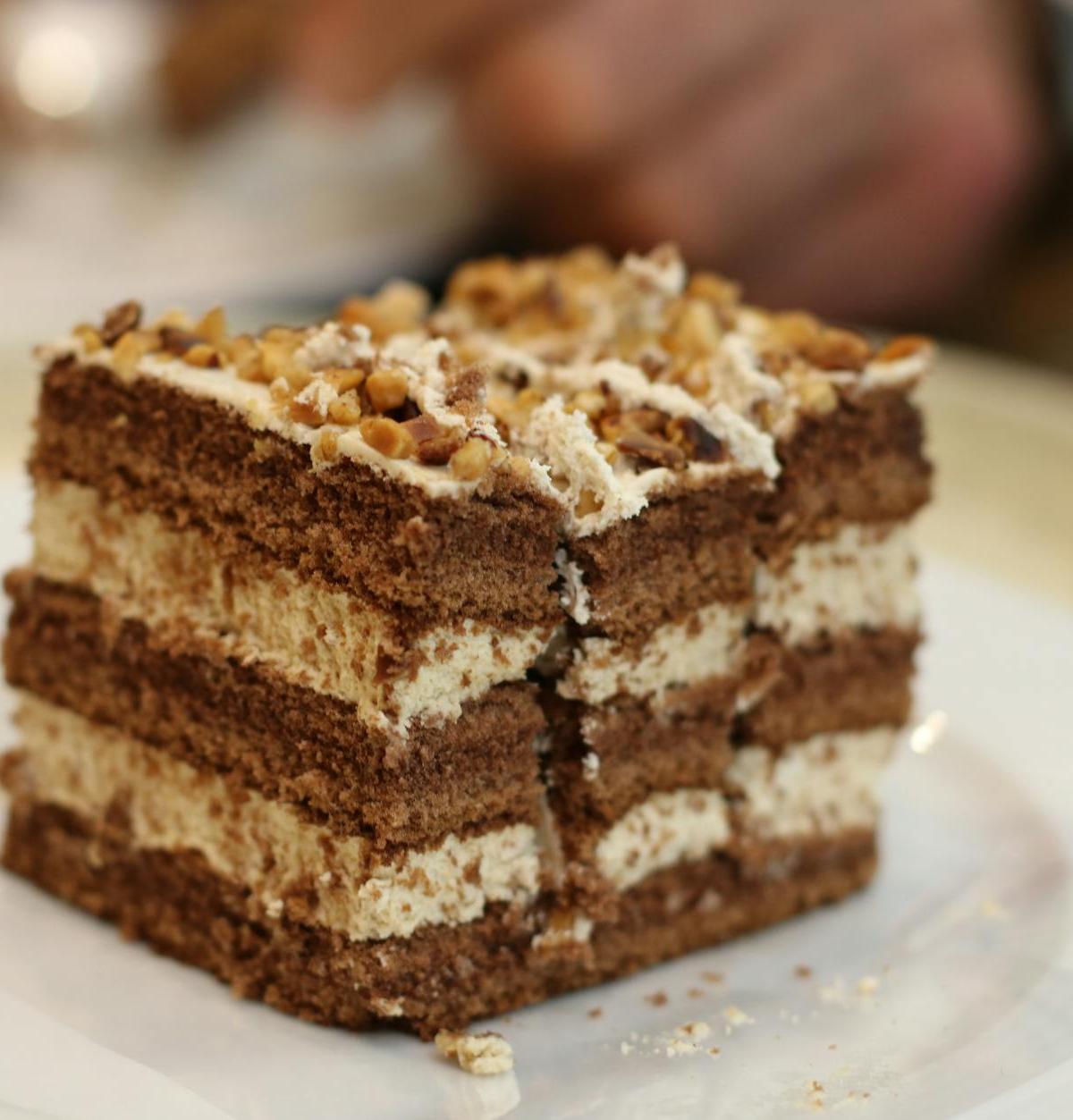
Rich, tender layer cake with bold coffee flavor, topped with silky coffee buttercream and toasted walnuts. An elegant British classic that's surprisingly simple to make at home.
- Total time
- 50 min
- Servings
- 8
- Calories
- 485
- Protein
- 6g
Ingredients
- 175 g unsalted butter, softened
- 175 g caster sugar
- 3 whole large eggs
- 2 tbsp instant espresso powder
- 2 tbsp boiling water
- 175 g self-raising flour
- 1 tsp baking powder
- ¼ tsp sea salt
- 75 g walnut pieces, finely chopped
- 100 g unsalted butter, softened
- 1 tbsp instant espresso powder
- 1 tbsp boiling water
- 225 g icing sugar, sifted
- ½ tsp vanilla extract
- 16 whole walnut halves, lightly toasted
Instructions
- 1
Preheat your oven to 180°C (160°C fan-assisted) and position a rack in the center. Lightly butter two 20cm round springform cake tins and line the bottoms with baking parchment — this prevents sticking and ensures clean, even layers.
- 2
Dissolve 2 tablespoons of instant espresso powder in 2 tablespoons of boiling water in a small bowl. Stir well until completely dissolved, then set aside to cool slightly — this concentrates the coffee flavor without adding excess liquid.
- 3
Finely chop 75g of walnut pieces with a knife on a cutting board until they resemble coarse breadcrumbs — not so fine that they become powdery, but small enough to distribute evenly through the batter.
- 4
In a large bowl using an electric mixer (or by hand with a wooden spoon), beat 175g of softened unsalted butter and 175g of caster sugar together for 3–4 minutes until the mixture is pale, fluffy, and noticeably lighter in color. This incorporation of air is essential — it gives the cake its tender crumb.
- 5
Add the 3 large eggs one at a time, beating well after each addition for about 30 seconds. If the mixture begins to look separated or curdled, add 1 tablespoon of your flour mixture (measured separately) — this stabilizes the batter. The final mixture should be smooth and glossy.
- 6
Pour the cooled coffee mixture into the batter and mix on low speed for 20 seconds until just combined. Do not overmix — you want the coffee evenly distributed but the batter still homogeneous.
- 7
In a separate small bowl, whisk together 175g of self-raising flour, 1 teaspoon of baking powder, and 0.25 teaspoon of sea salt. Gently fold this dry mixture into the butter mixture using a rubber spatula in three additions, folding until just combined after each addition — overmixing develops gluten and makes the cake tough.
- 8
Fold the 75g of finely chopped walnuts into the batter with a few gentle strokes of the spatula until evenly distributed.
- 9
Divide the batter evenly between the two prepared tins — a small offset spatula or the back of a spoon helps you level the tops. Tap each tin gently on the counter twice to release any large air pockets.
- 10
Bake for 20–25 minutes until a skewer inserted into the center of each cake comes out with a few moist crumbs clinging to it — do not overbake, or the cake will be dry. The sponge should spring back when gently pressed, and the edges should just begin to pull away from the sides of the tin.
- 11
Remove the tins from the oven and let cool in the tins for 5 minutes — this allows the cake to set just enough to be handled without crumbling. Then run a thin knife around the inside edge of each tin and turn the cakes out onto a wire cooling rack. Peel off the parchment and let cool completely, about 30 minutes, before assembling.
- 12
While the cakes cool, prepare the buttercream: dissolve 1 tablespoon of instant espresso powder in 1 tablespoon of boiling water in a small bowl. Let it cool to room temperature, stirring occasionally.
- 13
In a medium bowl using an electric mixer, beat 100g of softened unsalted butter on medium speed for 2 minutes until it is very pale and creamy. Gradually add 225g of sifted icing sugar, beating on low speed to avoid a cloud of powder, then increase to medium speed and beat for another 2–3 minutes until light and fluffy.
- 14
Pour the cooled espresso mixture and 0.5 teaspoon of vanilla extract into the buttercream and beat on low speed until fully combined and smooth. If the frosting seems a bit loose, chill it in the refrigerator for 10 minutes until it reaches a spreadable consistency.
- 15
Place one cooled cake layer on a serving plate or cake board. Using an offset spatula or the back of a spoon, spread about one-third of the buttercream evenly over the top, leaving a 1cm border around the edge. The second cake layer will rest on this, and the border prevents the frosting from squishing out the sides.
- 16
Carefully place the second cake layer on top, pressing down gently to secure it. Spread the remaining buttercream over the top and around the sides of the cake in an even, smooth layer — or leave the sides rustic for a more casual look, your choice.
- 17
Press the 16 lightly toasted walnut halves around the top edge of the cake in a neat ring — this adds visual elegance and a final hint of toasted flavor. Let the cake rest at room temperature for at least 1 hour before slicing, which allows the structure to set and makes for cleaner cuts.
Tools you’ll need
- two 20cm round springform cake tins
- baking parchment
- small bowl
- cutting board and sharp knife
- large mixing bowl
- electric mixer (or wooden spoon for hand-mixing)
- medium mixing bowl
- rubber spatula
- small offset spatula
- wire cooling rack
- skewer or cake tester
- serving plate or cake board
Cook smarter
Get matched recipes for what’s in your fridge
CookSnap is a free iOS app that finds real recipes from the ingredients you already have. No more grocery-list aspirations.