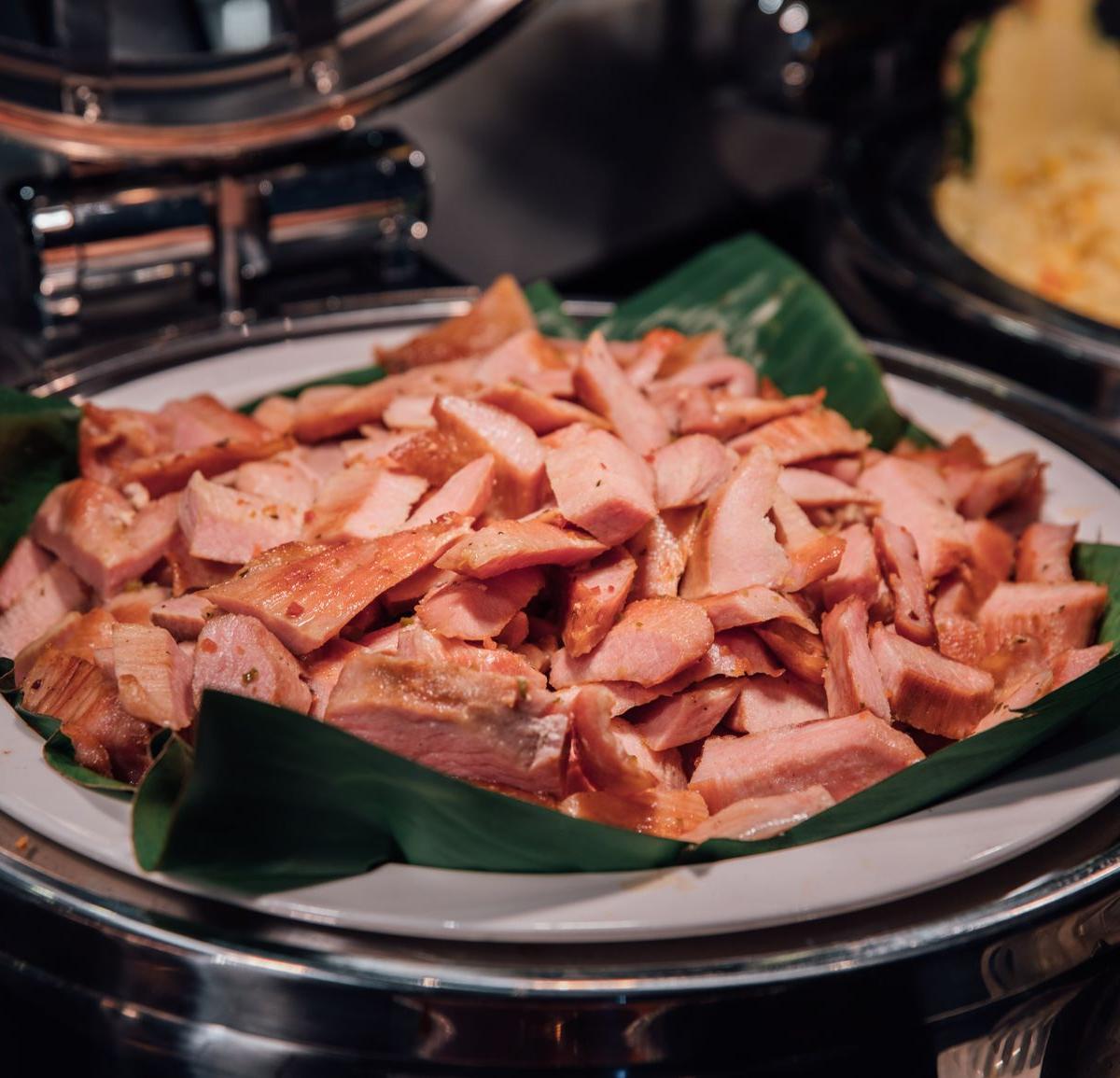
Cajun Tasso Ham
Smoky, spiced cured pork shoulder with deep Cajun flavors—a Louisiana staple perfect for gumbo, jambalaya, or sliced thin for appetizers. Homemade in 3 weeks with minimal hands-on time.
- Total time
- 2160 min
- Servings
- 12
- Calories
- 280
- Protein
- 38g
Ingredients
- ½ cup kosher salt
- 1 teaspoon pink curing salt (sodium nitrite)
- ¼ cup dark brown sugar
- 2 tablespoon whole black peppercorns
- 1 tablespoon whole coriander seeds
- 1 tablespoon whole mustard seeds
- 1 teaspoon whole cloves
- 4 sprigs fresh thyme sprigs
- 2 leaves fresh bay leaves
- 6 cloves garlic cloves
- 1 ounce fresh ginger, peeled and sliced
- 3 tablespoon smoked paprika
- 2 tablespoon cayenne pepper
- 1.5 tablespoon garlic powder
- 1.5 tablespoon onion powder
- 1 tablespoon ground black pepper
- 1 tablespoon dried thyme
- 1 tablespoon dried oregano
- 1 tablespoon granulated sugar
- 1 teaspoon kosher salt
- 1 teaspoon ground mustard
- 4 cup wood chips (hickory or oak)
- 2 cup water
Instructions
- 1
Select a 4 to 5-pound boneless pork shoulder (also called pork butt). Pat completely dry with paper towels and place in a non-reactive container (glass, stainless steel, or food-grade plastic).
- 2
Make the cure base: In a small saucepan, combine 0.5 cup kosher salt, 1 teaspoon pink curing salt, 0.25 cup dark brown sugar, 2 tablespoon whole black peppercorns, 1 tablespoon whole coriander seeds, 1 tablespoon whole mustard seeds, 1 teaspoon whole cloves, 4 fresh thyme sprigs, 2 fresh bay leaves, 6 garlic cloves (lightly crushed), and 1 ounce fresh sliced ginger. Add 4 cups of water and bring to a boil over medium-high heat, stirring occasionally until the salt and sugar dissolve completely—about 3-4 minutes. You should see steam rising steadily and no granules remaining at the bottom. Remove from heat and let cool to room temperature (about 1 hour), then refrigerate until completely cold—at least 2 hours or overnight.
- 3
Once the cure brine is cold, pour it over the pork shoulder in your container. Make sure the meat is fully submerged—if it floats, weigh it down with a small plate or ziploc bag filled with water. Cover tightly and refrigerate for 2 to 3 weeks. The longer it cures, the deeper the flavor and the more the meat will firm up. Check once or twice during this time to ensure the meat stays fully submerged.
- 4
After curing, remove the pork shoulder from the brine and rinse it thoroughly under cold running water for 2-3 minutes, rubbing with your hands to remove surface salt and spices. Pat completely dry with paper towels—this is crucial for developing a proper bark (crispy exterior) during smoking.
- 5
Mix the smoking spice rub: In a small bowl, combine 3 tablespoon smoked paprika, 2 tablespoon cayenne pepper, 1.5 tablespoon garlic powder, 1.5 tablespoon onion powder, 1 tablespoon ground black pepper, 1 tablespoon dried thyme, 1 tablespoon dried oregano, 1 tablespoon granulated sugar, 1 teaspoon kosher salt, and 1 teaspoon ground mustard. Stir well to break up any lumps.
- 6
Rub the entire surface of the pork shoulder generously with the spice mixture, working it into all crevices and sides. Use about 2-3 tablespoon per side, pressing gently so it adheres to the damp meat. Let the coated meat sit at room temperature for 30 minutes while you prepare your smoker—this allows the rub to begin penetrating the surface.
- 7
Set up a smoker (offset barrel, bullet smoker, or pellet smoker) for 225–250°F cooking. Soak 4 cup wood chips (hickory or oak) in 2 cup water for at least 30 minutes. Add the drained wood chips to your smoker's firebox or smoking chamber—they'll smolder and create the signature smoky flavor. If using a pellet smoker, follow the manufacturer's instructions for temperature control.
- 8
Place the rubbed pork shoulder on the smoker rack fat-side up (the remaining fat cap will protect the meat and baste it during cooking). Insert an instant-read thermometer into the thickest part of the meat without touching bone. Smoke at 225–250°F for 4 to 6 hours, until the internal temperature reaches 190–195°F. The meat should have a dark reddish-brown bark and jiggle slightly when you gently move it—this indicates the collagen has broken down and rendered. Add more soaked wood chips every 1-2 hours to maintain smoke.
- 9
Once the tasso reaches 190–195°F, carefully remove it from the smoker using tongs and transfer it to a cutting board. Let it rest for 15-20 minutes—during this time the juices will redistribute and the meat will firm up slightly. You'll notice the surface bark continues to darken slightly as carryover heat works its magic.
- 10
Let the cooled tasso rest to room temperature (about 1-2 hours), then wrap tightly in food-grade plastic wrap and refrigerate. The flavor deepens even more over the next 24-48 hours. Tasso will keep refrigerated for up to 2 weeks or frozen for up to 3 months. To use, slice thinly against the grain (about 1/8-inch thick) for appetizers, or dice into 1/4-inch pieces for gumbo, jambalaya, or red beans and rice.
Tools you’ll need
- non-reactive container (glass or food-grade plastic, at least 8-quart capacity)
- small saucepan
- instant-read thermometer
- smoker (offset barrel, bullet, or pellet)
- tongs
- cutting board
- sharp slicing knife
- small mixing bowl
Cook smarter
Get matched recipes for what’s in your fridge
CookSnap is a free iOS app that finds real recipes from the ingredients you already have. No more grocery-list aspirations.