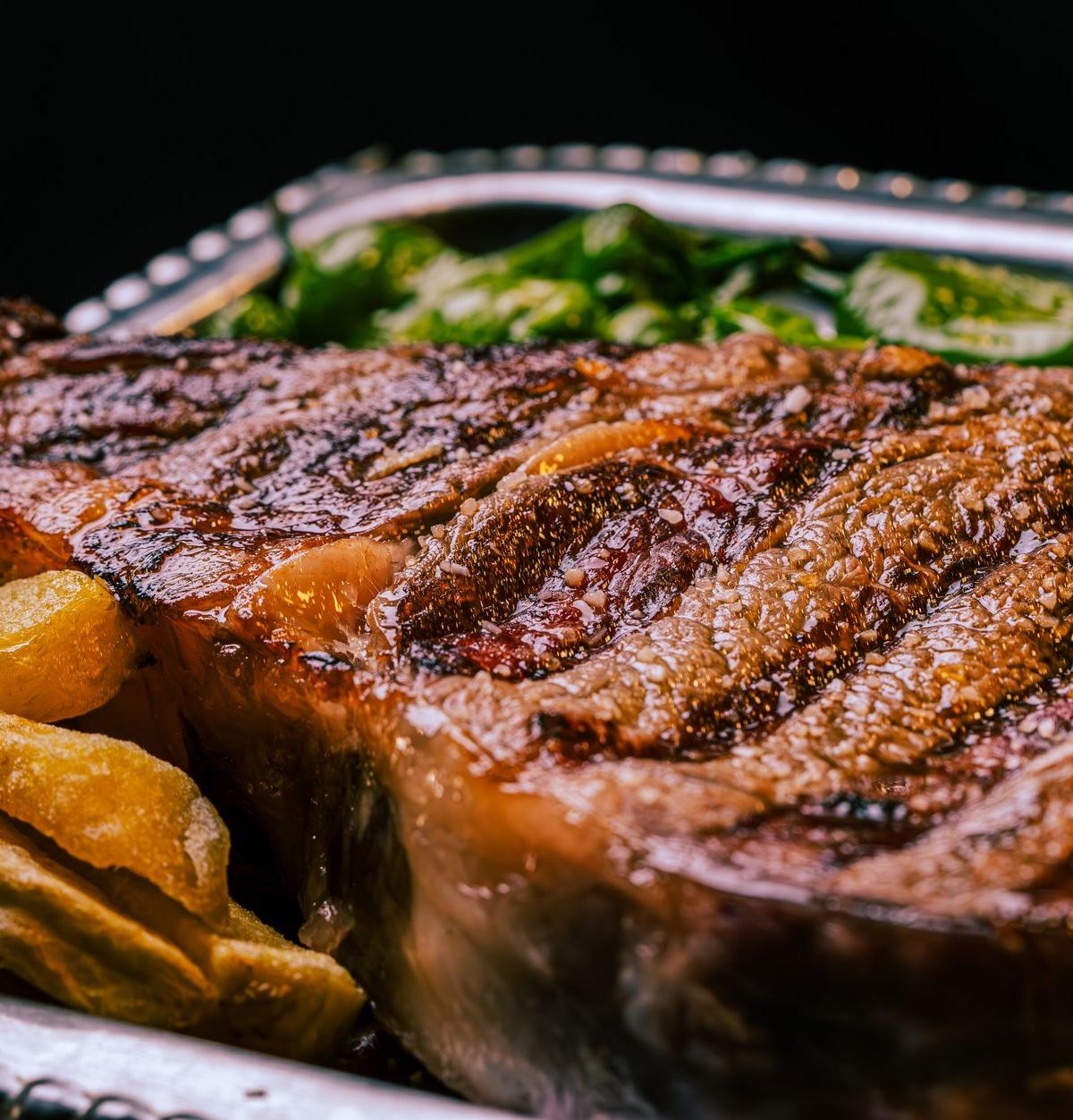
Bife de Chorizo a la Parrilla
A classic Argentine grilled ribeye steak with a smoky crust and tender, juicy interior, finished with fleur de sel. This simple but stunning dish celebrates pristine beef and the char of live fire.
- Total time
- 25 min
- Servings
- 2
- Calories
- 520
- Protein
- 55g
Ingredients
- 2 steaks (about 12 oz each) bone-in beef ribeye steaks (bife de chorizo), 1 inch thick
- 1 tablespoon fleur de sel or coarse sea salt
- ½ teaspoon freshly cracked black pepper
- 1 tablespoon extra-virgin olive oil
- 2 tablespoons fresh flat-leaf parsley, finely chopped
- 2 wedges lemon wedges
Instructions
- 1
Remove the two bone-in ribeye steaks from the refrigerator 30-40 minutes before grilling. This is crucial — allowing the beef to come close to room temperature ensures even cooking from edge to center and prevents a cold, gray band under the crust. Pat both steaks completely dry with paper towels. Dry surfaces are essential for achieving that dark, caramelized crust instead of a steamed surface.
- 2
Season each steak generously on both sides with fleur de sel and freshly cracked black pepper. In Argentina, the seasoning is intentionally generous — the salt should visibly coat the surface. Do this just before grilling so the salt doesn't draw moisture out of the meat.
- 3
Preheat a charcoal or gas grill to high heat (450–500°F). If using charcoal, let the coals burn until they are covered in white ash and glowing red. The grill should be very hot — you should barely be able to hold your hand 2 inches above the grate for 2–3 seconds.
- 4
Lightly rub each steak on both sides with about 0.5 tablespoon of extra-virgin olive oil. This thin coating prevents sticking and promotes an even char.
- 5
Place both steaks directly over the hottest part of the grill. Do not move them for the first 3–4 minutes. You want to hear a vigorous sizzle and see smoke curling up — this indicates the Maillard reaction is happening, creating that coveted dark crust. Resist the urge to flip early.
- 6
Using tongs, flip each steak only once and grill the second side for another 3–4 minutes. For a 1-inch-thick ribeye cooked to medium-rare (the Argentine preference), this total time produces a crust on both sides with an internal temperature around 130°F. The steak will feel slightly yielding when pressed with your thumb but will spring back quickly.
- 7
Check the internal temperature by inserting an instant-read thermometer horizontally into the center of the thickest part, being careful not to touch the bone. Aim for 125–130°F. If the steak is thinner or thicker than expected, adjust timing accordingly. Remember that carryover cooking will raise the temperature another 5°F while resting.
- 8
Transfer both steaks to a warm cutting board or serving platter and rest for 5 minutes without covering them. This resting period allows the juices to redistribute throughout the meat, ensuring each bite is juicy and tender. During this time, the internal temperature will climb to around 135°F (perfect medium-rare).
- 9
Transfer each steak to a plate. Sprinkle the chopped fresh flat-leaf parsley over the top and serve with lemon wedges on the side. In Argentina, the steak is often accompanied simply by parsley and salt — let the quality of the beef and the char speak for themselves. Serve immediately while the meat is hot.
Tools you’ll need
- charcoal or gas grill
- tongs
- instant-read thermometer
- paper towels
- cutting board
- knife
Cook smarter
Get matched recipes for what’s in your fridge
CookSnap is a free iOS app that finds real recipes from the ingredients you already have. No more grocery-list aspirations.