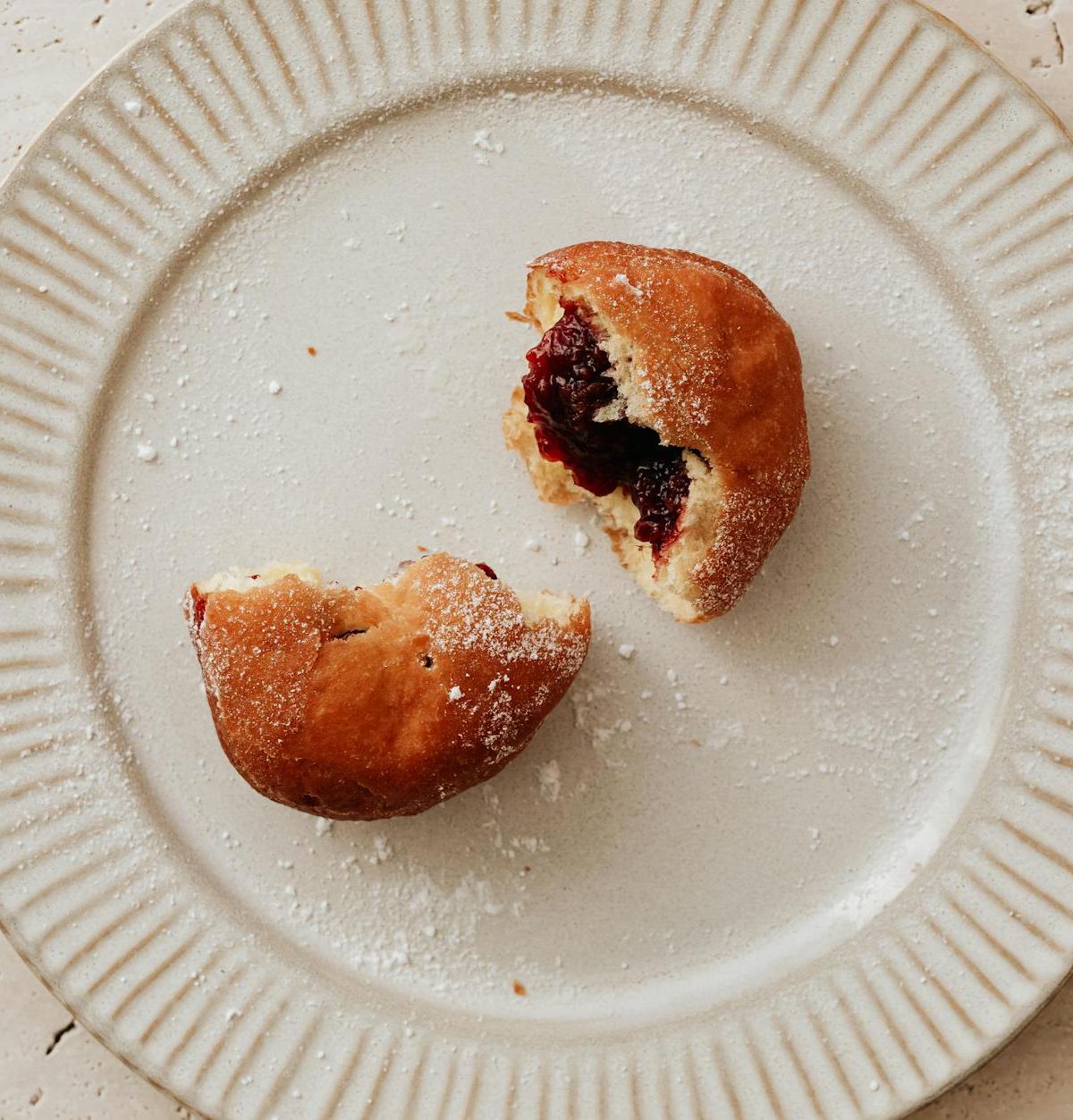
Berliner Pfannkuchen
Fluffy, jam-filled German fried pastries dusted with powdered sugar—a beloved carnival treat with a soft yeast dough exterior and sweet surprise center.
- Total time
- 90 min
- Servings
- 12
- Calories
- 280
- Protein
- 4g
Ingredients
- ½ cup whole milk
- ¼ cup granulated sugar
- 4 tablespoons unsalted butter
- ½ teaspoon kosher salt
- 2.25 teaspoons instant dry yeast
- 2 whole large eggs
- 1 teaspoon vanilla extract
- 2.5 cups all-purpose flour
- ½ cup seedless jam (strawberry or raspberry)
- 3 cups neutral oil for frying (vegetable or canola)
- ½ cup powdered sugar for dusting
Instructions
- 1
Warm 0.5 cup whole milk in a small saucepan over low heat until it reaches 110°F on an instant-read thermometer—it should feel warm to the touch but not hot. Remove from heat and stir in 0.25 cup granulated sugar, 4 tablespoons unsalted butter cut into small pieces, and 0.5 teaspoon kosher salt. Let the mixture cool to 105°F, then sprinkle 2.25 teaspoons instant dry yeast over the top and let it sit for 1 minute to bloom.
- 2
Crack 2 large eggs into a small bowl, add 1 teaspoon vanilla extract, and whisk together until fully combined. Pour the egg mixture into the cooled milk mixture and stir gently to combine.
- 3
Measure 2.5 cups all-purpose flour into a large mixing bowl. Pour the wet ingredients into the flour and stir with a wooden spoon until a shaggy dough forms. Switch to your hands and knead in the bowl for about 2 minutes until the dough comes together—it will be slightly sticky and soft, which is correct.
- 4
Transfer the dough to a lightly floured work surface and knead for 8-10 minutes, adding a light dusting of flour only if the dough sticks to your hands. The dough is ready when it's smooth, elastic, and springs back slowly when you poke it—this develops the gluten needed for a tender, fluffy interior.
- 5
Lightly oil a large mixing bowl and place the dough inside, turning it to coat all sides. Cover the bowl with a damp kitchen towel and set in a warm, draft-free spot to rise until doubled in size, about 1 hour. The dough has risen enough when a light poke leaves a small indentation that doesn't spring back.
- 6
Punch down the risen dough gently to release the air. Turn it out onto a lightly floured work surface and roll it into a rectangle about 1/4 inch thick using a rolling pin.
- 7
Using a 2.5-inch round cutter or the rim of a glass, cut out 12 circles from the dough. You may need to re-roll the scraps gently once to get all 12. Place each circle on a small piece of parchment paper (about 3 inches square) to prevent sticking.
- 8
Space the parchment-lined circles about 2 inches apart on baking sheets. Cover loosely with damp kitchen towels and let them proof in a warm spot for 45-60 minutes. They are ready when they've increased in size by about half and feel soft and airy—a light poke should leave a slow-springing indentation.
- 9
Pour 3 cups neutral oil (vegetable or canola) into a heavy-bottomed pot or Dutch oven. Heat to 350°F on an instant-read thermometer. The temperature is critical—if it's too low, the pastries will absorb oil and be greasy; if it's too high, they'll brown too quickly outside while staying doughy inside.
- 10
Working in batches of 2-3 to avoid crowding, carefully slide each proofed dough circle off its parchment and into the hot oil. Fry for 60-75 seconds on the first side—you'll see the bottom turn golden brown and the pastry will float up. Using a spider strainer or slotted spoon, gently flip each one over.
- 11
Fry the second side for another 60-75 seconds until it's deep golden brown. The pastries should be puffed and airy. Transfer to a wire rack set over a rimmed baking sheet to drain excess oil. They will continue to firm up as they cool.
- 12
Once the pastries have cooled enough to handle (about 5 minutes), fit a piping bag with a thin, long metal pastry tip (about 1/8 inch diameter). Spoon 0.5 cup seedless jam into the piping bag. Insert the tip horizontally into the side of each pfannkuchen, about halfway up, and gently squeeze about 1 teaspoon of jam into the center. You'll feel slight resistance when the pastry is full.
- 13
Sift 0.5 cup powdered sugar into a shallow bowl. While the pfannkuchen are still warm, gently toss them in the powdered sugar until fully coated on all sides, or hold each one over the bowl and dust generously with powdered sugar using a fine-mesh strainer for a more refined look.
- 14
Serve the pfannkuchen warm or at room temperature. They are best eaten within a few hours of frying, while the exterior is still slightly crispy and the interior soft and pillowy. Store leftovers in an airtight container at room temperature for up to 1 day.
Tools you’ll need
- instant-read thermometer
- small saucepan
- small bowl
- large mixing bowl
- wooden spoon
- rolling pin
- 2.5-inch round cutter or glass
- parchment paper
- baking sheets
- kitchen towels
- heavy-bottomed pot or Dutch oven
- spider strainer or slotted spoon
- wire rack
- rimmed baking sheet
- piping bag
- metal pastry tip
- fine-mesh strainer
Cook smarter
Get matched recipes for what’s in your fridge
CookSnap is a free iOS app that finds real recipes from the ingredients you already have. No more grocery-list aspirations.