How to Tell If a Recipe Was Written by a Human
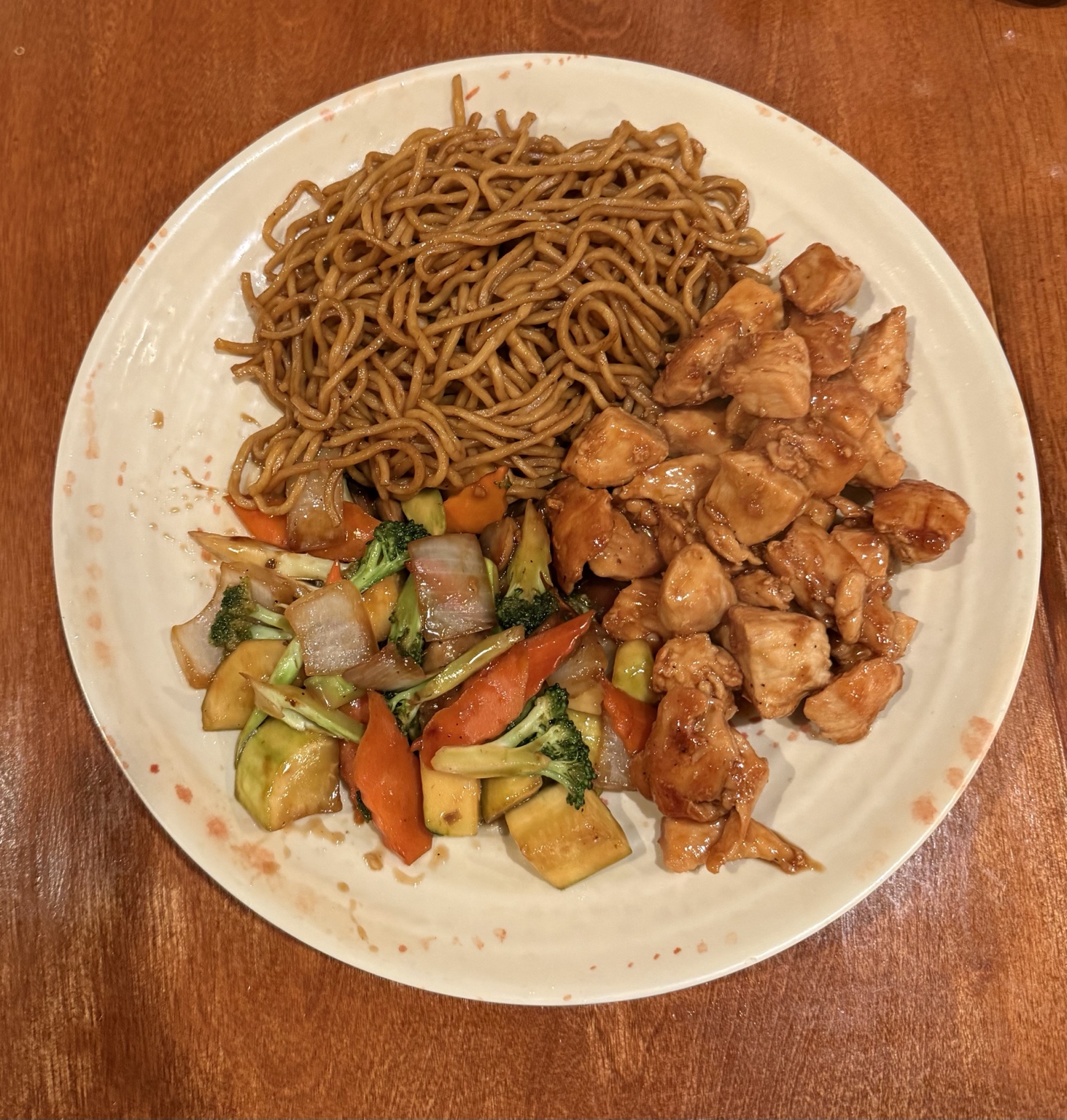
A recipe that has never been cooked looks identical to one that has. Same headings, same bolded ingredient list, same confident instructions, same glossy photo at the top. The difference only shows up later — at the stove, twenty minutes in, when the sauce that was supposed to thicken is still water and you've already used the last of the cream.
That gap between how a recipe reads and how it cooks has always existed. What's changed is how cheap it is to produce the reading part. Generating a thousand plausible recipes now costs less than testing one, and the incentives point exactly where you'd expect them to.
So here are the checks that actually work. None of them require knowing anything about AI. They're just the things a recipe picks up by being cooked, which a recipe assembled out of other recipes never does.
1. Read the method and tick off the ingredients
This is the single strongest test, and it takes about twenty seconds. Read the instructions with the ingredient list next to them and account for every line. Two failures show up:
- An orphan ingredient. Something sits in the list and is never used. The half cup of stock, the egg, the lemon — listed, bought, never mentioned again.
- A phantom ingredient.The method says “stir in the parsley” and there is no parsley in the list. You find out at the point in the cooking where you're meant to add it.
A person who cooked the dish would have caught this, because they'd have hit it in their own kitchen. Text that was assembled rather than cooked has nothing to catch it. This one check disqualifies more bad recipes than the other six combined.
2. Look at what the numbers are doing
Real recipes carry inherited specificity. They say one 14-ounce can, because that's the size the can comes in. They say 425°F and 12 to 14 minutes, because someone stood there and found the edges of it. They say about a third of the bunch, because that's what was left.
Text that has never been near a stove drifts toward tidy numbers. Everything comes in cups and tablespoons. Cook times land on 10, 20, 30. Every recipe serves four. A whole page of round numbers isn't proof of anything on its own — but combined with anything else on this list, it's a strong signal, and its absence is reassuring.
3. Look for doneness cues, not just times
“Bake for 25 minutes” is not an instruction, it's a guess about your oven. Someone who has actually made the dish gives you something to check: until the top springs back, until the onions go translucent and smell sweet, until a thermometer in the thickest part reads 165°F, until the liquid coats the back of a spoon.
Doneness cues are the residue of failure. You only write “the sauce will look broken before it comes together” if you once thought you'd broken it. A recipe made of times and no cues is a recipe nobody has had to rescue.
4. Look for the warning
Related, and worth its own check: real recipes are honest about where they're fragile. Don't crowd the pan or the chicken steams instead of browning. Take it off the heat before it looks done, it carries on cooking. This bakes fast, so start checking at eighteen minutes.
Generated text is uniformly confident. It has no memory of a ruined batch, so it warns you about nothing. A recipe with no rough edges anywhere in it has usually never met a real kitchen.
5. Read the headnote for one specific fact
Everyone skips the paragraph above the ingredients. Don't — it's the cheapest tell on the page. A real headnote makes a specific claim: where the version came from, what the author changed and why, what they tried first that didn't work.
The generated version is a warm fog. “This delicious and easy weeknight favourite is sure to become a staple in your home.” It reads fine and says nothing that could be true or false. You're looking for one checkable detail. If four sentences contain none, that's the answer.
6. Look at the photo like a stranger
Photos are the easiest part to fake and, oddly, still one of the easier tells — if you look at the picture instead of just liking it. Count things. Six thighs in the recipe, three in the bowl. A garnish that appears nowhere in the ingredient list. Then look at the edges of the image rather than the food: the fork with the wrong number of tines, the spoon handle that merges into the bowl rim, the label on the jar in the background whose text dissolves into letter-shaped smudges.
The blunter version of this check: does the food look like food someone ate? Real plates have a smear on the rim, a crumb on the board, one piece slightly more browned than the rest. Perfect, evenly-lit symmetry is a rendering, not a dinner.
7. Check whether anyone has actually cooked it
The comments are the only part of a recipe page that can't be written in advance. What you want is evidence of contact with reality: someone reporting they halved it, someone saying it needed another ten minutes, someone complaining. A single “this needed more salt” is worth more than fifty ratings.
Be suspicious of the opposite pattern — a wall of short, uniformly enthusiastic five-star comments that never mention a substitution, a problem, or a specific ingredient. And treat “no comments at all” as neutral rather than damning. Plenty of good recipes are simply new.
What the seven checks are really asking
They're all proxies for one question: did this come from someone who stood in a kitchen and made it?Every check looks for a mark that cooking leaves behind — a number that isn't round because a can isn't round, a warning that exists because something once went wrong, a photo of a plate that someone later ate.
Which is also why you can't fix this with a better model. The information isn't missing from the writing; it was never collected. We've written before about why generated recipes invent ingredients you don't have — the short version is that a model is rewarded for producing text that looks like a recipe, and a plausible recipe and a working one are different objects.
Why this is worth thirty seconds
Two reasons, one boring and one not.
The boring one is groceries. A recipe you can't finish is a bag of ingredients bought for nothing, and it usually fails at the point where you've already committed — the shop is done, the pan is hot. Thirty seconds of reading beforehand is the cheapest insurance available.
The one that isn't boring is safety. Cook times for poultry, pork, ground meat, and home-canned anything are not stylistic choices. A confident, invented “bake at 350°F for 20 minutes” on a chicken that needs closer to forty is the one failure mode on this page that can make someone ill. If a meat recipe gives you a time and no internal temperature, that's reason enough to get the temperature from somewhere you trust and ignore the clock.
The version of this we built
The reason we're opinionated about this is that CookSnap made the opposite bet from most apps in the category. It doesn't write you a recipe. It searches a curated library of real recipes — a little under fifteen thousand as of this writing — and returns the ones your ingredients actually reach.
That constraint is the whole product. Retrieval can come up empty; generation never does, which is exactly what makes generation feel better and be worse. When your fridge doesn't reach a full recipe, the honest answer is “here's the closest one, you're two ingredients short” — not a new recipe invented on the spot to fill the silence. You can try that yourself in a browser with the recipe finder: type what you have, and every result is a recipe that already existed before you asked.
None of which means you need an app. The seven checks work on any recipe from any source, and the habit is the useful part. But if you'd rather start from a library where the question has already been settled, the iOS app is in TestFlight beta now — the waitlist is on the homepage.